In Uzbekistan, drinking water supply will be brought to 90 percent.
Additionally, the coverage of sewage services in cities will be increased to 80 percent. To achieve this, an additional $1.3 billion in investment will be attracted.
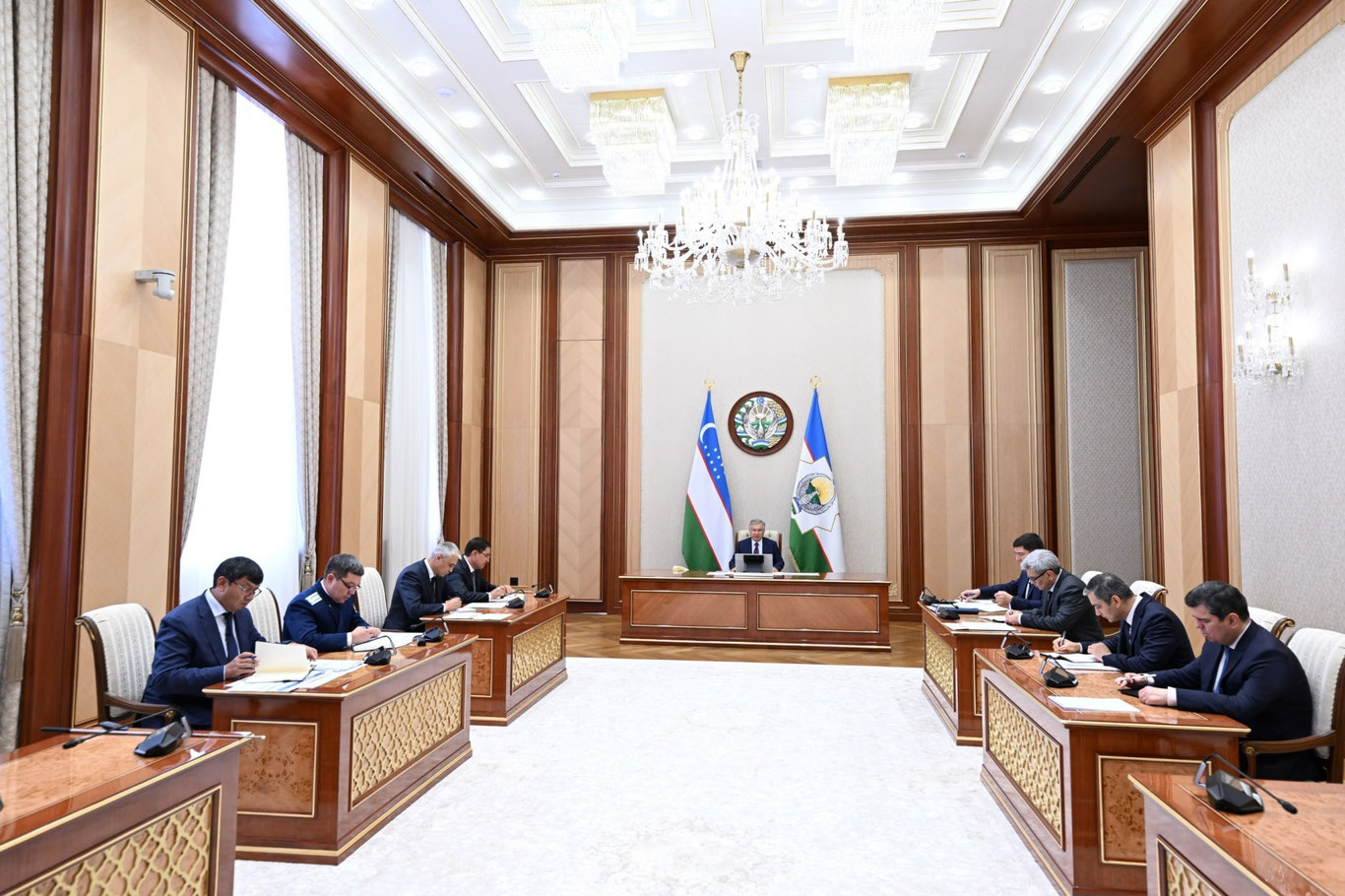
President Shavkat Mirziyoyev reviewed a presentation on ongoing work and future plans to further improve drinking water and wastewater services, as reported.
It was reported that the volume of investments attracted to the sector in recent years has increased tenfold, reaching $2.7 billion. As a result, the share of the population provided with centralized drinking water has risen from 63% in 2017 to nearly 83%.
During this period, 7.7 million residents received centralized drinking water for the first time, water supply was improved for 11 million citizens, and 1.1 million people were connected to the sewerage system. Additionally, 39,000 kilometers of drinking water networks and 3,200 kilometers of wastewater networks were constructed or reconstructed.
Furthermore, 3,400 drinking water facilities and 295 wastewater facilities and pumping stations were built or upgraded.
The presentation set a goal to increase the drinking water supply level to 90% and the coverage of sewerage services in cities to 80% in the coming years. To achieve this, it is planned to attract an additional $1.3 billion in investment.
The head of state noted that, alongside the achieved results, the system for formulating and implementing projects, as well as timely identifying and resolving existing problems, is not yet up to the required standard.
Specifically, 107 billion soums have been allocated to address problems in the sewerage system in Andijan city. Work has begun on installing modern filters in the Sergeli district to prevent the spread of unpleasant odors.
Also, within the framework of the project to supply drinking water from the Tupolang reservoir to Surkhandarya region, the network has been extended to Termez city. By the end of the year, it is planned to supply drinking water to the Sherobod, Muzrabot, Angor, and Jarkurgan districts.
The presentation also identified priority tasks for resolving pressing issues in the regions. In particular, it was noted that centralized drinking water networks need to be extended to 513 mahallas, and water supply quality needs to be improved in another 3,000 mahallas.
The President paid special attention to the issue of fully connecting households to the drinking water network. To this end, it is planned to extend networks directly to homes, replacing 232,000 water standpipes.
By the end of the year, projects worth a total of $600 million are planned for implementation. Under these projects, 1,600 kilometers of drinking water networks and 387 kilometers of sewerage networks, as well as 80 drinking water facilities and 29 wastewater facilities, will be constructed.
As a result, 310,000 residents in 107 mahallas will receive centralized drinking water for the first time. Additionally, the quality of water supply will be improved for 2.5 million residents living in 453 mahallas.