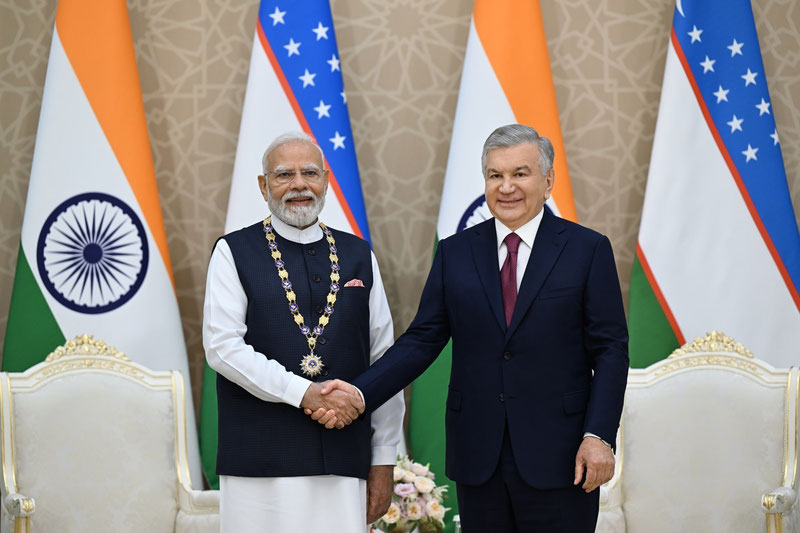
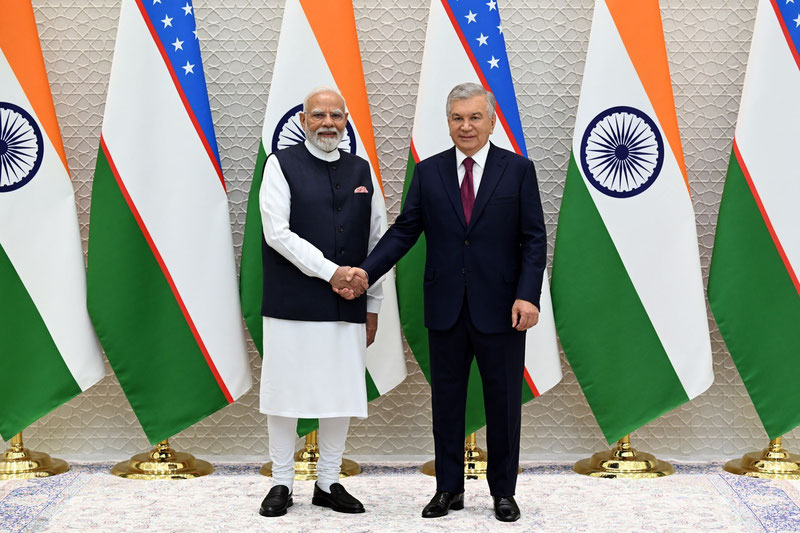
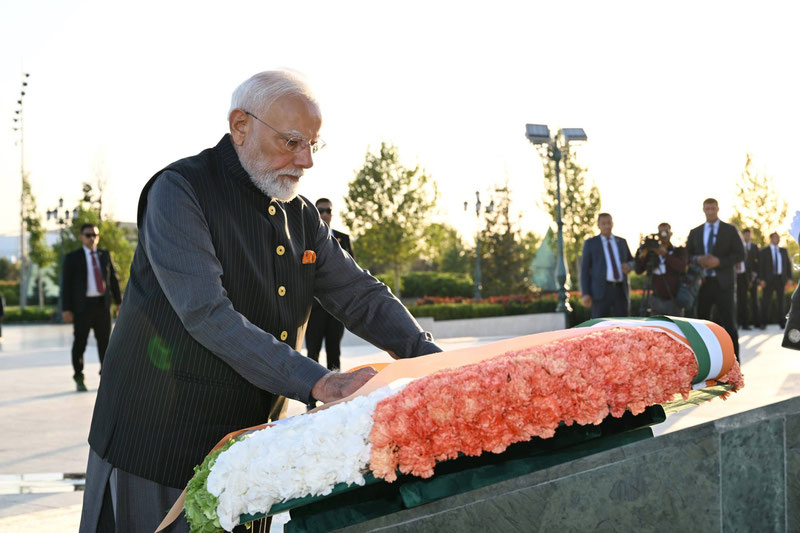
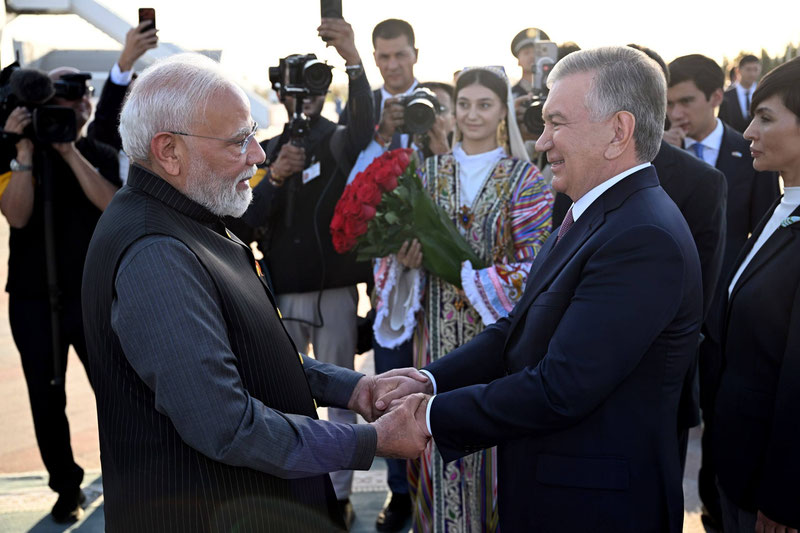
The President of Uzbekistan and the Prime Minister of India held negotiations in both narrow and expanded formats.
Roadmaps will be developed for each priority direction.
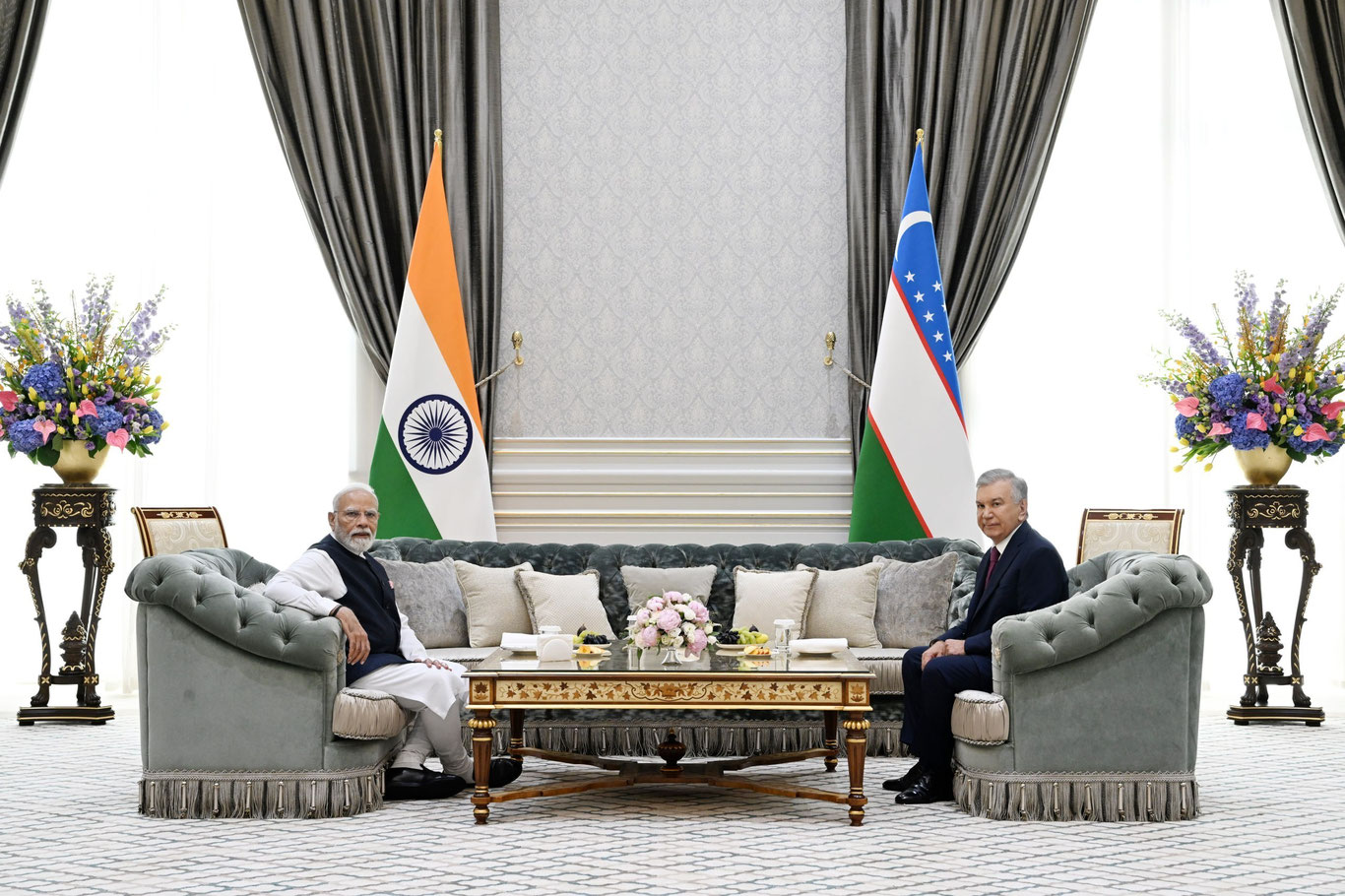
Negotiations between the President of the Republic of Uzbekistan Shavkat Mirziyoyev and the Prime Minister of the Republic of India Narendra Modi took place at the Koksaroy residence.
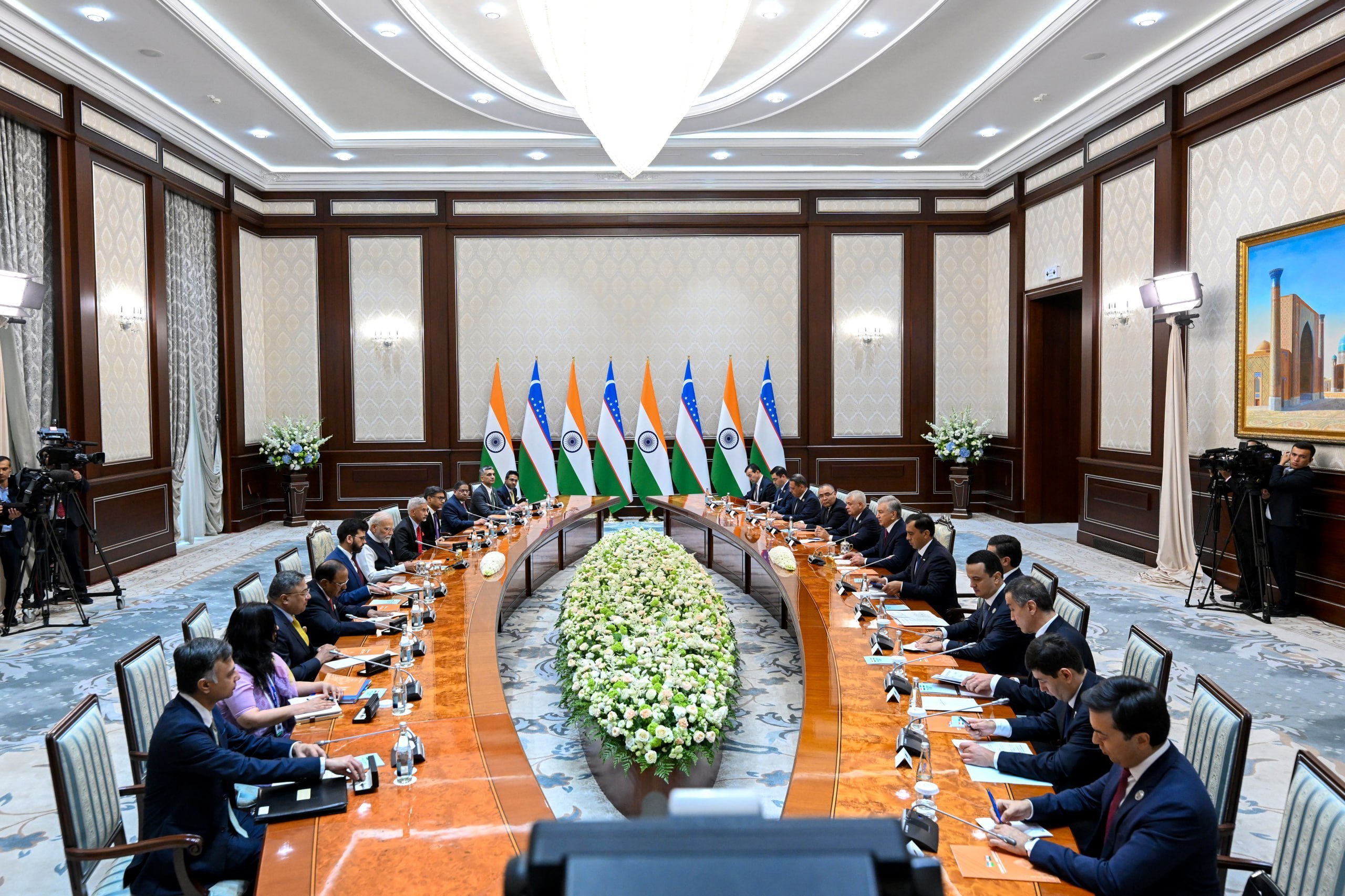
At the beginning of the meeting, Narendra Modi congratulated Shavkat Mirziyoyev on Independence Day and wished peace, prosperity, and progress to the people.
Current issues of further developing Uzbekistan-India strategic partnership relations and multifaceted cooperation were considered. It was noted with great satisfaction that active and effective dialogues continue at various levels.
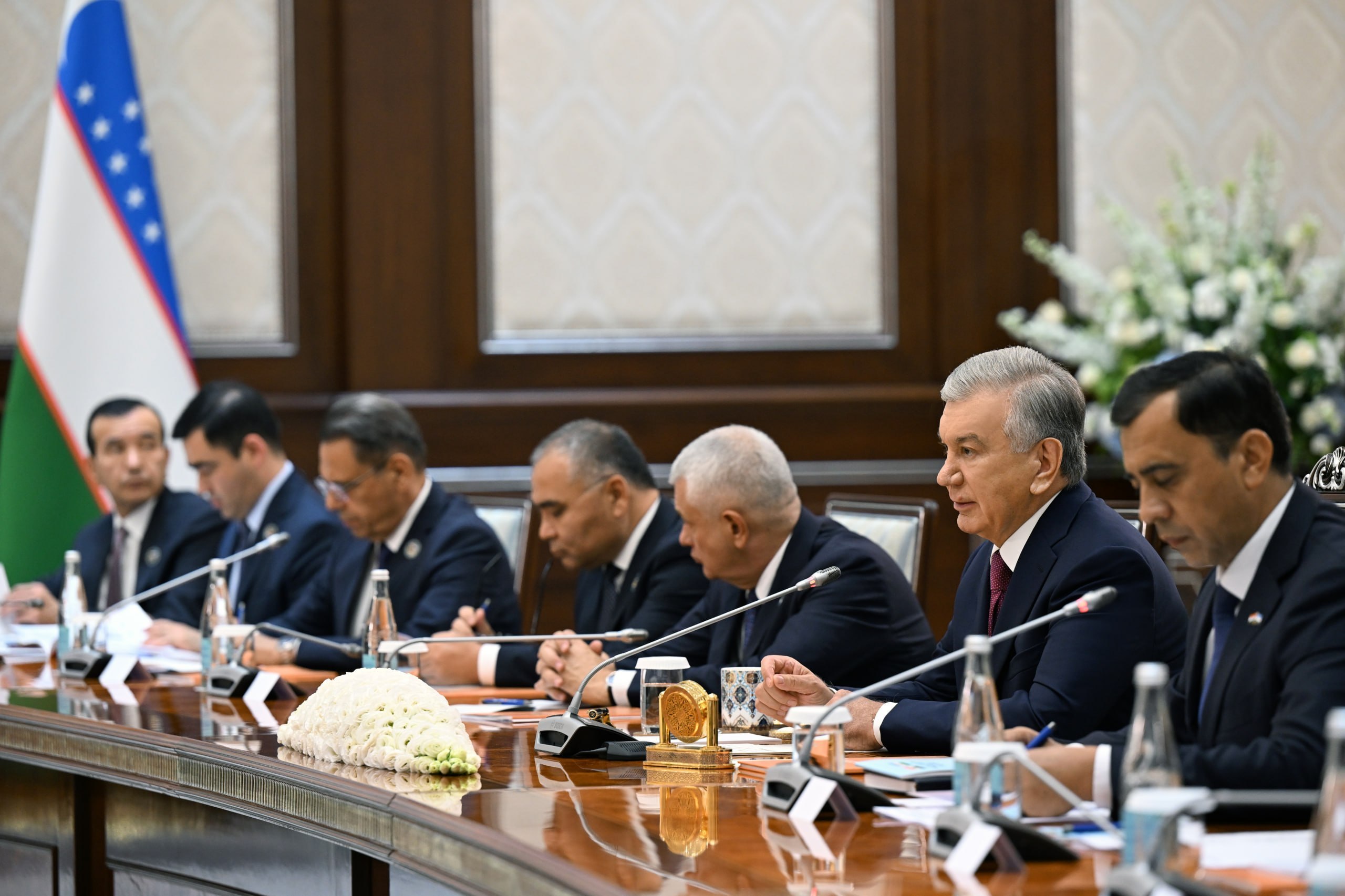
According to the results of last year, the volume of trade turnover exceeded 1 billion dollars for the first time. In recent years, the number of joint enterprises has increased sevenfold. Fourteen direct flights per week are operated between the two countries.
Cooperation in the field of education is expanding. Four Indian universities are operating in Uzbekistan.
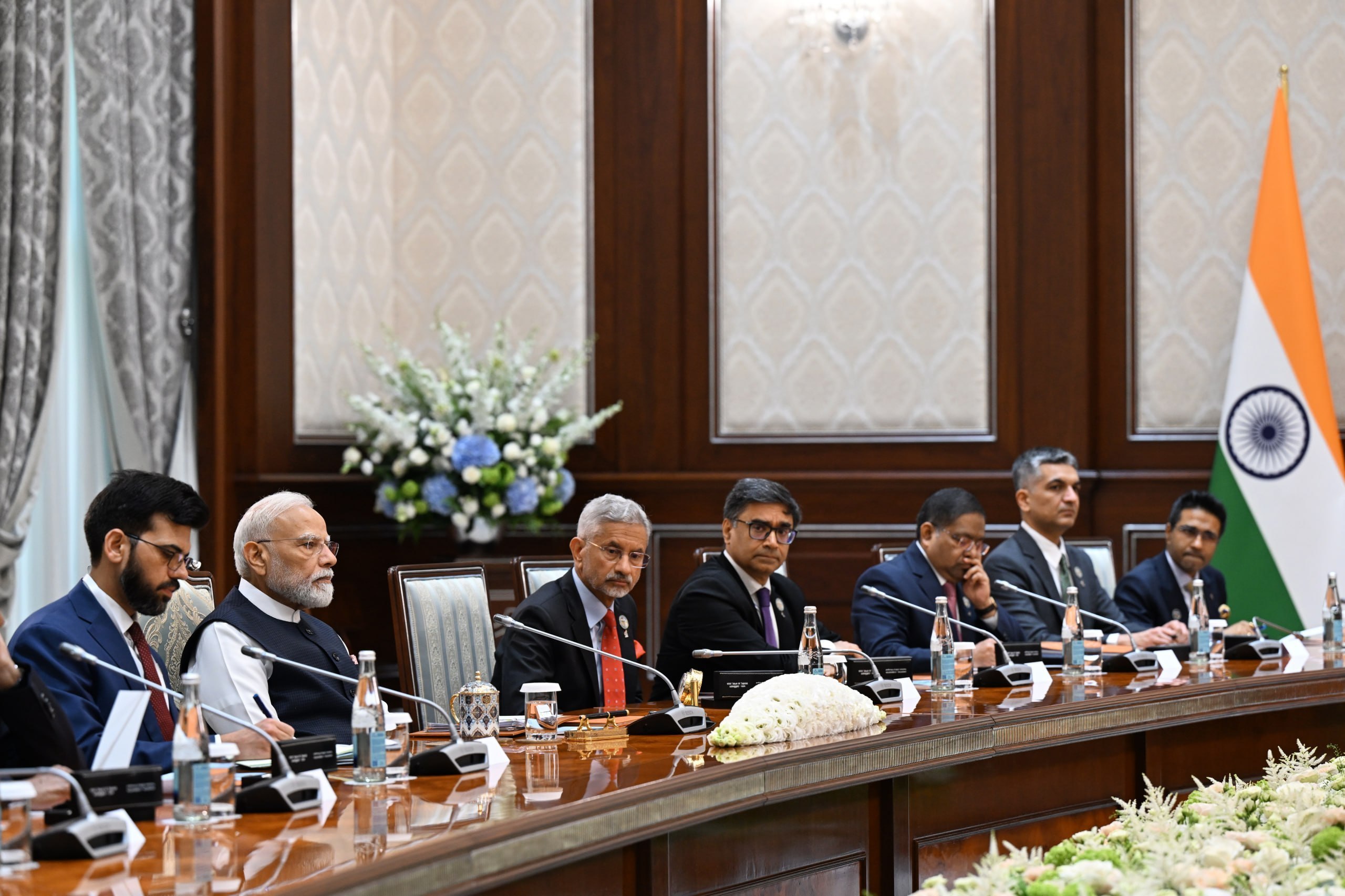
Special attention is being paid to the development of cultural and humanitarian ties. The Indian Cultural Center named after Lal Bahadur Shastri and the Center for Indian Studies named after Mahatma Gandhi play an important role in this regard.
It was noted that yoga is becoming increasingly popular in Uzbekistan and cooperation in this field is actively developing.
It was emphasized that this visit is of historical significance and will play an important role in bringing relations between Uzbekistan and India to the level of comprehensive strategic partnership.
It was noted that this will mark a new stage in Uzbekistan-India relations and create a solid foundation for further expanding practical cooperation in all priority areas.
The parties agreed to intensify political dialogue and exchanges at all levels, including within the framework of parliamentary friendship groups, the Intergovernmental Commission, and the Business Council.
In order to ensure effective coordination of cooperation, it was envisaged to establish a coordination mechanism at the level of heads of foreign policy agencies.
During the negotiations, issues of further expanding trade, economic, and investment cooperation were thoroughly discussed.
Noting that there is great potential for increasing the volume of mutual trade several times, the parties agreed to take necessary measures to bring trade turnover to 5 billion dollars by 2030.
Special attention was paid to expanding industrial cooperation and implementing new joint projects. The prospects for developing cooperation with leading Indian companies in energy, electrical engineering, metallurgy, critical minerals, healthcare, pharmaceuticals, agriculture, and the jewelry industry were highly assessed.
Issues of developing interregional cooperation were addressed. It was noted that close partnership ties have been established between Andijan region and Gujarat state, Fergana region and Haryana state, and Samarkand region and Agra.
In addition, the parties discussed issues of further expanding cultural and humanitarian cooperation. An agreement was reached on regularly holding Culture Days, concerts, exhibitions, forums, and film festivals. Within the framework of the visit, the signing of a five-year program on Cultural Exchange is envisaged.
During the negotiations, an exchange of views also took place on pressing issues on the international and regional agenda.
The leaders noted with satisfaction the effective cooperation within the framework of international structures. The parties emphasized the importance of consistently continuing the practice of mutual support of initiatives put forward within the framework of the UN, SCO, BRICS, and other international organizations.
At the end of the meeting, heads of ministries and agencies were tasked with ensuring the active promotion of joint projects and programs.
Appropriate “road maps” will be developed for each priority area, including specific mechanisms, responsible executors, and implementation timelines.