Updated Uzbek alphabet: will passports and ID cards be replaced?
The draft resolution "On measures to introduce the changes made to the Uzbek alphabet in all spheres of society's life" has been submitted for public discussion.
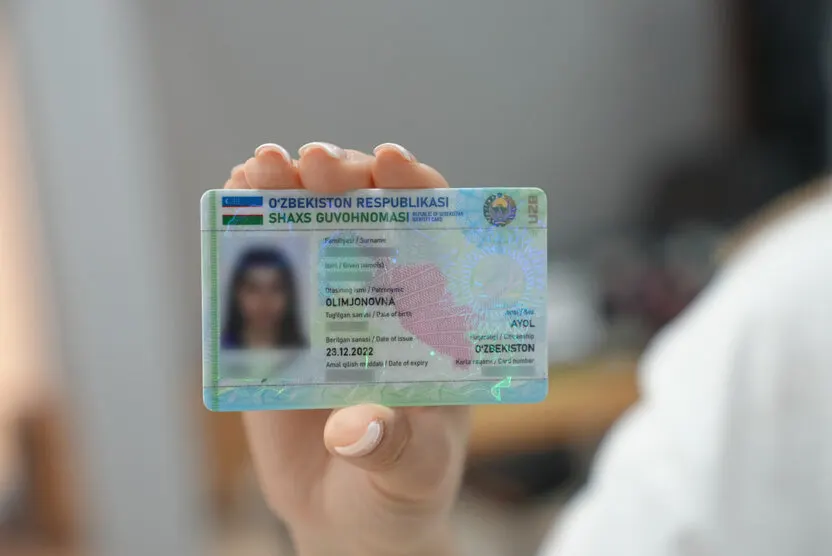
The Ministry of Justice has submitted the draft resolution «On measures to introduce the changes made to the Uzbek alphabet into all spheres of society’s life» for public discussion. The document provides for a program of measures to be implemented for the transition to the new alphabet envisaged.
On October 21, President Shavkat Mirziyoyev signed a law on improving the Uzbek alphabet based on Latin script. According to the law, which enters into force on April 22, 2027, the letters O‘, G‘, Sh and Ch, which were deemed complex and inconvenient, will be brought into a unified form. The letter combination Ng will be removed from the alphabet.
According to the draft resolution, ID cards of Uzbek citizens, foreign citizens and stateless persons, biometric passports of Uzbek citizens for travel abroad, driver’s licenses, vehicle technical passports, as well as service certificates of employees of state bodies and economic associations will be issued in the improved alphabet when replaced within the deadlines established by regulatory legal acts.
In this case, ID cards, biometric passports, driver’s licenses, vehicle technical passports and cadastral documents issued after the law enters into force are to be issued in the new alphabet. At the same time, document forms prepared in the current alphabet are permitted to be used until January 1, 2028.
Documents issued on the basis of current legislation, including documents confirming personal and property rights, retain their legal force regardless of whether they contain the previous form of the letters.
Additionally, the procedure for reflecting the letters of the improved Uzbek alphabet in the visual information zone (VIZ) of biometric documents and ID cards will be revised. Until January 2027, the current technical capabilities of reflecting Uzbek alphabet letters in this zone will be studied. And by April 2027, proposals will be prepared on developing technical requirements for reflecting the new letters in the visual information zone and adapting them to biometric document personalization systems.
The Ministry of Internal Affairs, the Ministry of Digital Technologies, the Ministry of Foreign Affairs and the Academy of Sciences have been designated as responsible for the implementation of these tasks.
From the date the law enters into force, information and materials distributed by mass media, as well as printing and publishing products, must be prepared and printed only in the improved alphabet.
Documents, official correspondence and information issued by state bodies, economic associations and other legal entities will also be prepared in the updated alphabet.
It is not permitted to refuse to identify a person, determine their rights and obligations, or provide public services or accept their documents on the grounds that the person’s surname, first name and patronymic are written in the previous or improved letter form.
Furthermore, from the date the law enters into force, letterheads and information inscriptions of state bodies and economic associations will be aligned with the improved alphabet and spelling rules in the established procedure. Digital external information media will also be adapted to the new alphabet.
Starting from 2027, it is planned to gradually transfer inscriptions at airports, railway stations and other public places to the new alphabet. Route, station and service information on buses, metro, railways and other transport vehicles, as well as road signs, indicators and address inscriptions, will also be displayed in the improved alphabet.
The draft resolution assigns state bodies, economic associations, other organizations and local executive authorities the task of developing and approving, within one month, roadmaps for introducing the alphabet changes in their systems.
The roadmaps will clearly define the mechanisms for introducing the changes, deadlines, financial sources and responsible executors. The implementation of the assigned tasks will be discussed at meetings of state bodies at least once a month.
Discussion of the draft resolution will continue until December 6.