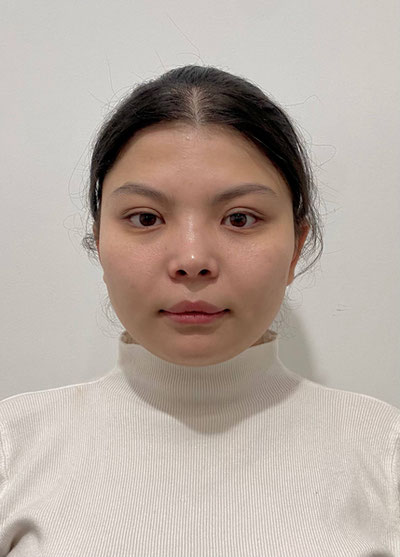
A new president has been elected in Kosovo: Justina Shiroka Pula has assumed the position.
His election averted the possibility of early parliamentary elections and eased the political tension in the country.
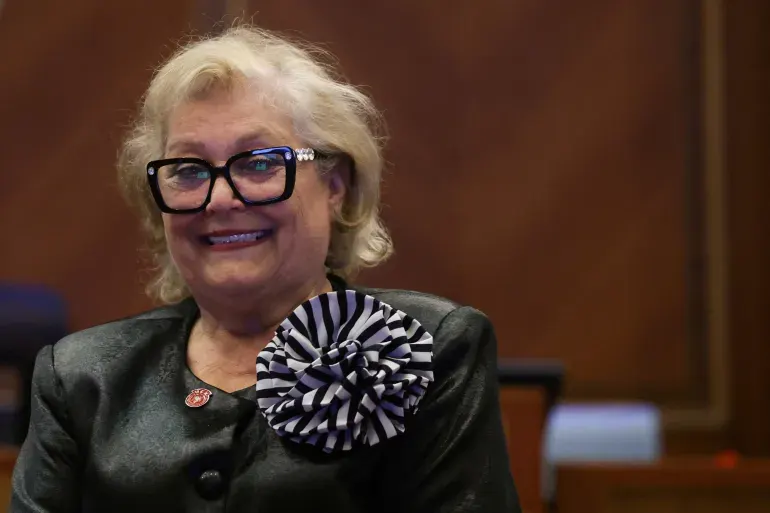
Kosovo's parliament elected 73-year-old Justina Shiroka Pula as the country's president. 81 deputies voted for her. Thus, the possibility of holding early parliamentary elections in the country amid a prolonged political crisis was prevented.
The presidential election was held amid tensions in parliament and protests against the verdicts handed down to former leaders of the Kosovo Liberation Army. The constitutional deadline for electing the president was set to expire at midnight on Wednesday.
The ruling "Vetevendosje" movement (LVV) and the opposition Kosovo Democratic Party (PDK) agreed on Pula's candidacy. She received 81 votes, surpassing the two-thirds threshold required for the presidency — 80 votes — by one vote.
As part of the agreement, the parties also agreed to amend the legal framework regulating the operations of the Kosovo Specialist Chambers in The Hague. This court handles cases against former leaders of the Kosovo Liberation Army on war crimes charges. Protesters also demanded that politicians address precisely this issue.
Donika Emini, a researcher at the University of Graz's Center for Southeast European Studies, assessed Pula's election as the result of political necessity and the need to stabilize institutions.
According to her, election fatigue and public dissatisfaction with the political elite have intensified in Kosovo. Amid the 20 days of protests following the Specialist Chambers' verdict, including the violence that occurred in Pristina one day before the presidential election, holding another election could have become a major political cost for all political forces.
Who is Justina Shiroka Pula?
Born in Pristina in 1953, Justina Shiroka Pula has worked as an economist, academic, and politician. She graduated from the Faculty of Economics at the University of Pristina and studied economic development theory and policy at the Faculty of Economics in Zagreb. She later defended her doctoral dissertation on the relationship between demographic investments and Kosovo's economic development.
Shiroka Pula worked at the University of Pristina for many years, rising from assistant lecturer to the rank of professor. She also headed the university's Department of Management and Informatics.
In December 2025, Shiroka Pula became the first woman elected to head the Kosovo Academy of Sciences and Arts.
She also has a political career. Shiroka Pula served as Kosovo's Minister of Energy and Mining from 2008 to 2011, and as a parliamentary deputy representing the PDK from 2011 to 2014.
For this reason, experts emphasize that she should not be assessed merely as an academic with no connection to politics. Her political, institutional, and academic experience helped her become an acceptable candidate for various political forces.
Shiroka Pula became Kosovo's third female president. Before her, Atifete Jahjaga and Vjosa Osmani held the presidential office.
What are the president's powers?
Although the Kosovo president's formal executive powers are limited, the position holds an important place in the country's political and diplomatic life. The president represents Kosovo on the country's behalf domestically and in the international arena, helps ensure the continuity of state institutions, and can mediate in disagreements between political forces.
Shiroka Pula begins her presidency with the support of the ruling LVV and PDK. Her political opportunities will also depend on her relations with the Democratic League (LDK) and other opposition forces, as well as the team she forms in the presidential office.
Expert Donika Emini expressed hope that during the new presidency, coordination of foreign policy between the president, the prime minister, and the Ministry of Foreign Affairs will be strengthened.
She noted that disagreements between the previous president and the government, including on important issues such as Kosovo's accession process to the Council of Europe, demonstrated what consequences weak inter-institutional coordination can lead to.