Israeli attacks have turned Gaza into a "toxic wasteland" — Oxfam
Israel's military operations in Gaza have caused widespread contamination of water, soil, and air, posing a serious threat to public health and food security.
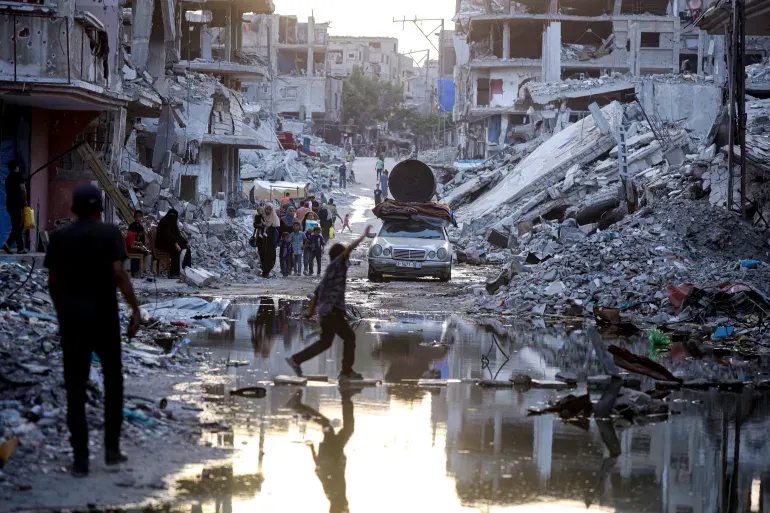
More than 99 percent of the territory has suffered environmental contamination as a result of Israel's military operations against Gaza. Poisoned water, contaminated soil, and harmful substances spreading from the rubble threaten the health and lives of 2.3 million Palestinians. This was reported in a report by the international charity Oxfam and the Conflict and Environment Observatory (CEOBS).
According to the report, Israel's use of explosive and incendiary weapons and the destruction of buildings and infrastructure have caused contamination of air, water, soil, and food products in Gaza. The analysis is based on satellite imagery, remote sensing, scientific research, and open-source data.
Oxfam International Executive Director Amitabh Behar emphasized that Israel's military actions in Gaza are also causing serious harm to the environment. According to him, this threatens not only the current population but also the lives of future generations. The organization stated that Palestinians are being exposed to various toxic substances through contaminated air, water, food, and soil.
61 million tons of rubble accumulated in Gaza
According to estimates by the UN Environment Programme, the attacks that began on October 7, 2023, have produced 61 million tons of rubble in Gaza. This amounts to an average of 29 tons per person living in the territory.
According to Oxfam data, as of October 11, 2025, Israel's ground military operations had directly affected 78 percent of Gaza's territory. Removing the rubble would require 2.1 million truck trips.
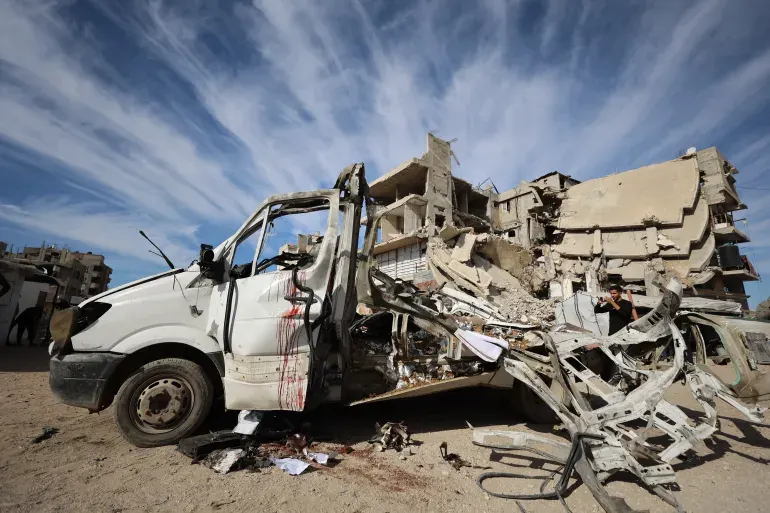
The report found that more than 99 percent of Gaza's territory contains at least one potential source of contamination. The highest risk was recorded in Gaza City, Khan Yunis, Rafah, Jabaliya, and along the Salah al-Din road. Unexploded ordnance, damaged vehicles, batteries, and fuel reserves could damage soil and groundwater.
Water supply has decreased by 61 percent
According to the Palestinian Water Authority, daily water supply in Gaza stood at 334,000 cubic meters before October 2023, but had fallen to 54,700 cubic meters by June 2024. By April 2026, as a result of emergency repairs, this figure had reached 130,300 cubic meters. Nevertheless, water supply remains 61 percent below pre-attack levels.
Only 9 of 61 water reservoirs are operational. Their total capacity allows for the delivery of 18 liters of water per person per day.
Furthermore, by April 2024, all six wastewater treatment plants in Gaza had been destroyed. Approximately 40,000 cubic meters of untreated wastewater flows into the Mediterranean Sea every day. As of April 2026, only 30 percent of the sewage network and 19 percent of pumping stations were partially operational.
Agriculture and food security have been damaged
According to the Oxfam report, before October 2023, farms in Gaza supplied 95 percent of the fresh vegetables consumed by the population. By the end of 2025, however, more than 87 percent of cultivated land had been damaged, with only 3 percent remaining usable and undamaged.
Additionally, more than 7,200 greenhouses have been damaged, and more than one million olive trees have been uprooted. Facilities involved in seed storage and distribution have also been destroyed.
In July 2026, 1.2 million people in Gaza, or 59 percent of the population, were living in crisis-level food insecurity or worse. The report also noted that nearly 95 percent of livestock had been lost and that fisheries had sharply declined.
Risks to public health are increasing
According to data cited in the report, more than 1.9 million cases of acute respiratory infections and nearly 81,000 cases of acute diarrhea were recorded in Gaza in January–February 2026. More than 36,000 of those with diarrhea were children under five years of age.
In 2024, type 2 poliovirus was detected in Gaza's wastewater. Subsequently, a case of poliomyelitis leading to paralysis was recorded in a child. This was the first such case detected in the territory in 25 years.
According to Oxfam data, Gaza's gross domestic product declined by 83 percent in 2024, amounting to 362 million dollars. By October 2025, direct physical damage was estimated at 35.2 billion dollars, while economic losses were estimated at 22.7 billion dollars.
It is estimated that 71.4 billion dollars will be required over the next ten years to restore and rebuild the territory. Of this, 26.3 billion dollars will be needed in the first 18 months.
Oxfam emphasized the need for a fully independent investigation to determine the consequences of environmental and infrastructural damage in Gaza. The organization also proposed a five-stage plan for restoring the territory. It includes reducing contamination risks, conducting inspections, repairing critical infrastructure, managing toxic waste, and establishing long-term environmental monitoring.
The report noted that the destruction of water, food, and sanitation systems in Gaza could be significant in assessing whether Israel has complied with its obligations under international law, including the Genocide Convention.