World

Due to the El Niño phenomenon, the price of sugar in the world may rise sharply.

Due to the climate phenomenon, rainfall is expected to decrease in India, the second largest sugar exporter. As a result, sugarcane planting may be delayed.

Due to the El Niño phenomenon, the price of sugar in the world may rise sharply.

India, the world's second-largest sugar exporter, may not have surplus sugar reserves for export for at least another three seasons. This is due to the El Niño weather phenomenon causing a decline in sugarcane yields and an increase in demand for ethanol.


According to Reuters, these factors could prevent millions of tons of sugar from reaching the global market, reducing supply for importing countries in Asia, Africa, and the Middle East, and keeping benchmark prices in London and New York at elevated levels.


Based on interviews with trade and industry representatives, government sources, and farmers, the decline in sugarcane volume and rising demand for ethanol production will leave insufficient quantities for export in the coming years.


In India, sugar exports are carried out with government permission. Informed sources in the government and industry have indicated that New Delhi may restrict export permits each season rather than imposing a multi-year ban.


Experts note that due to El Niño, monsoon rains in India are expected to be at their lowest level in 11 years this year.


The decrease in rainfall is forcing farmers to delay planting sugarcane, and some are planning to switch to crops that require less water.


According to industry estimates, sugar production in India this season could fall from the previously expected 30.95 million tons to 27.9 million tons. This is even lower than the country's annual domestic consumption of approximately 28.5 million tons.


At the same time, India continues its policy of increasing the share of ethanol in gasoline to reduce dependence on imported oil. Industry representatives believe that the government's future policy will prioritize supporting ethanol production over sugar exports.


Government sources and industry representatives say that if El Niño severely impacts sugarcane cultivation, India may also be forced to import sugar in the future.


The country last imported sugar in the 2016–2017 and 2017–2018 seasons.

Trump's trip to China: A meeting with Kim Jong Un may take place

Trump's trip to China: A meeting with Kim Jong Un may take place

Trump met with Kim Jong Un several times during his presidential term from 2017 to 2021.

Attack on a church in Jordan: three men sentenced to death

Attack on a church in Jordan: three men sentenced to death

The attack occurred on October 23 during a funeral service at a Greek Orthodox church.

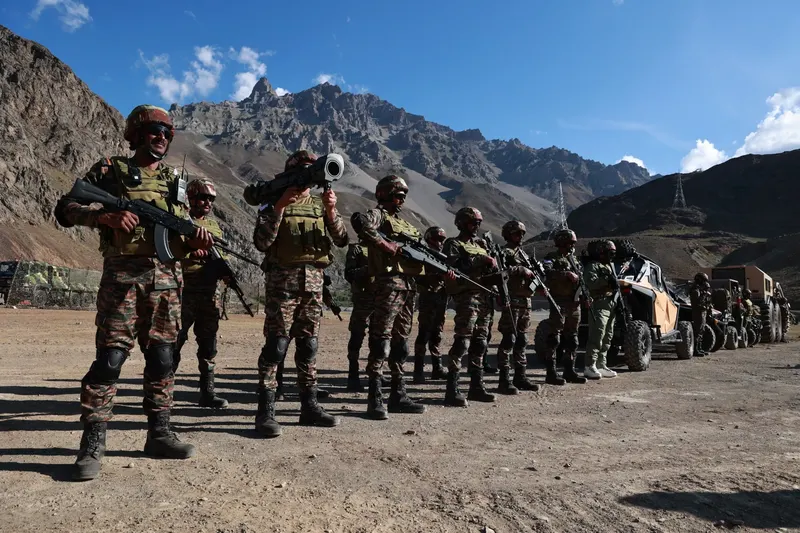
India–China tensions: Delhi is strengthening combat readiness in mountainous areas

India–China tensions: Delhi is strengthening combat readiness in mountainous areas

Special units within the Indo-Tibetan Border Police are being trained in close-quarters combat, movement in mountainous terrain, and the use of drones.

Meta was fined nearly $900 million: the company accessed users' personal photos and videos without consent

Meta was fined nearly $900 million: the company accessed users' personal photos and videos without consent

Meta announced it will appeal the decision.

An Uzbek student was arrested in South Korea: he was accused of financing a terrorist group

An Uzbek student was arrested in South Korea: he was accused of financing a terrorist group

He transferred money six times to a member of a terrorist organization in Syria.

Rwanda deportation center: Germany and four other countries are preparing an agreement

Rwanda deportation center: Germany and four other countries are preparing an agreement

The initiative is drawing criticism from human rights organizations.

Blow to Russian oil exports: Ukraine targets station in Samara region

Blow to Russian oil exports: Ukraine targets station in Samara region

Ukrainian military officials have described this facility as critical infrastructure for Russia's oil industry, which is financing the war.

Ukraine is using robots on the battlefield: they are being deployed for attacks and evacuation

Ukraine is using robots on the battlefield: they are being deployed for attacks and evacuation

Such devices are being used not only for transporting military cargo and evacuation, but also for offensive operations using grenade launchers and anti-tank weapons.