Air quality in Tashkent has deteriorated: it will continue until the end of the week
Such conditions can be observed briefly during the night and morning hours.
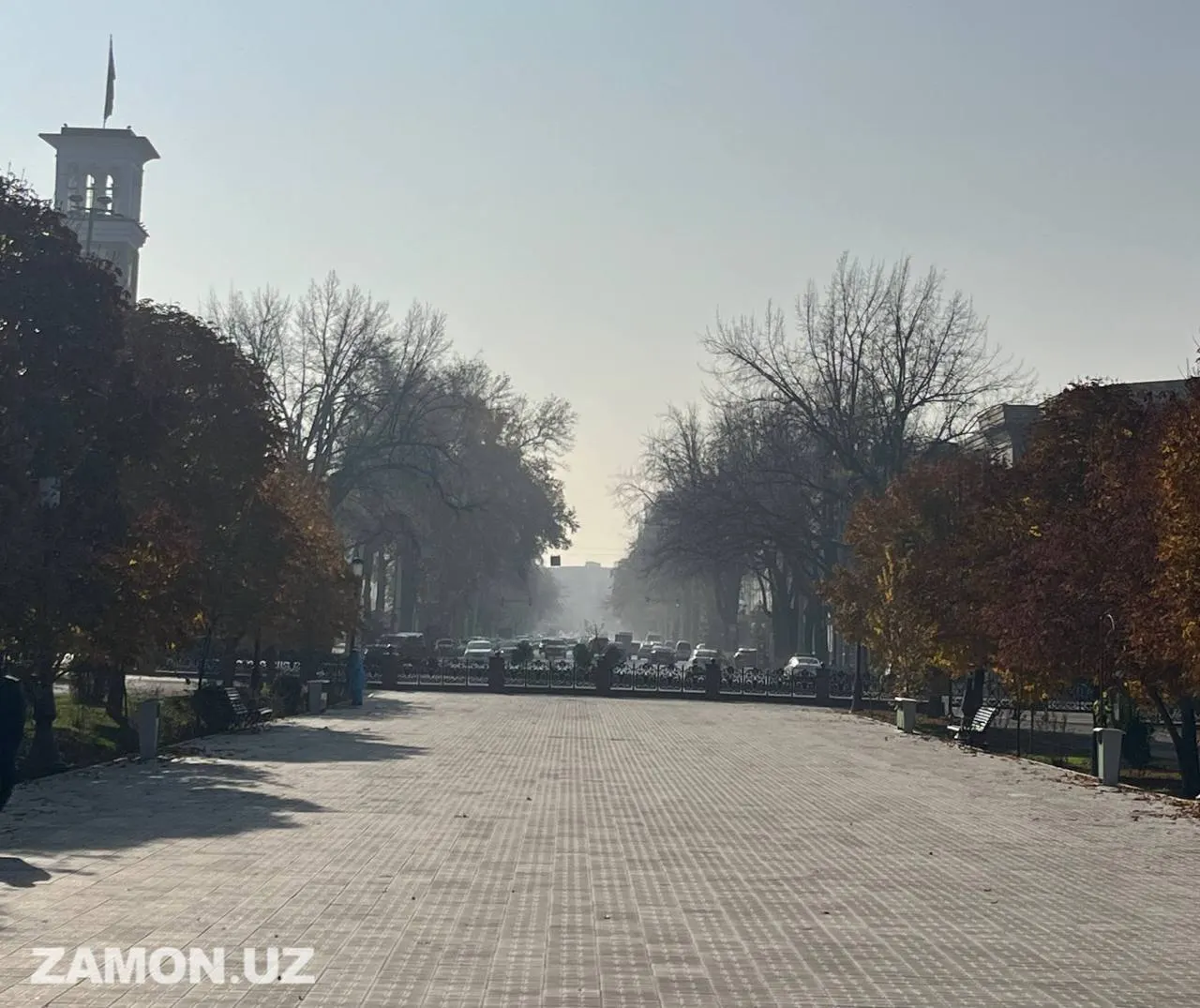
On October 6, during daytime hours in Tashkent, air quality was mainly at a "moderate" level. In the evening hours, the situation worsened, and by the morning of October 7, the "unfavorable for sensitive groups" level was recorded in broader areas. In some places, short-term "unhealthy" air quality was also observed.
According to observations from October 6 at 17:00 to October 7 at 10:00, the average amount of PM2.5 particles in Tashkent was 43.5 µg/m³, and that of PM10 particles was 97.2 µg/m³. According to the International Air Quality Index (AQI), the average indicator was 117, which corresponds to the "unfavorable for sensitive groups" level.
According to national indexing, the PM2.5 indicator was recorded at a "green" level, and PM10 at a "yellow" level. As of October 7 at 10:00, the city average indicator for PM10 had risen to the "orange" level.
Experts explain the deterioration of air quality by unfavorable meteorological conditions that limited the dispersion of pollutants. In particular, a wind speed of approximately 1 m/s and the strong temperature inversion observed at night weakened air exchange and vertical mixing.
In vertical observations conducted from October 6 at 23:00 to October 7 at 08:00, a temperature inversion was detected. The temperature difference in the inversion layer was 1.8–6.7 °C. Under such conditions, a relatively warm air layer forms above the cold air near the ground, which limits the upward dispersion of pollutants.
It is noted that such conditions may be observed briefly until the end of the week, mainly at night and in the morning. Currently, air quality in Tashkent's atmosphere is under constant monitoring by a Special Commission.