Europe is displeased with Tajikistan: the political conflict behind Putin's visit
Vladimir Putin visited Tajikistan. The President of Russia, for whom the International Criminal Court has issued an arrest warrant, was not arrested by Dushanbe. Following this, Tajikistan sent an official notification to the UN regarding its withdrawal from the Rome Statute.
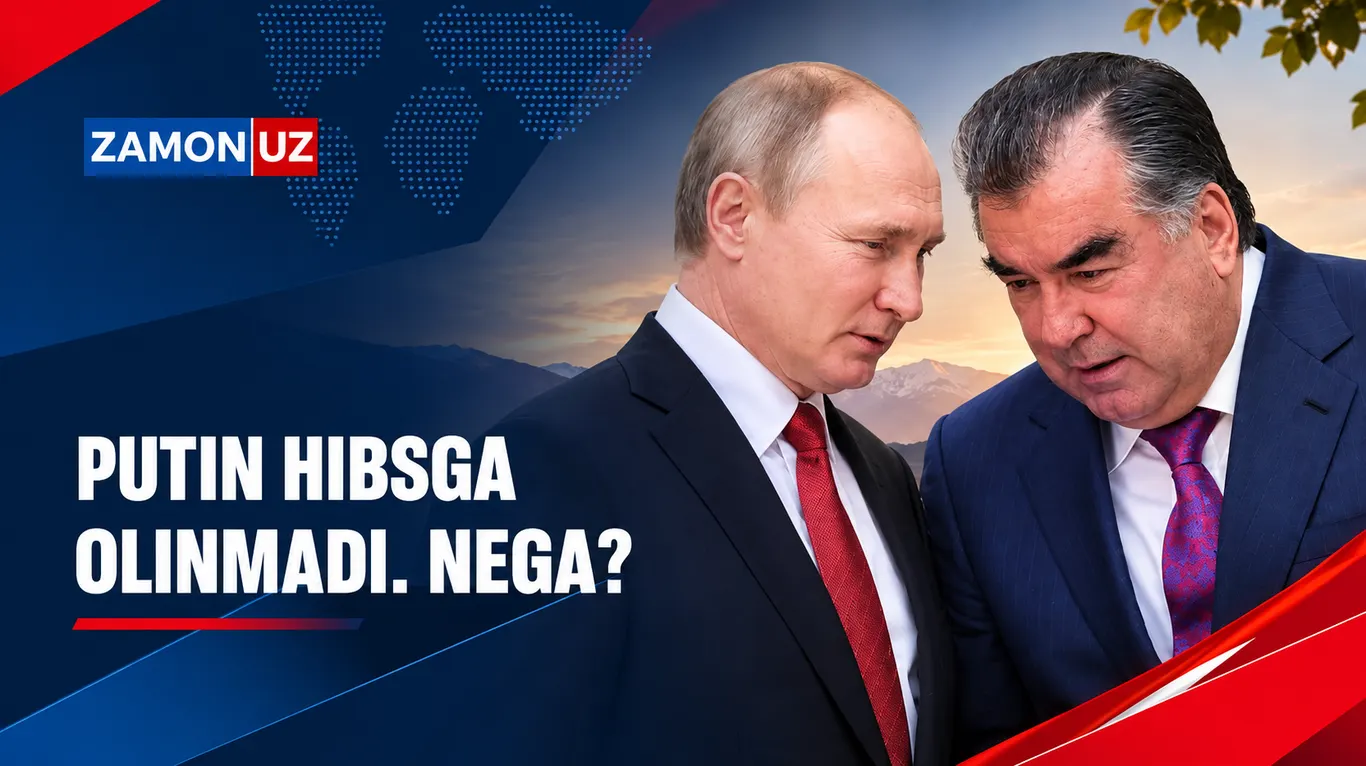
Putin went to Tajikistan last week. He was personally welcomed by the country's leader Emomali Rahmon. However, a few days later, Europe expressed its displeasure with Tajikistan. The reason was that Putin was not arrested in Tajikistan. Because Putin has an arrest warrant issued by the International Criminal Court. And Tajikistan is a member state of the Rome Statute, which established exactly this court.
So why did Tajikistan make such a decision? What role do relations with Russia play in this event? And most importantly, what does this decision mean for international law?
Why should Putin have been arrested?
First of all, let's go back to the beginning of the events. On March 17, 2023, the International Criminal Court based in The Hague issued an arrest warrant for Russian President Vladimir Putin. The court suspects Putin of responsibility for war crimes related to the unlawful deportation and transfer of children from occupied territories of Ukraine to Russia. This is not about the court's final verdict, but about the arrest warrant. Putin does not admit the charges, and Russia does not recognize the jurisdiction of the International Criminal Court. However, member states of the Rome Statute have an obligation to cooperate with the court and comply with its arrest requests. Tajikistan was one of such states.
This issue first came onto the agenda in October 2025. At that time, Vladimir Putin visited Tajikistan. Despite the existence of the International Criminal Court's arrest warrant, the Tajik government did not arrest him. On March 19, 2026, the relevant chamber of the International Criminal Court concluded that Tajikistan had failed to fulfill its obligations. The court also referred the matter to the Assembly of States Parties to the Rome Statute.
In defending its position, the Tajik side cited as justification that Russia is not a member of the Rome Statute and the legal grounds arising from relations and agreements between the two countries. However, the International Criminal Court did not find these arguments to be sufficient grounds for Tajikistan's failure to fulfill its international obligations.
Nearly eight months later, the situation repeated itself. On November 19–20, 2026, Putin again visited Dushanbe. He was received by Tajik President Emomali Rahmon. The two heads of state discussed economic, security, and other cooperation issues. But in the international arena, the main attention was focused on another matter: Putin had again come to Tajikistan but had not been arrested.
After Putin's visit, the European Union expressed its position. On November 22, a European Union representative stated that the EU regretted Tajikistan's again receiving Putin. According to Brussels, Tajikistan failed to fulfill its obligations under the Rome Statute. The European Union called on all states to cooperate with the International Criminal Court and to execute issued arrest warrants. But the most important part of the events was still ahead.
Tajikistan is withdrawing from the International Criminal Court
Against the backdrop of these events, Tajikistan sent an official notification of withdrawal from the Rome Statute. This means that the process of terminating the country's membership in the International Criminal Court system has begun. In the official notification circulated by UN Secretary-General António Guterres as depositary of the Rome Statute, it is recorded that Tajikistan's notification of withdrawal was received on November 20, 2026.
According to Article 127, paragraph 1 of the Rome Statute, a state's notification of withdrawal from this document takes effect one year after the date it is submitted to the UN Secretary-General. Therefore, Tajikistan's withdrawal from the Rome Statute will take effect on November 20, 2027. This means that until that date, the country remains a party to the Rome Statute and must fulfill its obligations under it.
It is noteworthy that Tajikistan ratified the Rome Statute on May 5, 2000. This means that after being a party to this international document for 26 years, the country is withdrawing from it.
It is difficult to analyze Tajikistan's decision in isolation from its relations with Russia. Russia is considered one of Dushanbe's main partners in the economic and security spheres. In addition, many Tajik labor migrants work in Russia. Military-political cooperation between the two countries is also based on strong ties.
From this point of view, maintaining close relations with Moscow is of important strategic significance for Dushanbe. However, there is no official evidence confirming that Tajikistan decided to withdraw from the Rome Statute specifically under Russian pressure. Therefore, the Russian factor can be considered one of the possible political reasons for this decision, but there is currently no basis to assess it as the direct cause of the decision.
On November 23, the European Union stated that it regretted Tajikistan's decision to withdraw from the Rome Statute. Brussels called on Dushanbe to reconsider this decision. The Assembly of States Parties to the International Criminal Court also expressed concern over Tajikistan's decision.
Arrest warrant for Putin and Lvova-Belova
The International Criminal Court issued an arrest warrant for Vladimir Putin in March 2023. The court suspects the Russian president of war crimes related to the unlawful deportation and transfer of children from occupied territories in Ukraine. A similar warrant was also issued for Maria Lvova-Belova, the Russian President's Commissioner for Children's Rights.
In September 2024, Putin visited Mongolia, a member state of the International Criminal Court's Rome Statute. However, Mongolia also did not execute the arrest warrant for the Russian president. This situation showed that the issue of implementing International Criminal Court decisions has become a complex political and legal problem for other states as well.
In short, this event surrounding Tajikistan has revealed a much broader issue than a simple diplomatic disagreement. On one side stands the International Criminal Court, striving to ensure accountability for international crimes, and on the other side are states that are also taking their own political, economic, and security interests into account.
Tajikistan's decision to withdraw from the Rome Statute will not eliminate this contradiction either. Because the country's withdrawal from the court will take effect in November 2027 and will not automatically annul international obligations that arose earlier.
Now the main question is: will Tajikistan's decision serve as an example for other states as well? Or, on the contrary, will international pressure on states regarding the implementation of International Criminal Court decisions increase? Time will show the answer to these questions.