If a nuclear war breaks out, where will the US Congress hide?
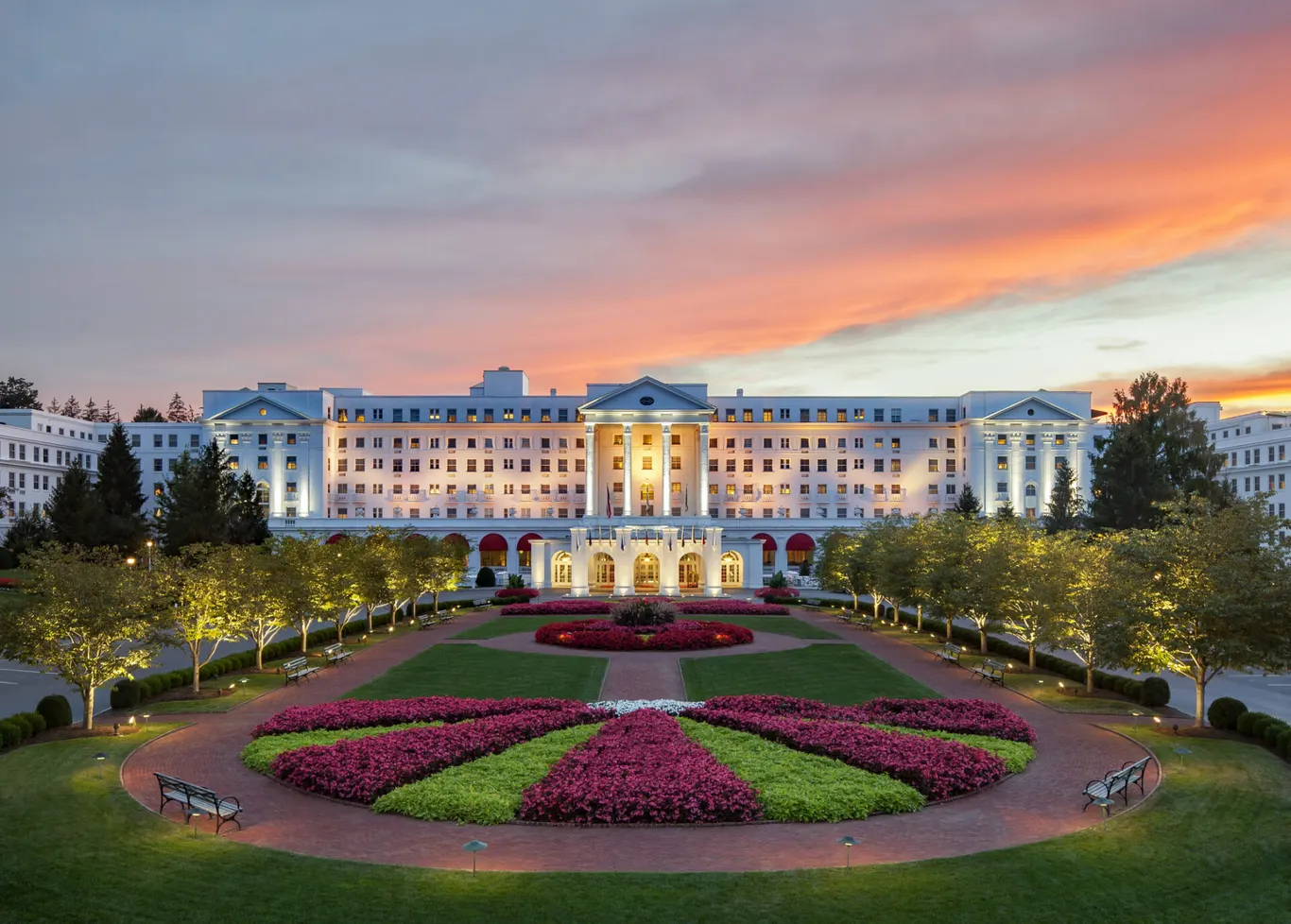
Beneath The Greenbrier, one of the magnificent hotels in the USA, there was a huge secret bunker hidden from the whole world for nearly 30 years. It was not an ordinary shelter.
THE SECRET BUNKER BUILT FOR THE US CONGRESS
The 1950s. The world was going through a period of intense confrontation between two powerful states – the United States of America and the Soviet Union. After the Second World War, a new threat appeared in the world: nuclear weapons. After the atomic bombs dropped on Hiroshima and Nagasaki in 1945, humanity had come to understand what devastating destruction such a weapon could cause.
Subsequently, a nuclear arms race began between the USA and the USSR. Both states started producing increasingly powerful bombs, long-range missiles, and new military technologies. For the American government, however, the threat was not limited to the destruction of cities. If Washington were hit by a nuclear strike, what would happen to the country's political governance system? After the President, ministers, and military leaders, how would the state's legislative branch function? It was precisely these questions that forced the US leadership to develop emergency plans.
In 1955, President Dwight Eisenhower instructed the Department of Defense to develop a plan for continuing Congressional operations in the event of a nuclear attack. The main goal of this plan was to ensure the continuity of state governance.
WHY WAS A HOTEL CHOSEN?
The US government needed a location that was simultaneously far enough from Washington, yet situated in an area where government officials could be quickly transported when necessary. For this purpose, the US Army Corps of Engineers was tasked with finding a suitable location for building a special underground facility. As a result, The Greenbrier hotel, located in the town of White Sulphur Springs in the state of West Virginia, was an excellent choice. This decision was not accidental.
First, the hotel was located approximately four to five hours by car from Washington. Second, the area was relatively remote and mountainous, considered convenient for placing such a facility. Third, The Greenbrier had a history of prior connections with the US government. Interestingly, this hotel had also been used for state needs during the Second World War. In 1942, the US Army took it over for state needs and converted it into a 2,200-bed military hospital. Subsequently, it began operating as a hotel again.
In 1957–1958, the project began to be implemented, and the main construction work peaked in 1959. The project was officially presented as the construction of a new wing of the hotel — West Virginia Wing. From the outside, it looked like an ordinary construction project aimed at expanding the hotel and building new conference and exhibition halls. But the work being carried out underground served an entirely different purpose.
One of the workers who participated in the bunker's construction, Randy Wickline, later recalled this process, saying that an enormous amount of concrete was delivered to the construction site. According to his calculations, the Superior Supply company delivered concrete to the construction site 4,000 times over approximately two and a half years. In total, around 50,000 tons of concrete were used. These numbers were so large that even local residents began to ask questions about the true purpose of the construction.
110 urinals were installed in the new section of the hotel. Some construction workers and hotel staff who saw this did not understand why so many sanitary fixtures were needed. In reality, however, the area they thought was an exhibition hall was intended to accommodate hundreds of congressmen and staff in the future.
During the construction process, excavation work, installation of thick reinforced concrete structures, heavy steel doors, and special communications systems were carried out. The bunker was not an ordinary shelter. It was planned that people there would not only hide, but also work, eat, receive medical care, and continue the country's political governance. The project was initially called Project X. Later, the names Project Caspar and Project Greek Island were also used. Today, this facility is primarily known as Project Greek Island.
HOW WAS THE BUNKER BUILT AND WHAT WAS INSIDE IT?
By 1962, construction work was completed. As a result, a huge three-story underground facility consisting of 153 rooms appeared beneath the hotel. It was officially called the Government Relocation Facility, meaning a center for relocating and accommodating the government. The bunker was designed to accommodate 535 members of Congress and approximately 565 support staff. In total, conditions were created for nearly 1,100 people.
Most interestingly, separate assembly halls were built here for both chambers of the US Congress — the House of Representatives and the Senate. In addition, there was also a special hall for joint sessions of the two chambers. This means that even after a nuclear attack, it was planned for Congress to continue its law-making and state governance functions.
The bunker had 18 communal dormitory rooms. Two-tier iron bunk beds were installed in them. Rather than personal comfort, the focus was on accommodating as many people as possible in one place. A 400-person dining hall, food storage, medical center, operating room, and separate sanitary areas were also organized here.
But one of the most important parts of the bunker was its independent life support system. It had a separate power station, water reserves, and air purification systems. Sources note that the power supply for 1,100 people was designed for approximately 40 days, and the food reserve for 60 days. This means that even if contact with the outside world were cut off, the bunker was supposed to be able to operate independently for a certain period.
In addition, a television studio was also organized here. In its background was a decoration depicting the US Capitol building. This was because it was considered important to show citizens in other parts of the country that Congress was continuing to operate and to demonstrate that state governance had not completely disappeared. The most important task here was not only to preserve the lives of politicians, but also to ensure the continuity of state institutions.
HOW WAS SUCH A SECRET KEPT FOR 30 YEARS?
Building such a huge facility was a major undertaking. But keeping it secret for decades proved to be an even more complex task. After all, this was a facility where hundreds of people were supposed to be accommodated, which constantly required technical maintenance and stored large amounts of supplies. The government solved this problem in its own unique way.
A company called Forsythe Associates was used to service the secret bunker. Officially, this company was engaged in servicing televisions and audiovisual equipment in the hotel. But its real task was entirely different. Company employees were engaged in monitoring the technical condition of the bunker, keeping communication systems operational, and updating necessary supplies. One of their leaders was Paul Fris Bugas.
Interestingly, while other hotel staff usually reported directly to the hotel administration, Forsythe Associates employees operated through a separate organization. Their work activities were also quite different from ordinary television repair services. Hotel historian Robert Conte later recalled that he had noticed this company's activities, but had not immediately understood its true purpose.
If we look at this situation today, the most interesting aspect of the secrecy is that building a separate military base was not necessary to hide the bunker. On the contrary, it was placed within the infrastructure of a hotel that people constantly entered and exited. Guests relaxed upstairs, played golf, and attended conferences. Beneath them, however, a facility serving an entirely different purpose was kept in a state of readiness.
Local residents also played a role in keeping this secret. Some residents of White Sulphur Springs noticed the unusual nature of the construction, and various speculations and rumors spread. But not talking about it to outsiders became a habit. In a historical investigation published by Smithsonian magazine in 2024, it was specifically noted that local residents kept silent during that period and did not discuss the secret for years.
WAS THE BUNKER EVER ACTUALLY USED?
October 16, 1962. Clear photographs showing that the Soviet Union had placed nuclear missiles in Cuba were presented to US President John Kennedy. Thus began one of the most dangerous international confrontations in history, known as the Cuban Missile Crisis. For several days, the world lived under the threat of nuclear war.
Interestingly, the The Greenbrier bunker's construction was completed on precisely this date. This was a coincidental timing, but historically a very symbolic situation. Although the bunker was prepared to accommodate the US Congress after a nuclear attack, the full membership of Congress was never evacuated there. In other words, the facility was never actually tested in its primary function.
However, this does not mean it remained inactive. Forsythe Associates employees were responsible for keeping the facility operational throughout the entire period. Food and other supplies were updated here, technical systems were checked, and electrical and communication equipment was monitored. The bunker's main purpose was to be ready for the US Congress to continue its operations even in the most severe circumstances.
By the 1990s, the political situation in the world had changed. The Soviet Union collapsed, and the Cold War ended. The confrontation between the two powerful states that had once lived under the threat of nuclear conflict was no longer at its former level. But the secret bunker beneath The Greenbrier still existed. And the general public did not know about its true purpose.