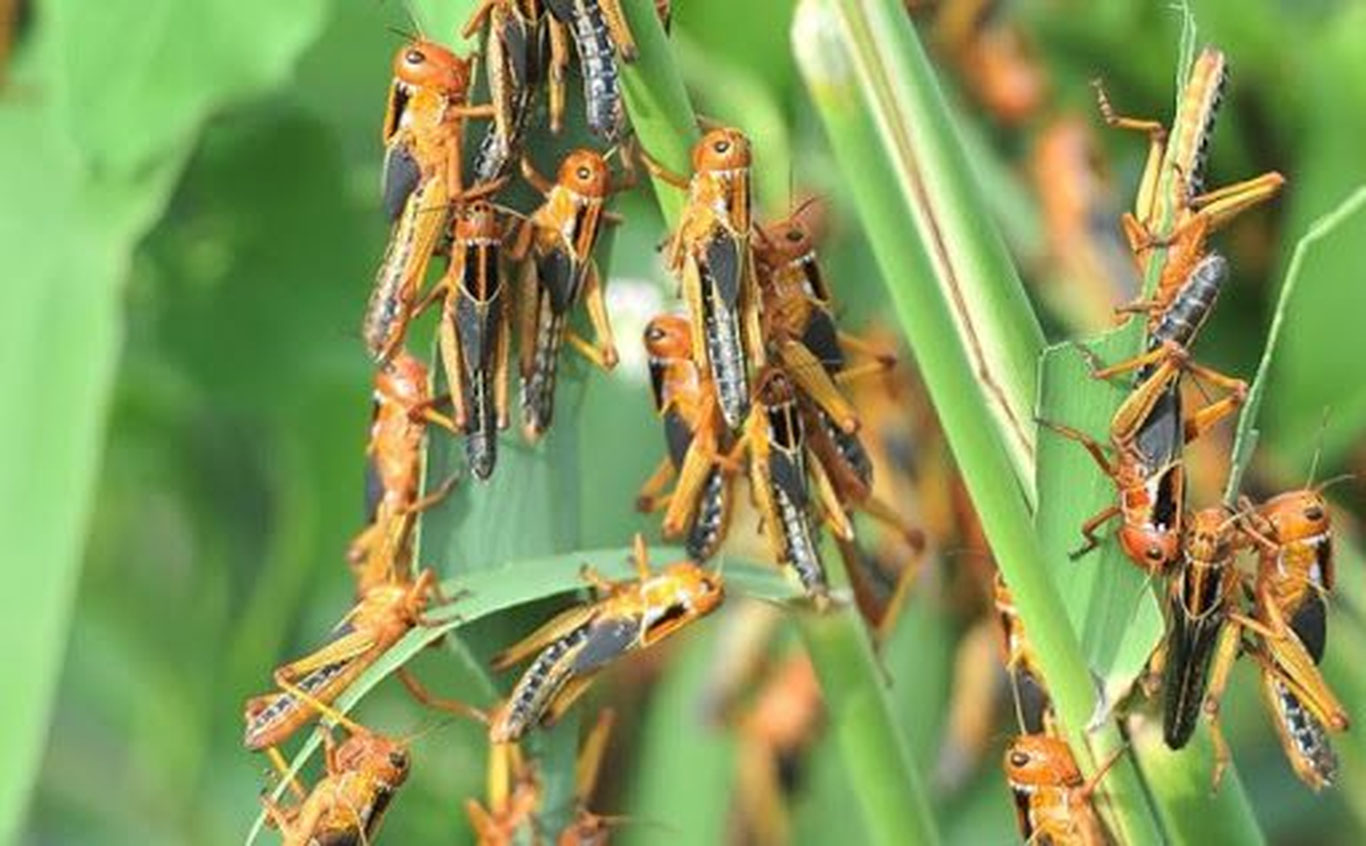
The Moroccan locust is spreading in Uzbekistan.
Surveillance and control have been intensified in areas where locusts have appeared, and chemical treatment operations are being carried out.
Measures to combat harmful locusts have begun in Uzbekistan. The Agency for Plant Quarantine and Protection reported on this.
According to information, the hatching of harmful locusts from eggs was detected from March 22 in Kashkadarya and Surkhandarya regions, from March 24 in Samarkand region, and from March 28 in Jizzakh region. Currently, mainly 1-2 year old Moroccan locusts are spreading.
Specialists are taking necessary measures to prevent the insects from reaching population crop fields and orchards. Chemical treatment works are being carried out in areas where locusts have been identified, and monitoring and control have been intensified.
It is noted that traditionally, chemical control work against locusts begins annually from oasis areas and concludes in the territories of the Republic of Karakalpakstan.
Currently, 53 special sprayer vehicles, 194 sprayer tractors, over 1000 motorized hand sprayers, 25 water carrier vehicles, and 66 motorcycles have been involved in the control measures. Furthermore, reserves of fuel-lubricants and chemical agents have been formed.
It is planned to carry out chemical treatment on a total area of 651.8 thousand hectares in 2026. To date, monitoring has been conducted on over 22 thousand hectares, and chemical control has been carried out on 3,641 hectares.
To effectively organize the fight against locusts, special headquarters have been established in all regions and rapid response teams in districts. Nearly 700 specialists have been involved in monitoring and control work across the republic.
Specialists note that there are about 200 species of locusts in the country, and control is carried out annually against 6-8 species of harmful, swarming locusts. During the season, the services operate in 24/7 mode.
The agency's message asks citizens to report areas where harmful locusts are spreading via phone numbers 1288 or 71 202 10 00.
It is emphasized that chemical treatment work is carried out free of charge.