Where is Amir Temur's coffin?
Amir Timur passed away on February 18, 1405. His death was kept secret for a period to prevent unrest among the soldiers, and he was buried on March 18.
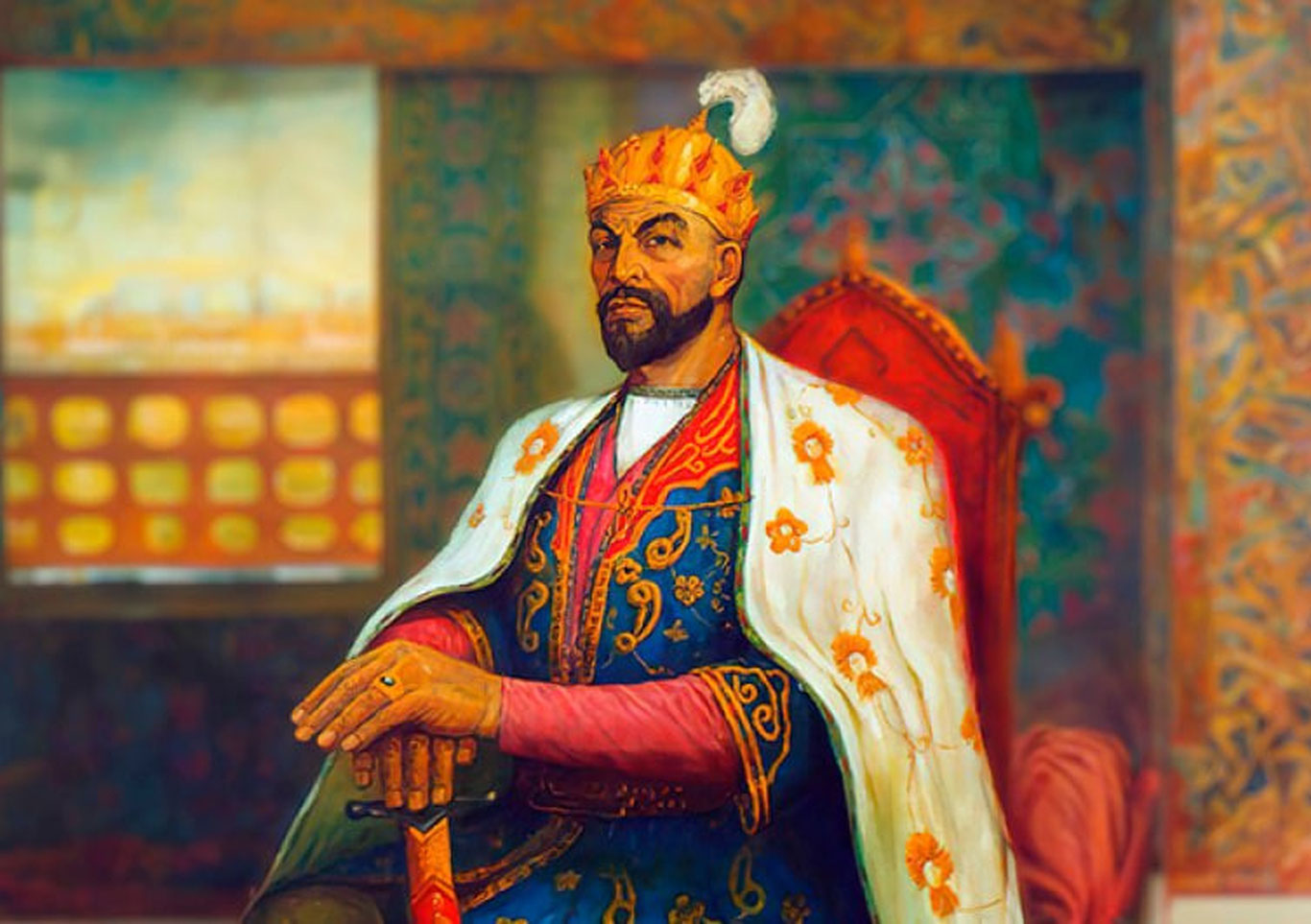
Amir Timur passed away on February 18, 1405. His death was kept secret for a certain period to prevent unrest among the soldiers and he was buried on March 18.
Amir Timur ibn Amir Taraghay was born on April 8, 1336, in the village of Khoja Ilghor in the Kesh (Shahrisabz) region. His father, Amir Muhammad Taraghay, was a bek from the Barlas tribe, a brave warrior, a patron and enthusiast of scholars and the virtuous, and a supporter of the learned.
According to historical sources, Sahibkiran Amir Timur died on February 18, 1405, in the city of Otrar, located in present-day Kazakhstan. His death was kept secret for a certain period to prevent unrest among the soldiers, and on March 18, the commander's body was brought to Samarkand in a special wooden coffin and buried in the Muhammad Sultan mausoleum, which was built on Sahibkiran's own order for his beloved grandson.
Later, during the time of Mirzo Ulughbek, after the construction of a separate mausoleum for Sahibkiran was completed, the body was transferred there. Subsequently, Timurids such as Miranshah Mirzo, Shahrukh Mirzo, Miranshah Mirzo, Mirzo Ulughbek, Muhammad Sultan, as well as Sahibkiran's spiritual mentor Mirsaid Baraka, were buried in this mausoleum.
In accordance with a joint decree issued in April 1941 by the government of the Uzbek SSR and the Central Committee of the Communist Party on conducting anthropological examinations in the mausoleums of Samarkand on the occasion of the Alisher Navoi anniversary, the graves of Amir Timur and the Timurids were opened from June 16 to 21 of that same year. After the excavations in the mausoleum were completed, the bones of Amir Timur, Miranshah, Shahrukh, Ulughbek, and Muhammad Sultan, exhumed from the graves, were taken to Tashkent in special boxes. Anthropologist M.M. Gerasimov created documented portraits of them based on these bones.
By the end of 1942, after the bones exhumed from Amir Timur's mausoleum had been studied, they were reburied. However, Amir Timur's coffin, which was removed from the grave along with the bones, as well as the remnants of the Timurids' shrouds, Mirzo Ulughbek's clothing, the mummified body parts of the deceased, and their hair and beards, were not returned to their place.
Although the Arab historian Ibn Arabshah recorded that Amir Timur was buried in a steel coffin made by Shirazi masters, this information turned out to be incorrect. It became known that the coffin was made of juniper wood.
The coffin was restored in the 1970s under the leadership of Professor A. Abdurazzoqov, an employee of the Institute of Archaeology of the Academy of Sciences of the Uzbek SSR, and handed over to the Samarkand State Museum-Reserve. The coffin was put on display in the former building of the State Museum of the History of Culture of Uzbekistan until 2009. After that building was dismantled, it was stored in the basement of the Afrosiyob Museum until 2018.
Currently, the coffin is on display in the "History of the Study of Amir Timur's Mausoleum" exhibition at the State Museum of the History of Culture of Uzbekistan in Samarkand. The lid of this coffin and a piece of fabric that covered it are kept in the funds of the "Samarkand" State Museum-Reserve.
Rustam Iqbol