Donald Trump and Xi Jinping will meet in Beijing.
The leaders of the two countries are expected to discuss trade, Taiwan, the Iran war, and technological competition issues at the summit in Beijing.
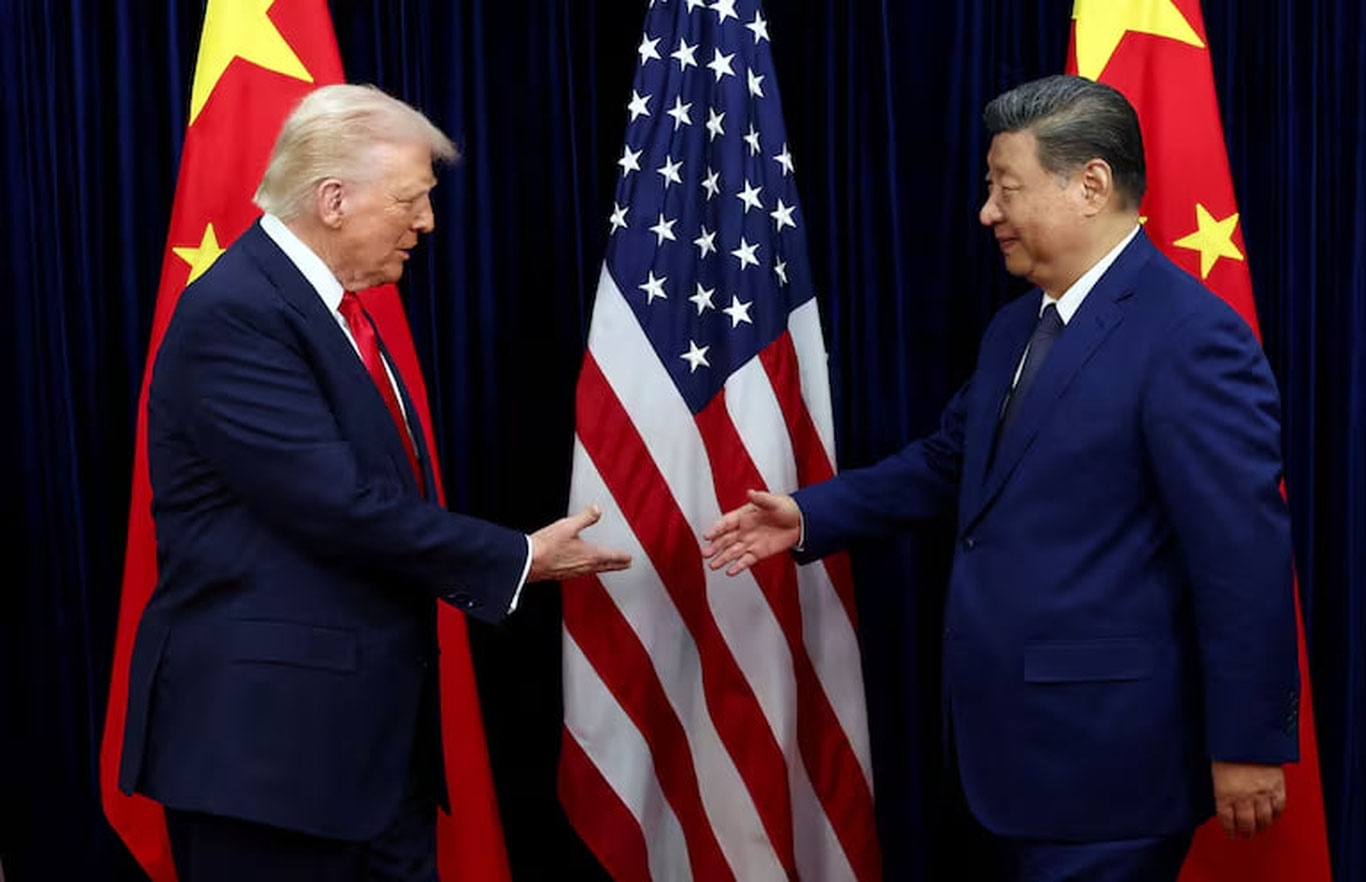
US President Donald Trump will hold high-level negotiations in Beijing with Chinese President Xi Jinping.
According to Al Jazeera, the summit, taking place against the backdrop of trade wars, tensions around Taiwan, artificial intelligence, the conflict related to Iran, and concerns over global supply chains, is being assessed as one of the most important meetings in international politics.
This will be Trump's first visit to China since 2017. The leaders of the two countries are expected to meet on Thursday and Friday to discuss issues related to trade, technology, geopolitical security, and energy markets.
The summit is being organized at a time when the situation related to Iran has escalated. The US has been trying for several weeks to persuade Beijing to exert influence on Tehran and encourage it to return to negotiations. This is because China is the main buyer of over 80 percent of the oil exported by Iran.
Additionally, Washington is calling on China to support efforts to reopen the Strait of Hormuz and restore shipping safety in the region. The conflict related to Iran has increased pressure on trade routes in the Persian Gulf and global energy markets.
Before departing for Beijing, Trump stated that he would have a "long conversation" with Xi regarding the Iran issue. At the same time, he emphasized that trade issues would remain the central topic of the visit.
According to analysts, Trump will try to achieve results in the negotiations that can be presented as an "economic victory" from a domestic political standpoint. Specifically, Washington may demand that China increase imports of Boeing aircraft, soybeans, beef, and other American products.
Beijing, for its part, will seek to achieve a relaxation of US restrictions on advanced semiconductors and chip manufacturing technologies. In recent years, the US has imposed a series of bans on the export of high technologies aimed at limiting the growth of China's military and artificial intelligence capabilities.
One of the main economic points of contention at the summit is expected to be the issue of rare earth metals. China controls nearly 90 percent of global rare earth processing. These resources are crucial for the production of semiconductors, electric vehicles, military equipment, and electronics.
Washington expects Beijing to stabilize the export of these materials. This is because export restrictions imposed by China have increased pressure on the US automotive and aerospace industries.
Furthermore, the Taiwan issue remains one of the most acute and sensitive topics at the summit. Beijing considers Taiwan a part of its territory and has increased military activity around the island in recent years. The US, meanwhile, continues to support Taiwan's defense capabilities based on the "Taiwan Relations Act."
According to experts, the wording used in the statements by Trump and Xi after the summit will also hold significant geopolitical importance. In particular, the US arms sales to Taiwan and Washington's policy towards Taipei will remain in focus.
Additionally, Trump may also raise the issue of Hong Kong media magnate and democracy advocate Jimmy Lai. He was convicted under Beijing's national security law.
As noted by Salvador Santino Regilme, an expert from Leiden University, the US and China remain simultaneously strategic competitors and economically strongly interdependent states.
"The United States relies on China's manufacturing capacity and cheap products. China, in turn, needs the US consumer market, technologies, and the stability of the global financial system," he said.
According to analysts, the likelihood of a comprehensive trade agreement at the end of the summit is low. However, the parties may reach limited agreements that create a basis for a temporary easing of tariffs, rare earth metal exports, and future negotiations.