Xi Jinping is building a military base in the land of the Uyghurs.
China is building a new military base in a region considered close to Central Asia, inhabited by Uyghurs. According to analysts, China intends to actively use this base for protecting its nuclear program and as a retaliation system. The base has been under construction for six years. It is also reported that China has built a military base in one of the Central Asian countries.
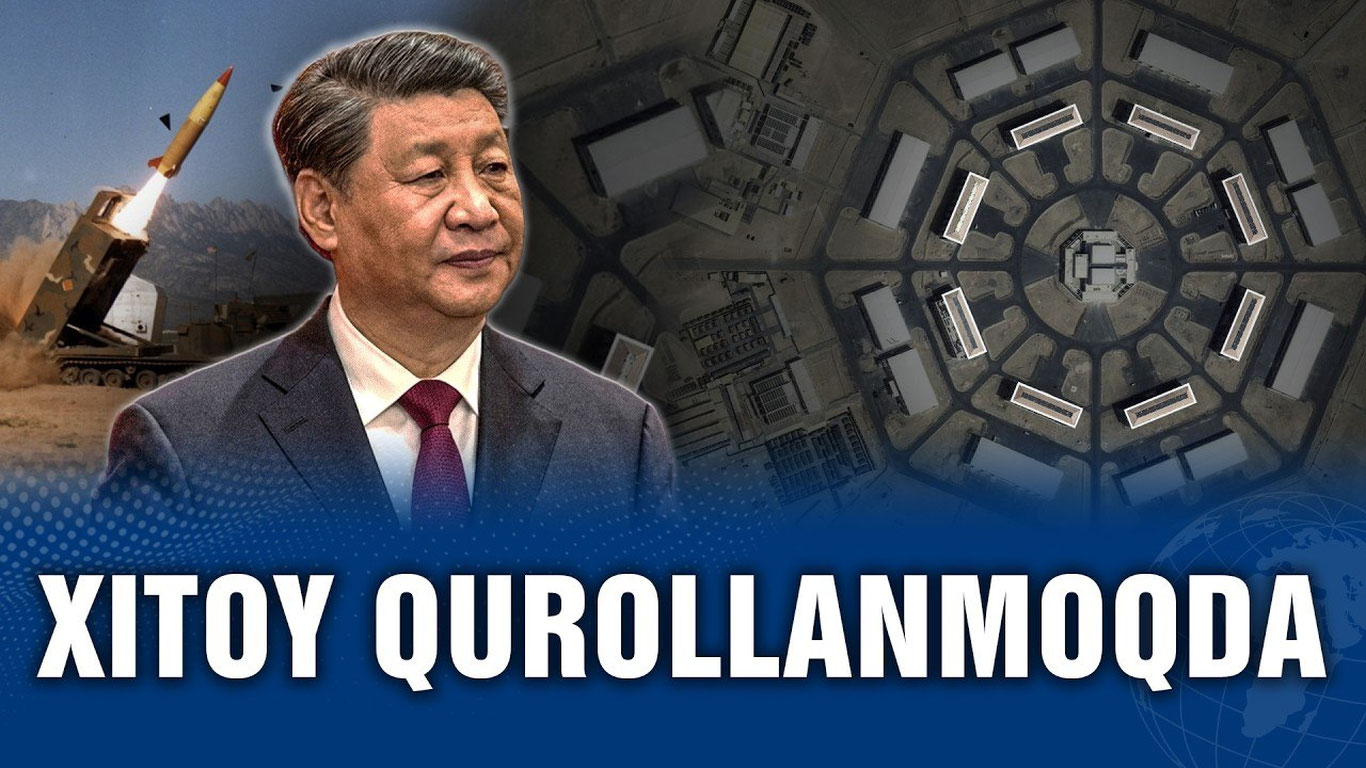
The People's Republic of China is building a large military base in the middle of the desert in the Xinjiang province, where Muslims live. According to Reuters, this Chinese military base is aimed at preserving Beijing's ability to launch a retaliatory strike even in the event of a potential first nuclear strike by the United States.
According to reports, intercontinental ballistic missiles produced by China can reach any territory of the United States. Satellite images analyzed by Reuters show that Beijing is building an extensive network of launch pads, bunkers, and communication centers around the shafts where long-range nuclear missiles are deployed.
China's New Defense Network in Xinjiang
China has built over 80 launch pads and three octagonal-shaped military facilities in the Xinjiang Uyghur Autonomous Region in the country's northwest, near the Hami nuclear missile field.
The images show over 80 concrete pads intended for China's expanding mobile missile complexes and air defense systems. Additionally, some facilities may serve electronic warfare, satellite communications, and command operations.
According to three security analysts who worked with Reuters, these previously unreported constructions indicate the expansion of robust infrastructure designed to protect and manage China's land-based nuclear forces.
They assess that this network is aimed at ensuring Beijing's "second strike" capability. This indicates that the nuclear competition between the US and China is entering a new phase at a time of rising tensions around Taiwan.
Project Covering Thousands of Square Kilometers
According to Alexander Neil, an expert at the Pacific Forum analysis center in Hawaii, the new infrastructure covers thousands of square kilometers of desert beyond the missile shafts.
"We are seeing the construction of infrastructure on a massive scale, extending far beyond the area of the missile shafts. If the capabilities of these facilities are confirmed, China's strategic nuclear deterrence potential will be significantly enhanced," he says.
China's official policy is based on the principle of minimal but credible nuclear deterrence. This policy stipulates that the country will not be the first to use nuclear weapons, but can respond if attacked.
The People's Liberation Army also has the capability to deploy nuclear weapons via submarines and military aircraft. Nevertheless, the missile shafts in Xinjiang and Gansu remain the mainstay of China's nuclear forces.
Why is China's Nuclear Program in Focus?
According to analysts, one of the most closely watched aspects of the military modernization program under President Xi Jinping is precisely nuclear armament.
Western diplomats accuse Beijing of not being sufficiently transparent about its nuclear capabilities and plans. US attempts to establish dialogue with China on this issue have yielded no significant results.
One of China's key principles is the "no first use" policy. However, some Western diplomats and experts say Beijing might use nuclear pressure tools to limit foreign intervention in the event of a conflict over Taiwan.
In May of this year, Xi Jinping warned US President Donald Trump that if disagreements over the Taiwan issue are mismanaged, the two countries could reach a "dangerous point."
At the center of the new infrastructure are two octagonal-shaped military complexes built over the past six years in eastern Xinjiang.
One is located approximately 140 kilometers from the Hami missile field, and the other about 230 kilometers away.
Satellite images show that these facilities contain living quarters for military personnel, areas for large military equipment, armored bunkers, and weapons depots.
Furthermore, the facilities are connected to the Hami missile shafts via airfields and railway lines.
Images also recorded exercises involving large military equipment conducted around the northern octagonal facility in May and April.
Camouflaged launch positions, large tents, and air defense missile systems are also visible within the desert.
US: China Rapidly Expanding Nuclear Arsenal
US officials and arms control experts emphasize that China is expanding its nuclear capabilities faster than any other country in the world.
According to the latest Pentagon report, China could possess 1,000 nuclear warheads by 2030.
The report states that approximately 100 intercontinental ballistic missiles are deployed at the country's three main missile fields.
China is also developing an early warning system based on Huoyan-1 satellites. According to the Pentagon, this system can detect a launched intercontinental missile within 90 seconds and report it to a command center within 3-4 minutes.
This would allow China to launch a retaliatory strike before its missiles come under attack.
This is not the only report about China building a military base abroad. In 2024, the British publication The Telegraph published an analysis with satellite images showing China building a military base in Tajikistan.
According to the publication, the military facility, located at an altitude of 13,000 feet among the mountains of Tajikistan, has observation towers and a large military area for regular training exercises for the troops of both countries. The Telegraph stated that military personnel from both nations are stationed at this location.
According to The Jamestown Foundation, Tajikistan continues to officially deny the fact of a Chinese military base being built on its territory, but China is indeed significantly increasing its military presence in the country.
China already has military facilities in Tajikistan. About ten years ago, a Chinese monitoring radio station appeared in this country to observe the actions of the Western coalition in Afghanistan. Additionally, China had another facility in the Gorno-Badakhshan Autonomous Region, a volatile area of Tajikistan. Officially, both facilities are under the control of the Tajik government, but it is said that they actually belong to China.
In 2016, a security agreement was signed between China and Tajikistan. Emphasis is also placed on the fact that the threat to Tajikistan may have increased after the Taliban came to power in Afghanistan. According to analysts, after the Taliban came to power in Afghanistan, Tajikistan requested military assistance from China.