What did Trump promise the prince?
It appears that a new nuclear arms race is beginning in the world. Secret documents obtained by CNN and insiders in the White House indicate that a deal has been exposed that could turn global security upside down. The Donald Trump administration has given preliminary approval for Saudi Arabia to enrich uranium within the country. The most terrifying part is that this deal could be implemented without international security controls! Negotiations have already been concluded, but the document is still on the White House desk awaiting a signature. Why? Let's analyze the games behind the curtain.
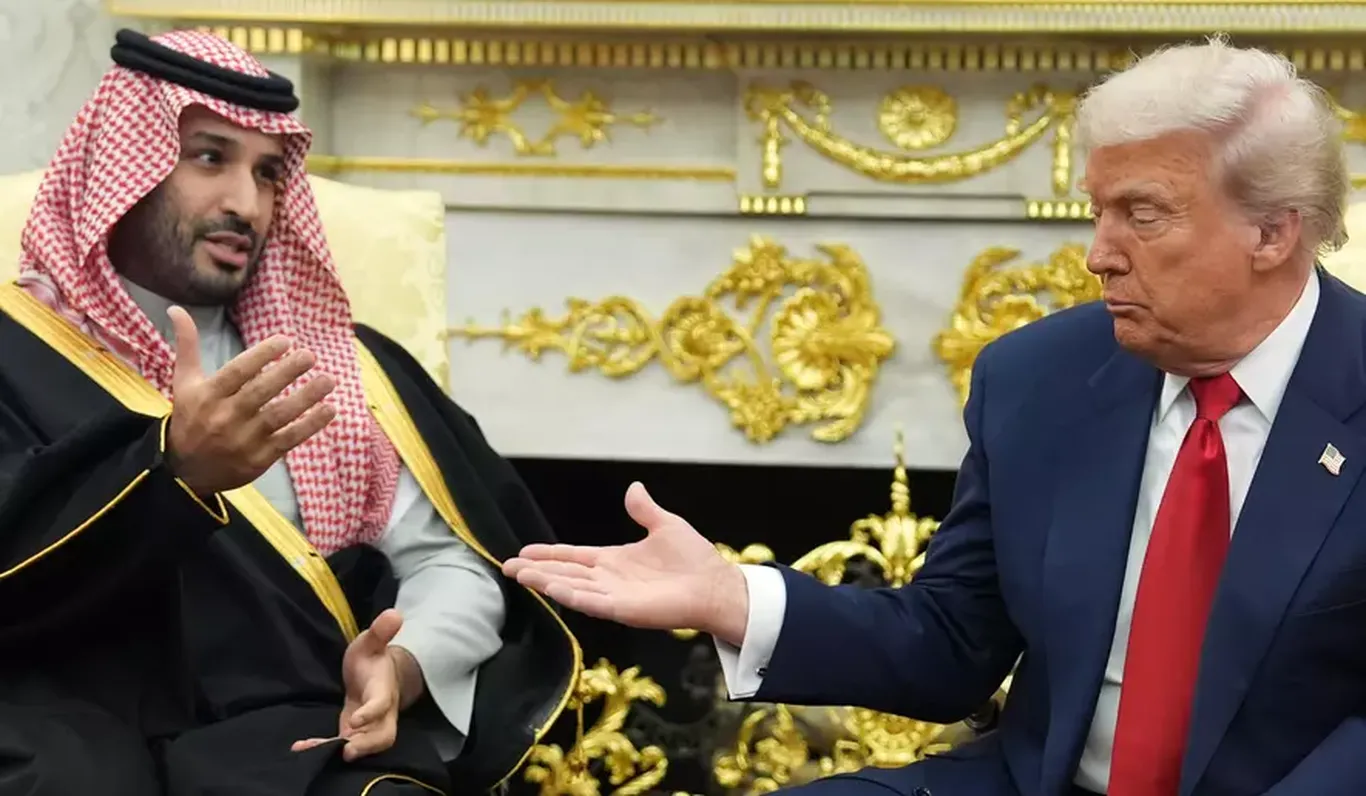
According to documents reviewed by CNN and sources familiar with the matter, the Trump administration has tentatively agreed to allow Saudi Arabia to enrich uranium without implementing international security measures aimed at preventing the development of nuclear weapons.
A draft nuclear agreement outlining U.S. support for Riyadh's civilian nuclear program is still awaiting President Donald Trump's signature, even though negotiations between the U.S. and Saudi Arabia concluded in October 2025.
According to two sources familiar with the matter, the ongoing war with Iran has played a specific role in delaying Trump's signature. According to Trump, this war was partly initiated to prevent Tehran from using its enriched uranium to create a nuclear weapon. Some lawmakers on Capitol Hill (Congress) believe the Trump administration is stalling the signing because these agreements could face a bipartisan resolution of disapproval that would block them from taking effect, according to one source.
Experts told CNN that if strict security measures are not established, this agreement could open the door for Saudi Arabia to create nuclear weapons. The country's Crown Prince Mohammed bin Salman had previously threatened that if Iran, his state's main regional rival, acquired a nuclear bomb, he would also build his own nuclear weapon.
According to four sources, these documents, which include an agreement on civilian nuclear cooperation and an agreement on mandatory nuclear security measures, have not yet been sent to Congress for review. Federal law requires the White House to do so as soon as the documents are signed.
The White House did not respond to questions about these agreements and instead directed CNN to a statement by Energy Secretary Chris Wright announcing the conclusion of negotiations in October 2025.
At the time, Wright said: "We have reached an agreement on civilian nuclear cooperation."
"Together with bilateral security agreements, we want to expand our cooperation, bring American nuclear technology into Saudi Arabia, and remain firmly committed to the non-proliferation obligation," said Chris Wright.
The Saudi Arabian embassy in Washington did not respond to a request for comment.
According to a source familiar with the matter, the Trump administration earlier this year briefed some representatives on Capitol Hill on the key outlines of the Saudi nuclear agreements, and it was stated at the time that the agreement would include a special provision allowing for a certain degree of uranium enrichment and/or plutonium reprocessing within the country. The source emphasized that this is an unprecedented situation for such an agreement.
Two sources told CNN that the rule on uranium enrichment includes conditions set by the U.S., but the details of potential restrictions remain unclear.
According to an authorization report submitted to Congress last year by the U.S. administration and a letter from the State Department to lawmakers in May, reviewed by CNN, the draft agreement does not require Saudi Arabia to adopt a standardized enhanced nuclear safeguards agreement with the International Atomic Energy Agency (IAEA) known as the "Additional Protocol." Instead, the safeguards agreement will be solely between the U.S. and the kingdom.
In its 2025 authorization report to Congress, the administration emphasized that the draft U.S.-Saudi bilateral safeguards agreement "applies additional safeguards and inspection measures in the most sensitive areas... enrichment, conversion, fuel fabrication, and reprocessing." Without providing specific details, the report stated that it would play a role in protecting the Saudi nuclear program and "the IAEA will have the necessary tools for its work," but the agency would not have the standardized inspection rights implemented through the Additional Protocol.
Dan Joyner, a nuclear regulatory consultant and law professor at the University of Alabama, said he "does not independently see the absence of the Additional Protocol as a cause for concern." According to him, the U.S.-Saudi bilateral agreement "is a reasonable way to supplement Saudi Arabia's existing IAEA safeguards, although its adequacy ultimately depends on terms that have not yet been announced."
However, Striker emphasized that even if such a facility is established under American control, there is no completely safe way to allow uranium enrichment or reprocessing on Saudi soil.
"You cannot be sure that the Saudis will not try to nationalize this facility, i.e., turn it into state property," he said. "The U.S. president in power at that time would face the choice of whether to bomb this facility to prevent a nuclear explosion or a similar risk."
Striker believes that Saudi technicians and scientists working on uranium enrichment centrifuges could also apply their knowledge at other secret facilities. Pakistan's nuclear weapons program began in a similar way — scientist Abdul Qadeer Khan is believed to have started Pakistan's program based on centrifuge drawings from a European company that had hired him. Khan is also believed to have shared his knowledge with Iran, Libya, and North Korea. The Pakistani government claims Khan acted independently in selling the technology.
Although the documents are ready, there are two serious reasons why the U.S. president has not yet picked up his pen:
First, the flames of war with Iran: As Trump himself emphasized, at a time when a war was started to prevent Tehran from enriching uranium and creating a nuclear bomb, granting Saudi Arabia the same right is like adding fuel to the fire.
Second, Congressional opposition: Lawmakers on Capitol Hill are accusing Trump of deliberately stalling. The reason is that as soon as the agreement is signed, the U.S. Congress is ready to trigger a resolution that could completely block the deal with bipartisan votes!
By law, the White House must immediately submit any signed civilian nuclear agreement (Section 123 Agreement) to Congress. But so far, this has not been done.
Insiders say that when U.S. officials briefed members of Congress behind closed doors, everyone was astonished. Because a "special agreement" had been prepared granting Saudi Arabia the right to enrich uranium and reprocess plutonium on its territory. This is a completely unexpected and unprecedented situation in international practice!
Uranium enrichment and plutonium reprocessing are the only ways to create the core of an atomic bomb. Dozens of countries with nuclear power plants do not enrich uranium themselves; they buy it in sealed containers from the U.S. or Russia. Saudi Arabia wants to produce it itself! And this is driven by the previous threat from Crown Prince Mohammed bin Salman.
The biggest concern is that the new document does not require Saudi Arabia to sign the enhanced "Additional Protocol" agreement with the UN nuclear watchdog — the IAEA! Oversight will be limited solely to bilateral communication between the U.S. and Saudi Arabia.
This situation is completely opposite to the 2009 U.S.-UAE agreement. The United Arab Emirates at the time completely renounced nuclear enrichment and agreed to IAEA oversight, which became known as the "Gold Standard" in the world. Washington now intends to break this standard with its own hands.
In its report, the U.S. administration is trying to reassure by saying "the IAEA will still participate in the process and will have the necessary tools", but experts are not convinced.
The paper on Trump's desk is not just an agreement, but a detonator for a new balance of power in the Middle East. If this document is signed, the world will wake up to a completely different nuclear reality!