In Uzbekistan, 5 interregional courts will be established starting from 2027.
President Shavkat Mirziyoyev approved the draft of the "Fair Justice – 2030" strategy and signed a decree aimed at developing the judicial system.
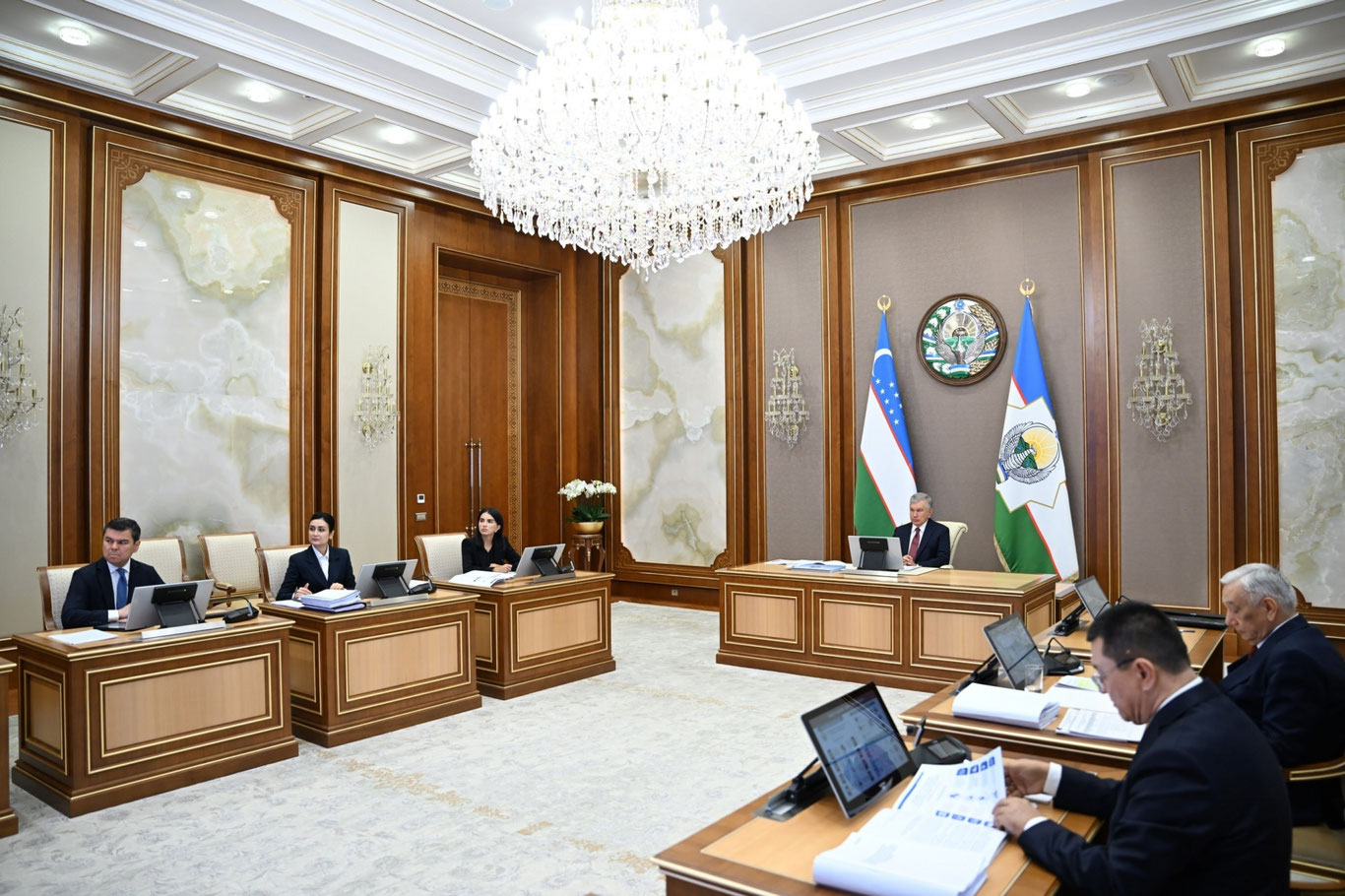
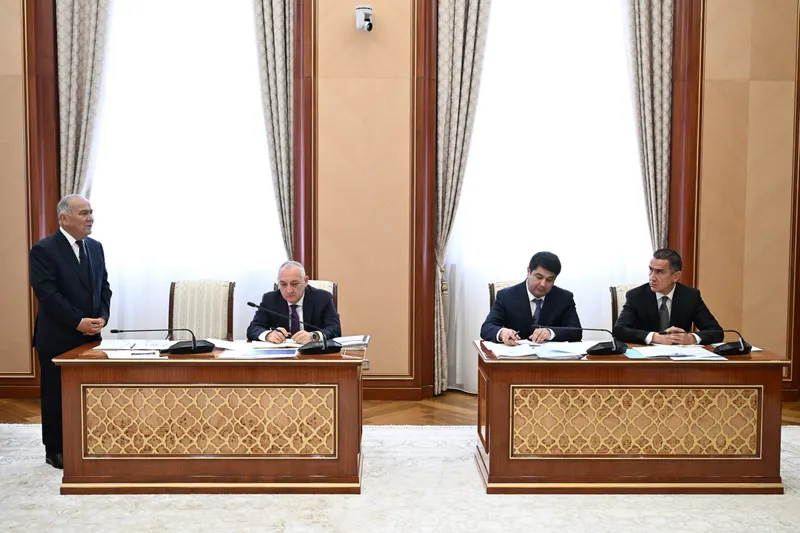
President Shavkat Mirziyoyev held a meeting with the heads of the judicial system to discuss the results of judicial and legal reforms and priority tasks in the field. At the meeting, the draft of the “Fair Justice – 2030” strategy aimed at developing the activities of courts until 2030 was presented.
The strategy was developed based on proposals from the population, dialogues with scientists, practicing lawyers, and advocates, as well as advanced foreign experience. It defines 57 tasks, 160 specific measures in the Action Program for 2026–2028, and 33 goals to be achieved by 2030.
In order to increase the impartiality of reviewing decisions of lower courts, 5 interregional courts will be established starting July 1, 2027.
In this case, appellate and cassation instances will be retained in regional courts, while the powers of the supervisory instance will be transferred to interregional courts. This is aimed at putting an end to the practice of a court reviewing its own decision and reducing the need for citizens to travel to the capital in search of justice.
In order to bring courts for civil cases closer to the population, such courts will be gradually established in almost all districts and cities by 2030, depending on need.
Also, in all courts, access to information, submission of applications, and use of digital services will be ensured based on the “single window” principle.
If an application submitted to a court falls under the jurisdiction of another court, it will not be returned to the citizen. The court itself will send the application to the relevant court. If minor deficiencies are identified in the application, the court will actively assist the citizen in resolving them.
To promptly resolve economic disputes, the “proactive management of economic cases” standard will be introduced. This procedure is aimed at preventing entrepreneurs from being shuffled between various agencies and having to submit documents repeatedly.
Proceeding from the fact that human freedom is the highest value, the “reasonable suspicion” (prima facie) standard will be introduced to strengthen human rights guarantees during the stages of investigation and inquiry.
According to it, when considering the issue of granting sanction, the investigating judge will be able to check the legality of detaining a person and the sufficiency of grounds for suspicion or accusation, as well as request necessary additional documents. This is aimed at preventing unjustified restriction of personal freedom.
In order to ensure uniform judicial practice, an open “Register of Precedents” covering decisions of the Plenum of the Supreme Court will be maintained.
In order to free judges from organizational tasks not directly related to the administration of justice, the “court administration” institute will be introduced from 2028.
Also, the “Digital Court” concept will be fully implemented in all courts. In this regard, the my.sud.uz portal and its mobile application will be improved.
It is planned that at least 50 percent of applications to courts will be submitted electronically, 100 percent of court sessions will be recorded via audio recording, and the number of users of the Supreme Court information systems will be increased by at least 5 times.
In addition, it is envisaged to expand mediation and reconciliation mechanisms, maintain an open register of administrative documents found to be illegal, and increase the number of types of crimes considered with the participation of the “jury of people’s representatives” to at least 3.
A sample of special service uniforms for court staff was also reviewed during the presentation. It was noted that this will help citizens easily identify court employees and increase their professional responsibility.
At the meeting, proposals on further improving constitutional court proceedings, increasing the efficiency of the activities of judicial community bodies, strengthening judicial independence, and improving the qualifications of personnel in the system abroad were also discussed.
The President approved the draft strategy and signed a relevant decree aimed at implementing the reforms envisaged therein.