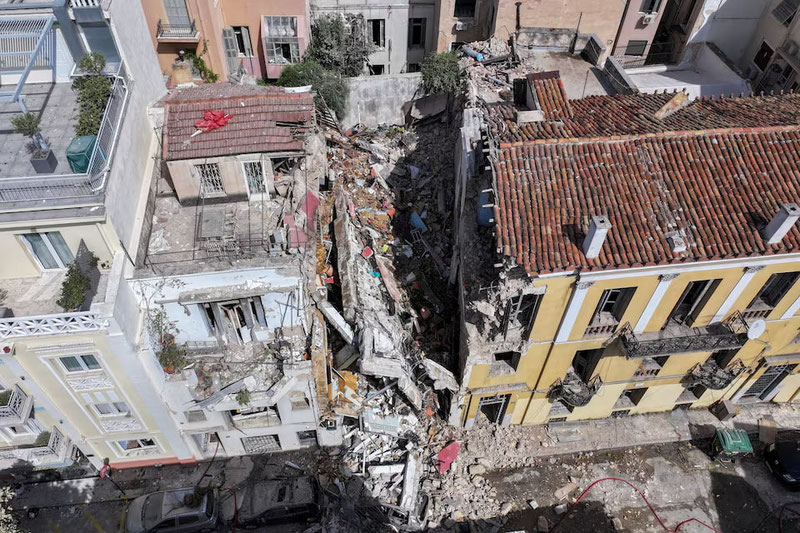
Scorching heat consequences in London: houses began to crack and sink
Experts attribute this to the shrinking of clay soil due to dry weather.
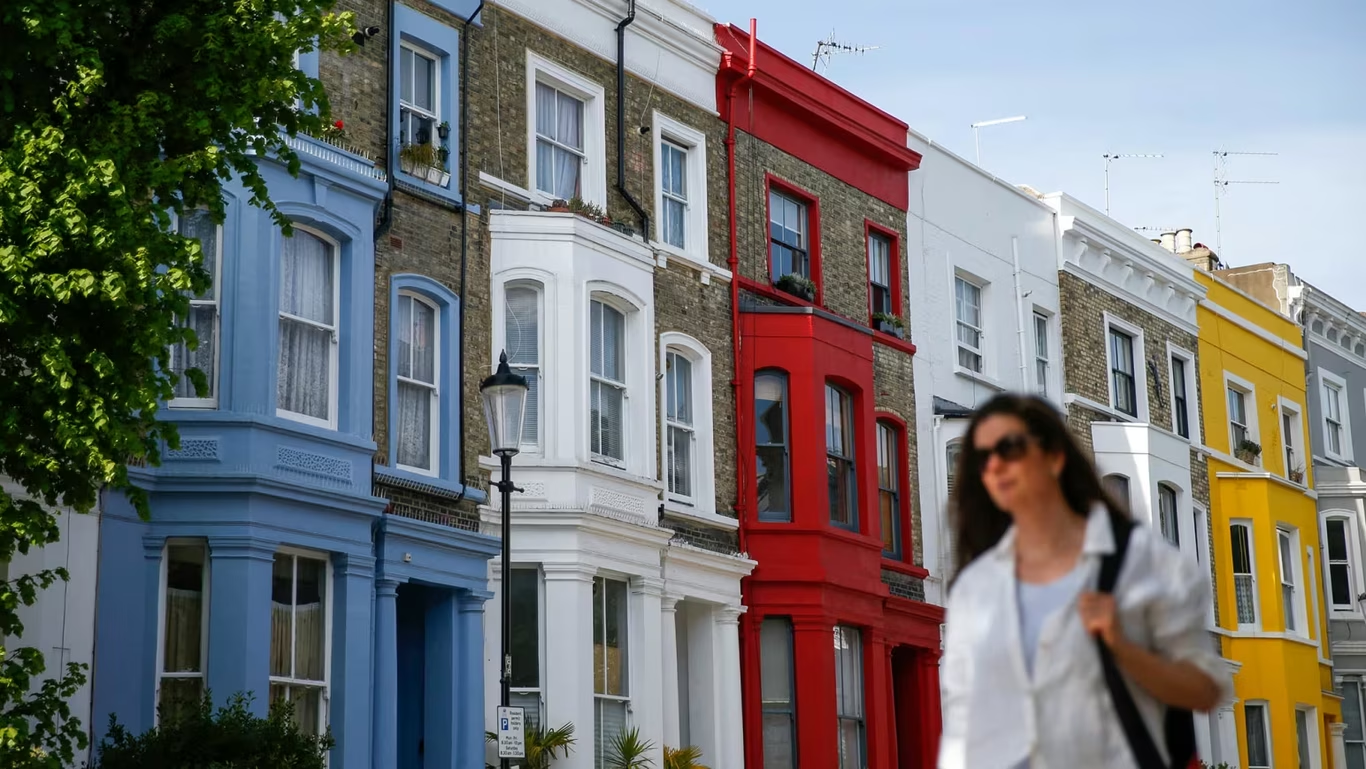
In the summer of 2026, in some areas of London, zigzag-shaped cracks appeared on the walls of houses, doors became stuck, and windows were deformed. In some buildings, signs of subsidence were also observed. CNN reported about this.
London and the southeastern regions of England are facing a soil subsidence problem exacerbated by dry and hot weather. During extreme heat, moisture in the soil decreases and the clay layer shrinks. Uneven shrinkage of the soil beneath foundations can lead to the subsidence of buildings.
A representative of the British Geological Survey assessed soil subsidence as one of the most dangerous geological phenomena in the United Kingdom. Experts have stated that as global warming intensifies, the problem may also expand.
It is noted that clay soil is widespread in London. It expands when it absorbs moisture and shrinks when it dries out. This process is called "shrink-swell." Trees can also intensify the process: in hot weather, their roots penetrate deeper in search of moisture and reduce the amount of water in the soil. Older buildings are more prone to such a process. More than half of London's houses were built before 1945, and some of them have relatively shallow foundations.
According to the forecast of the Aviva insurance company, by 2030, 100 percent of real estate in some areas of London may face the risk of soil subsidence. In particular, the areas of Kensington, the City of London, and Westminster were mentioned.
The problem is not limited to London. According to CNN, whereas 40 years ago soil subsidence was mainly observed in London and southeastern England, due to climate change the risk is now increasing in other regions of the United Kingdom as well.
According to Bob Gibson, director of Building & Structural Consultants, after every hot summer, the number of insurance claims related to soil subsidence increases. In 2025, the insurance sector in the United Kingdom paid 415 million dollars for claims related to soil subsidence. This is 10 percent more compared to 2024.