Parliamentary elections in Hungary: Orban admits defeat
Peter Magyar, who once envied Viktor Orbán, has taken his place.
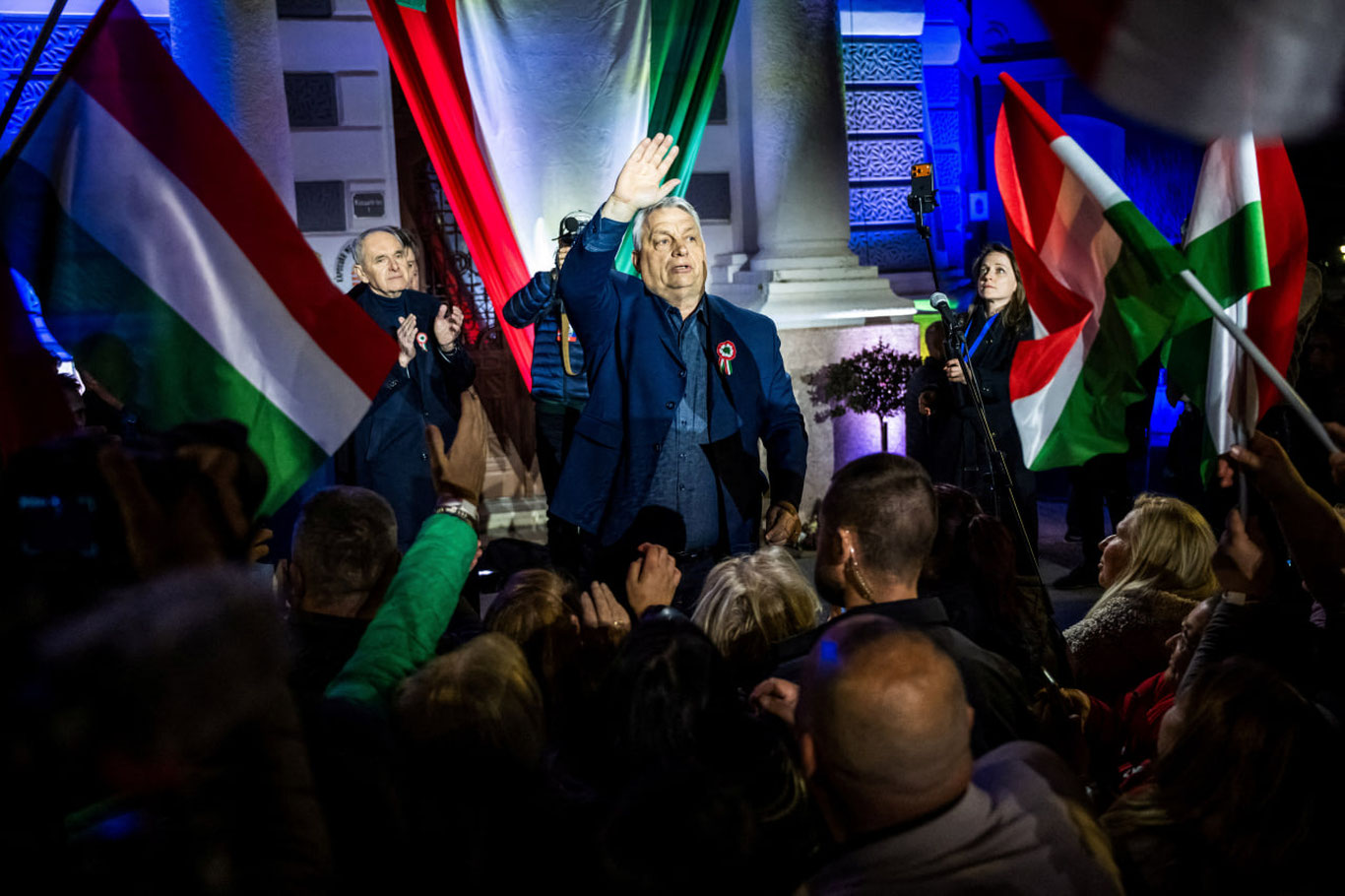
Hungarian Prime Minister Viktor Orban acknowledged the defeat of the ruling "Fidesz" coalition in the parliamentary elections and congratulated the opposition "Tisza" party on its victory. Reuters reports on this.
According to data from the National Election Office (NVI), as of Sunday evening, April 12, with 81.49% of votes counted, the opposition "Tisza" party led by Péter Magyar is leading in the Hungarian parliamentary elections.
It is noted that over 5.8 million citizens participated in the election. Voter turnout was at a record level of 77.8%. The country's new prime minister is expected to be known within 30 days.
Currently, the "Tisza" party led by Péter Magyar is set to secure 137 out of 199 seats in parliament. The incumbent Prime Minister Viktor Orban's "Fidesz" party and its ally, the Christian Democratic People's Party (KDNP), are set to have 55 seats. Another 7 seats are being contested by the far-right "Our Homeland" movement. Thus, "Tisza" secures more than two-thirds of the seats in parliament, ensuring a constitutional majority.
Opposition leader Magyar stated that Orban has already congratulated him on the election victory.
In turn, Orban addressed his supporters in Budapest, describing the preliminary results as "clear" and "sobering."
"I congratulated the winning party. Even if we are in opposition, we will continue to serve the Hungarian people and our homeland," he said.
This result is noted as Orban's first defeat in the last 16 years.
The 62-year-old Orban has been in power since 2010. In the current elections, 45-year-old Péter Magyar emerged as a serious contender for the first time. He was previously active in the youth wing of the "Fidesz" party and took over the leadership of the "Tisza" party two years ago.
Among the reasons for voter dissatisfaction with Orban's government are problems with public infrastructure, healthcare and education systems, as well as corruption cases. Magyar has expressed his intention to wage a sharp fight against corruption, carry out systemic reforms, and adopt a new constitution.
He also emphasized his support for Hungary maintaining distance from Russia and, as a member of the European Union, restoring its status as a reliable ally within NATO.
Reuters writes that the winning party leader, Péter Magyar, as a child in 1990, excited by Hungary's first democratic elections, pinned a picture of Viktor Orban, then a fighter against communism, to his bedroom wall.