Russian historians have requested the removal of the term "colonialism" from Kyrgyzstan's textbooks.
Historians from Kyrgyzstan, however, stated that it is necessary not to deny historical processes.
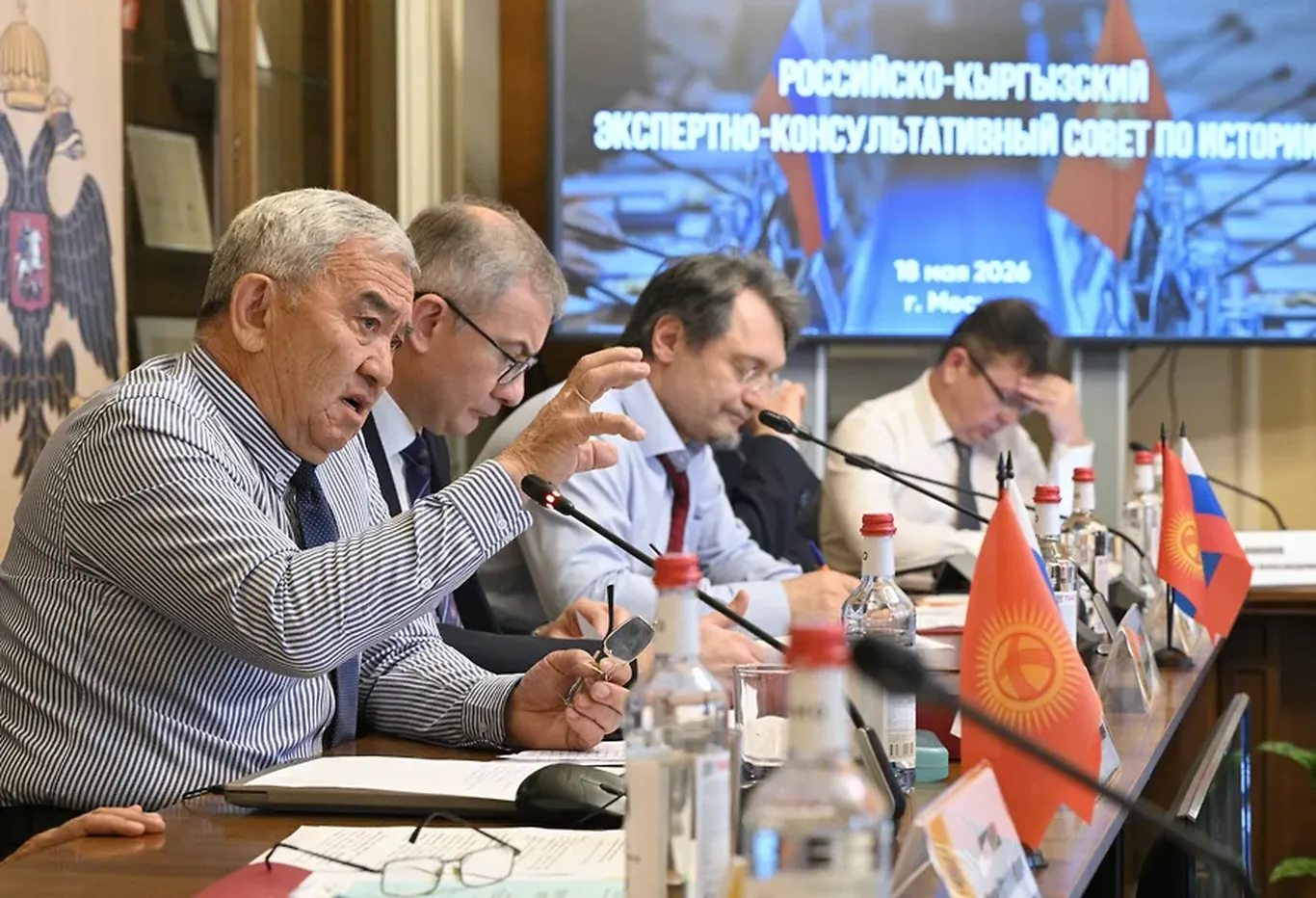
Historians from Russia and Kyrgyzstan are discussing the issue of revising historical interpretations and terminology in school textbooks. This was reported at a meeting of the Russia-Kyrgyzstan Expert Advisory Council on History, organized by the Russian Military Historical Society, as reported by the publication “Kommersant.”
It was reported that during the event, the Russian side proposed abandoning or revising the use of the term “colonialism” in Kyrgyz history textbooks.
Kyrgyz historians, however, assessed this process as a “complex issue” and expressed readiness to discuss it.
According to experts, history is covered in the textbooks of the two countries based on different approaches: in Russia, state history takes center stage, while in Kyrgyzstan, the history of the people is primary. The parties noted the need to smooth out these differences and find “compromise formulations.”
Andrey Bikov, a representative of the Institute of Oriental Studies of the Russian Academy of Sciences, emphasized that the history of Russia and the Kyrgyz people is insufficiently covered in Kyrgyz textbooks. At the same time, he noted the presence of “factual errors and mythologization” in certain historical interpretations.
Abilabek Asankanov, a representative of the National Academy of Sciences of Kyrgyzstan, disputed the views put forward by Russian historians regarding the “artificial antiquation of Kyrgyz history compared to other Turkic peoples.” He pointed out that the ethnonym “Kyrgyz” has been mentioned in Chinese sources since the 3rd century BC.
One of the main contentious issues was the assessment of the former USSR and the use of the term “colonialism.” The Russian side proposed replacing this term with softer wording, while the Kyrgyz side stated the necessity of not denying historical processes.
In the end, the parties reached an agreement on bringing historical approaches closer together, reducing contradictory interpretations in textbooks, and continuing cooperation. The Russian side also indicated that changes to the textbooks might be made in the future.