The Taliban has warned that it will arrest women who do not cover their faces and do not dress "in accordance with moral standards."
The document notes that women without a prayer veil, with their faces uncovered, in tight clothing, or wearing makeup while going out are being detained by the Taliban's morality enforcers.
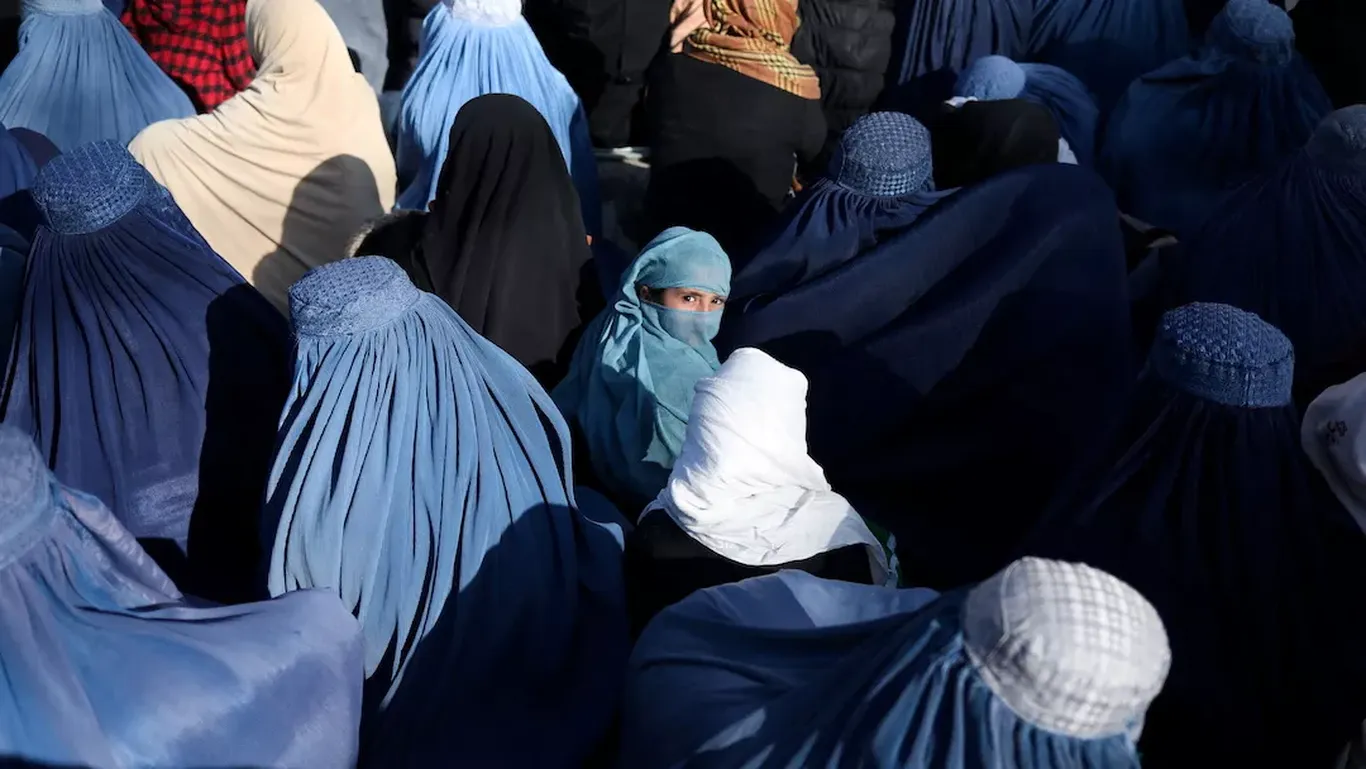
In Herat province of Afghanistan, the Taliban is tightening control over compliance with women's dress codes. According to local sources and a document obtained by Amu TV reported, women who do not adhere to the specified requirements may be detained.
According to the report, the Taliban's Department for the Promotion of Virtue and Prevention of Vice has called on male family members to ensure that women comply with "proper hijab" rules in public places.
The document states that women who go out without a prayer headscarf, with their faces uncovered, in tight clothing, or wearing makeup may be apprehended by Taliban morality enforcers and sent to women's detention facilities.
Additionally, male family members are held responsible for ensuring women's compliance with dress codes. The document emphasizes that violations may be referred to judicial authorities and lead to other legal measures.
According to local sources, this directive was adopted following a meeting involving Taliban representatives. In a circulated audio recording, it was stated that the new regulations would take effect from June 6. Neighborhood representatives and mosque imams have been tasked with warning the public about the new requirements.
In recent months, checkpoints have been established in areas of Herat such as Shahr-e Naw, the 29 Hut roundabout, Bakrabad, and the Laylami road, where vehicles and taxis are reportedly being inspected. Residents say that inspectors have deemed some women's clothing as not meeting Taliban standards.
Since returning to power in 2021, the Taliban has imposed a series of restrictions on women and girls. According to human rights organizations, more than 100 decrees have been issued during this period limiting women's participation in education, employment, and public life.
Earlier, it was reported that the Taliban leader had approved a 31-article document titled "Principles for Separating Spouses," under which girls can be married at the age of 12 and annulling such marriages is nearly impossible, as reported.