It has been determined that some higher education institutions in Uzbekistan have no professors or teachers, or their number is very low.
In some higher education institutions, there are over 200 students per professor.

Within the framework of the national ranking of higher education institutions, an indicator on the level of provision with teaching staff has been developed.
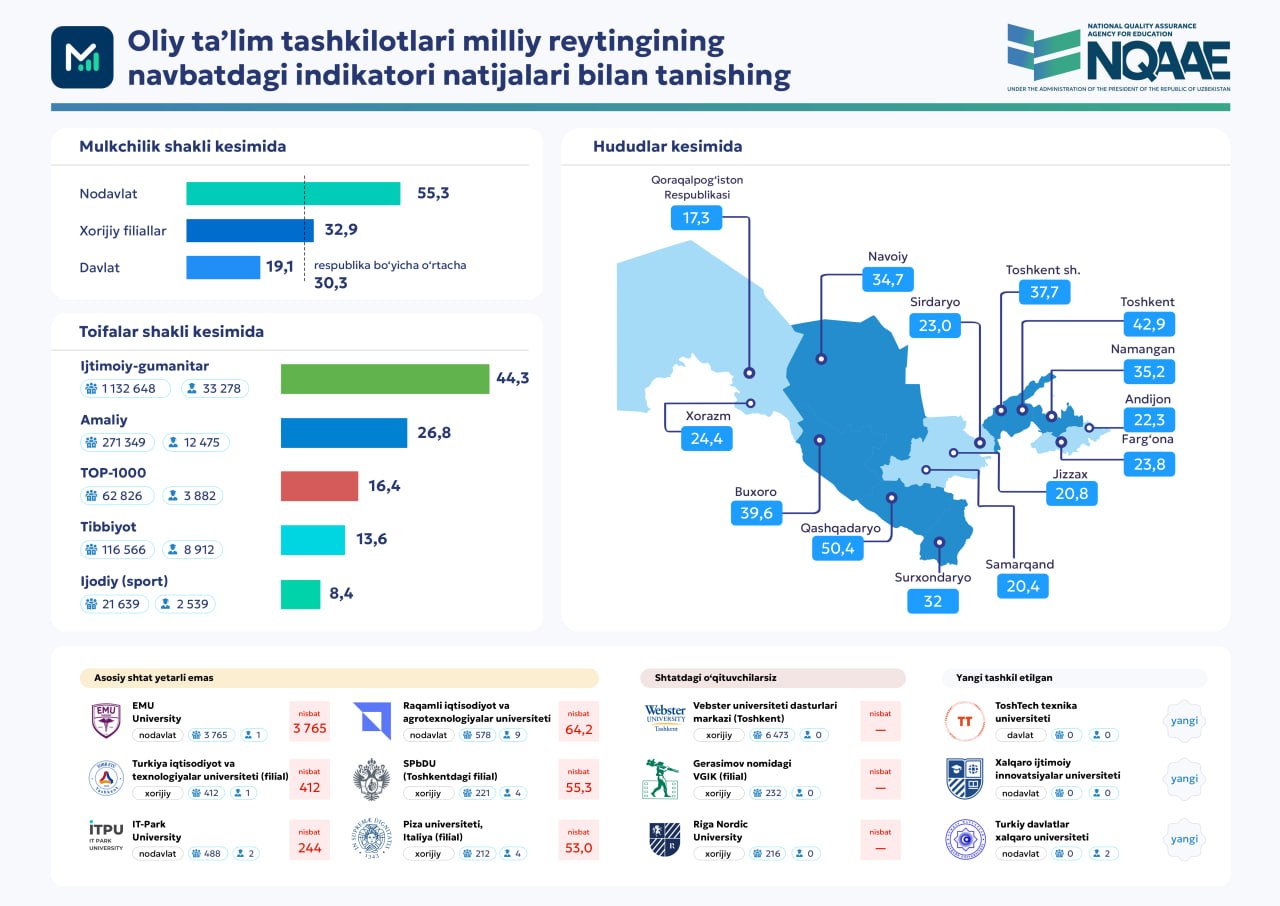
According to the results, in state higher education institutions, there are an average of 19.1 students per one faculty member. In branches of foreign higher education institutions, this figure is 32.9, and in non-state higher education institutions, it is 55.3.
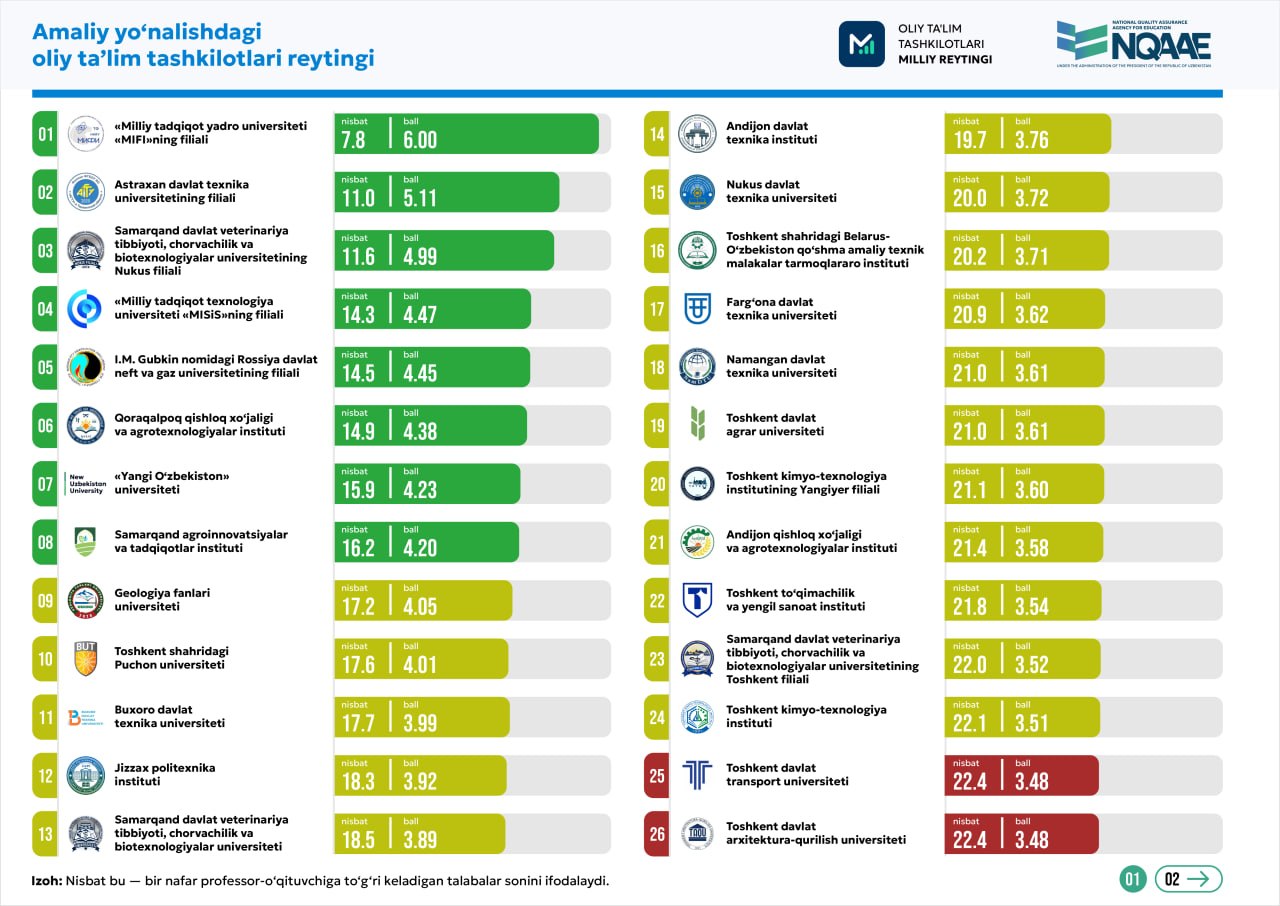
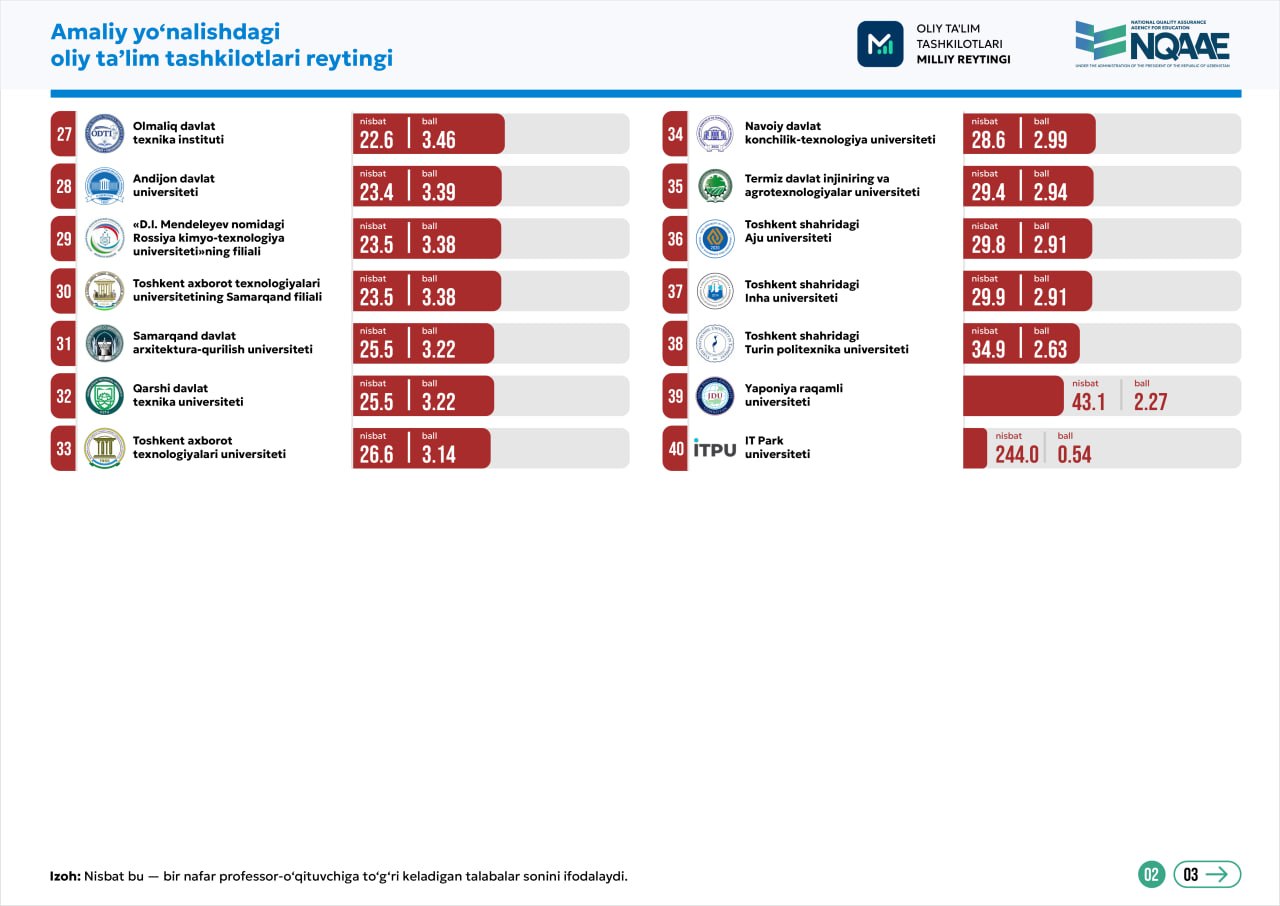
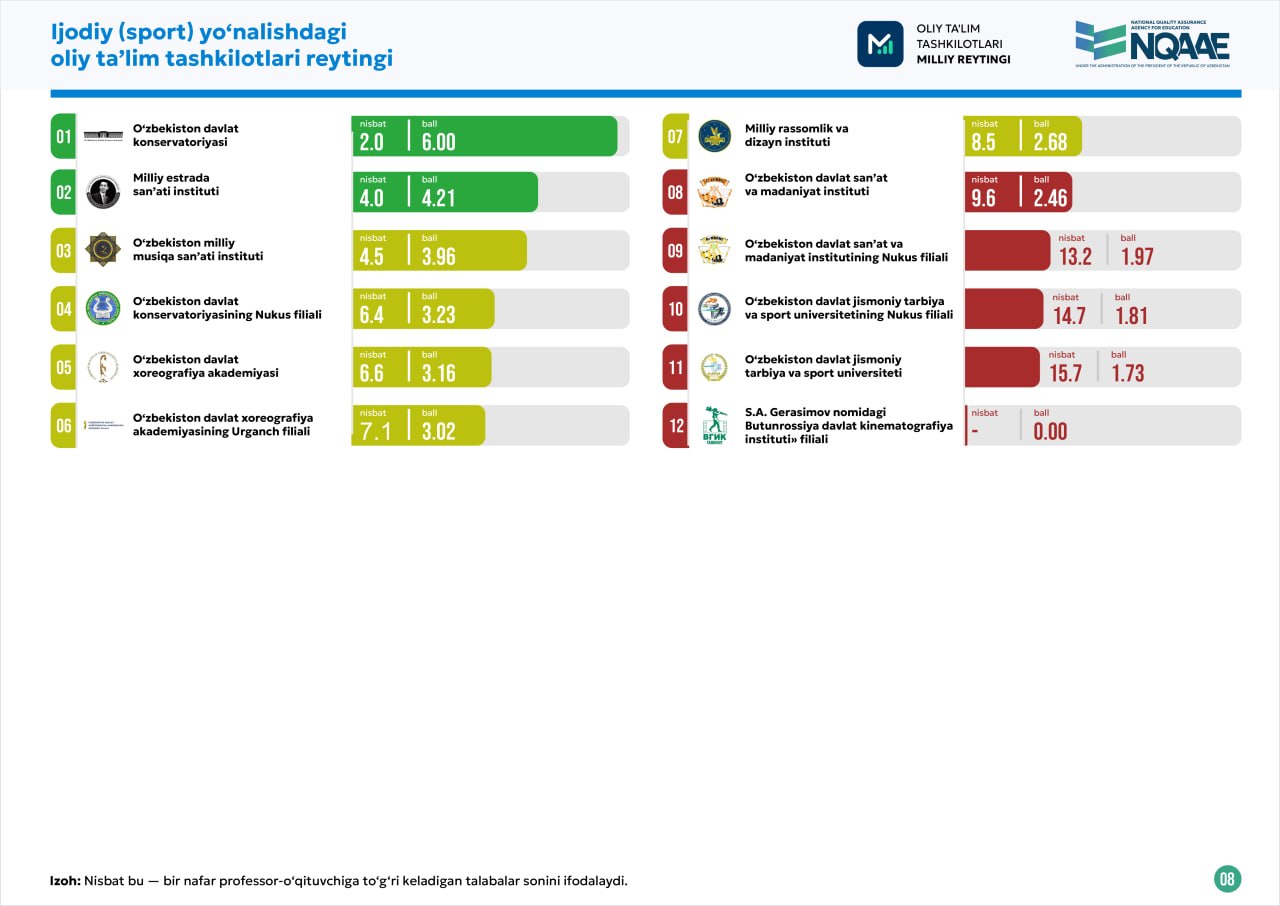
By field of higher education institutions, the most favorable ratio was recorded in universities specializing in arts and sports.
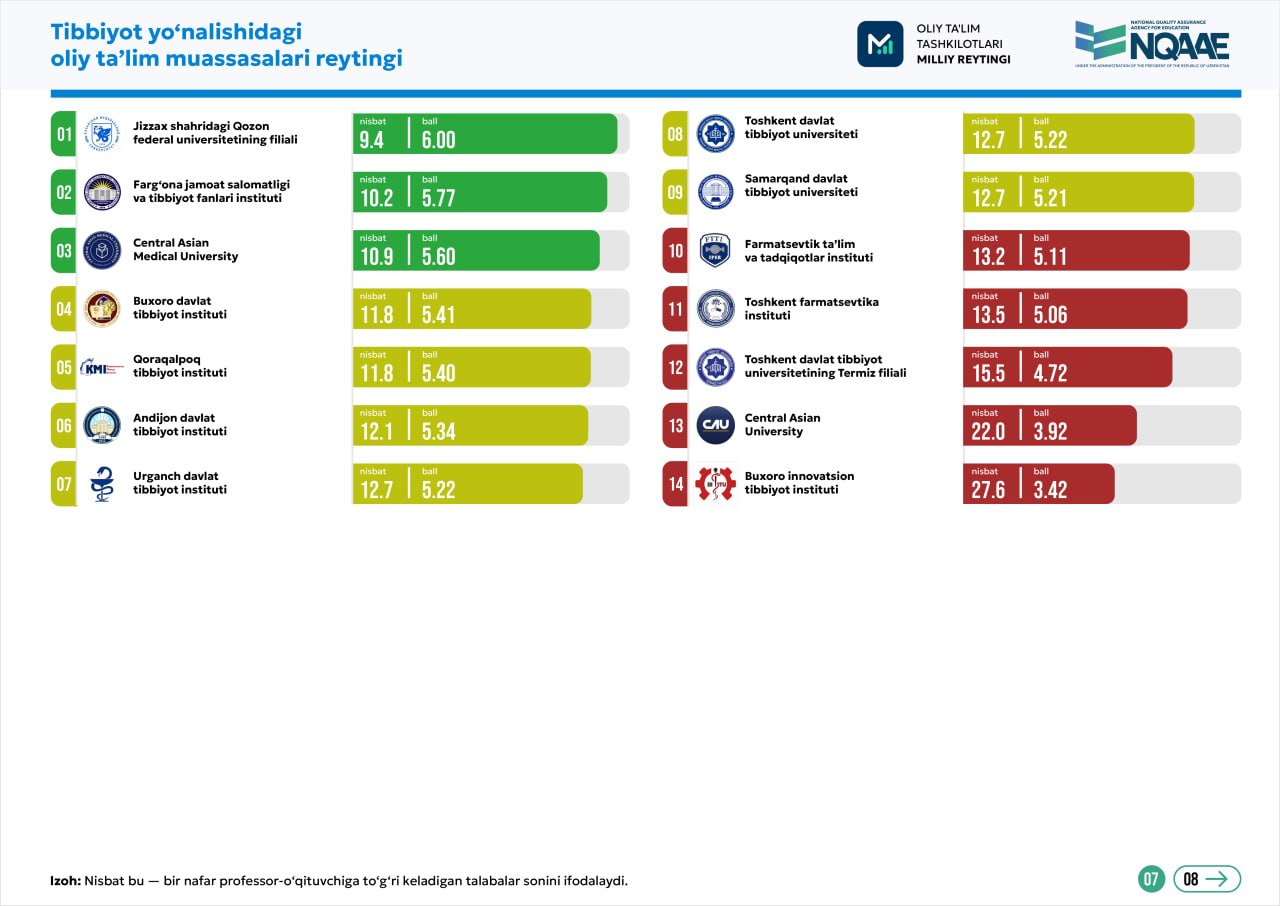
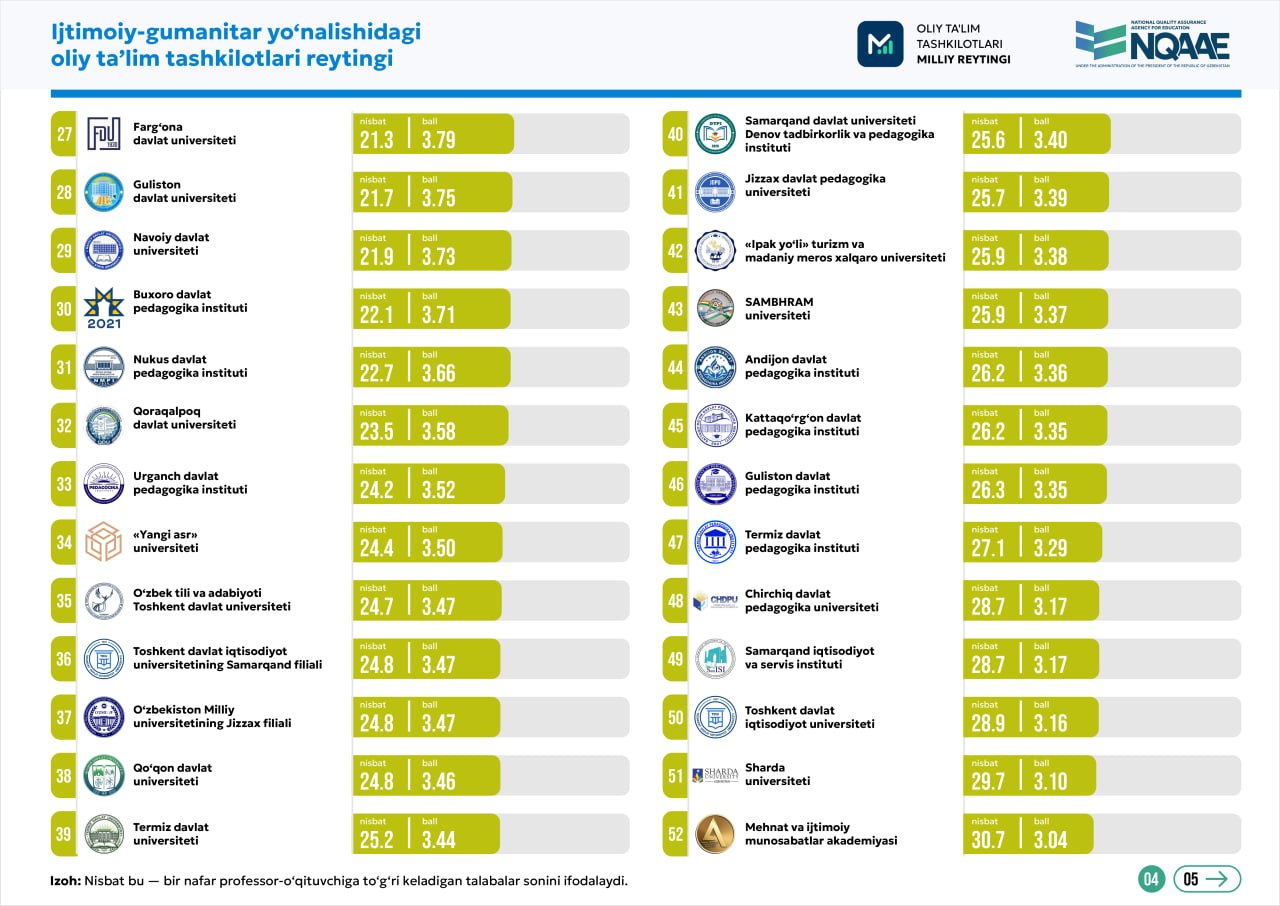
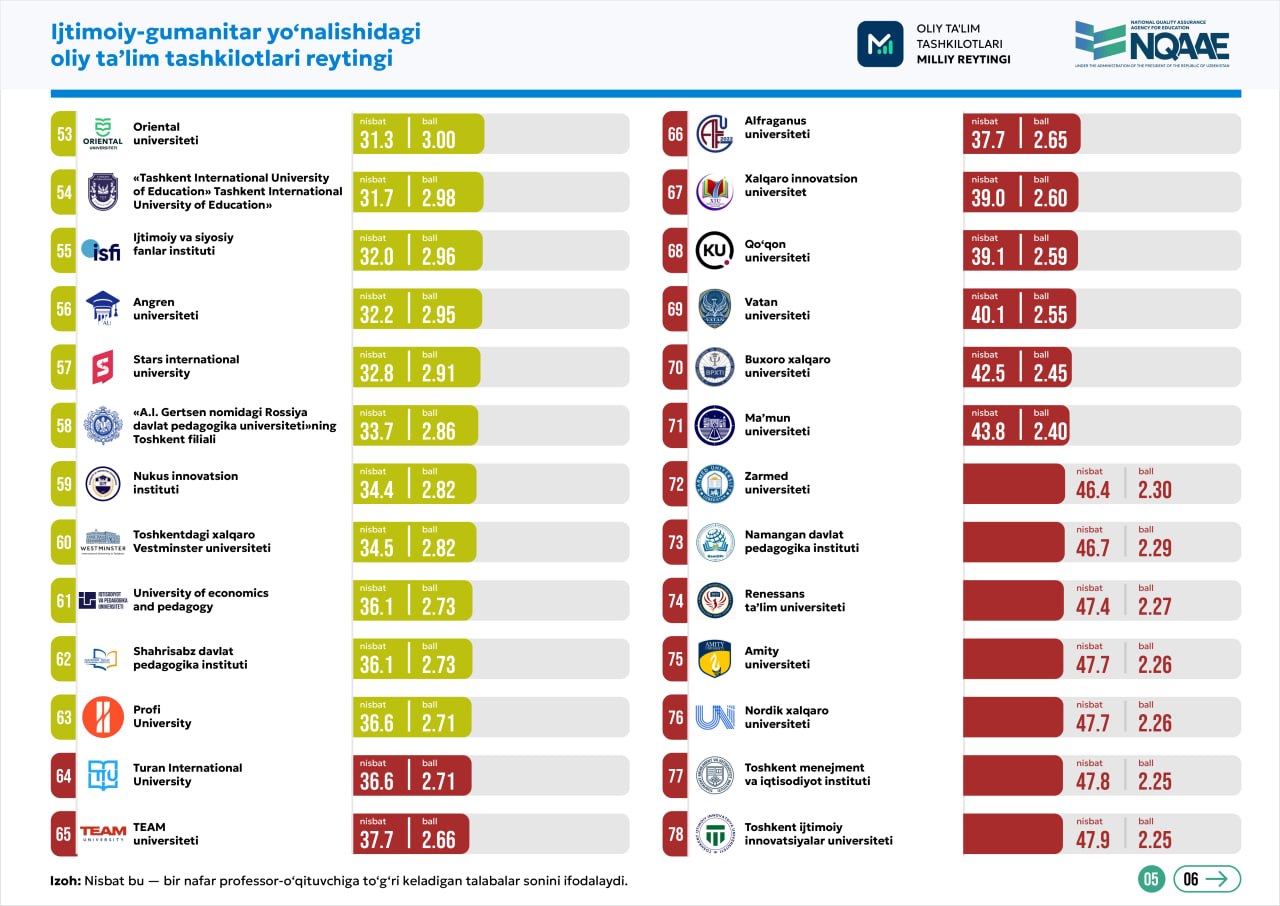
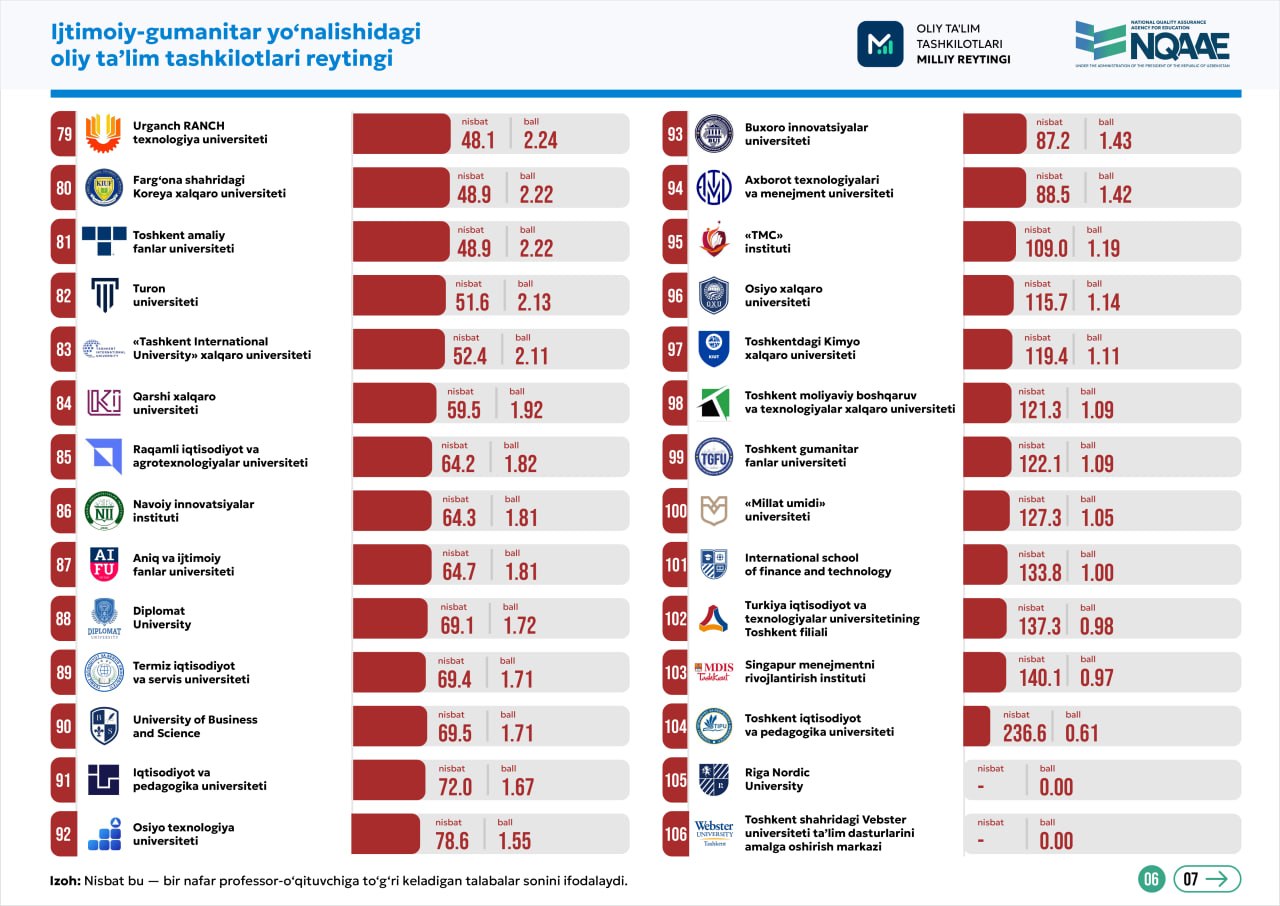
In these, there are an average of 8.4 students per one faculty member. In medical universities, this figure is 13.6, in applied sciences fields it is 26.8, and in social sciences and humanities universities it is 44.3.
By region, the highest indicator was recorded in Kashkadarya region, with 50.4 students per one faculty member. Similarly, in Tashkent region this figure is 42.9, in Bukhara region 39.6, and in Tashkent city 37.7. The lowest indicator was observed in the Republic of Karakalpakstan — 17.3.
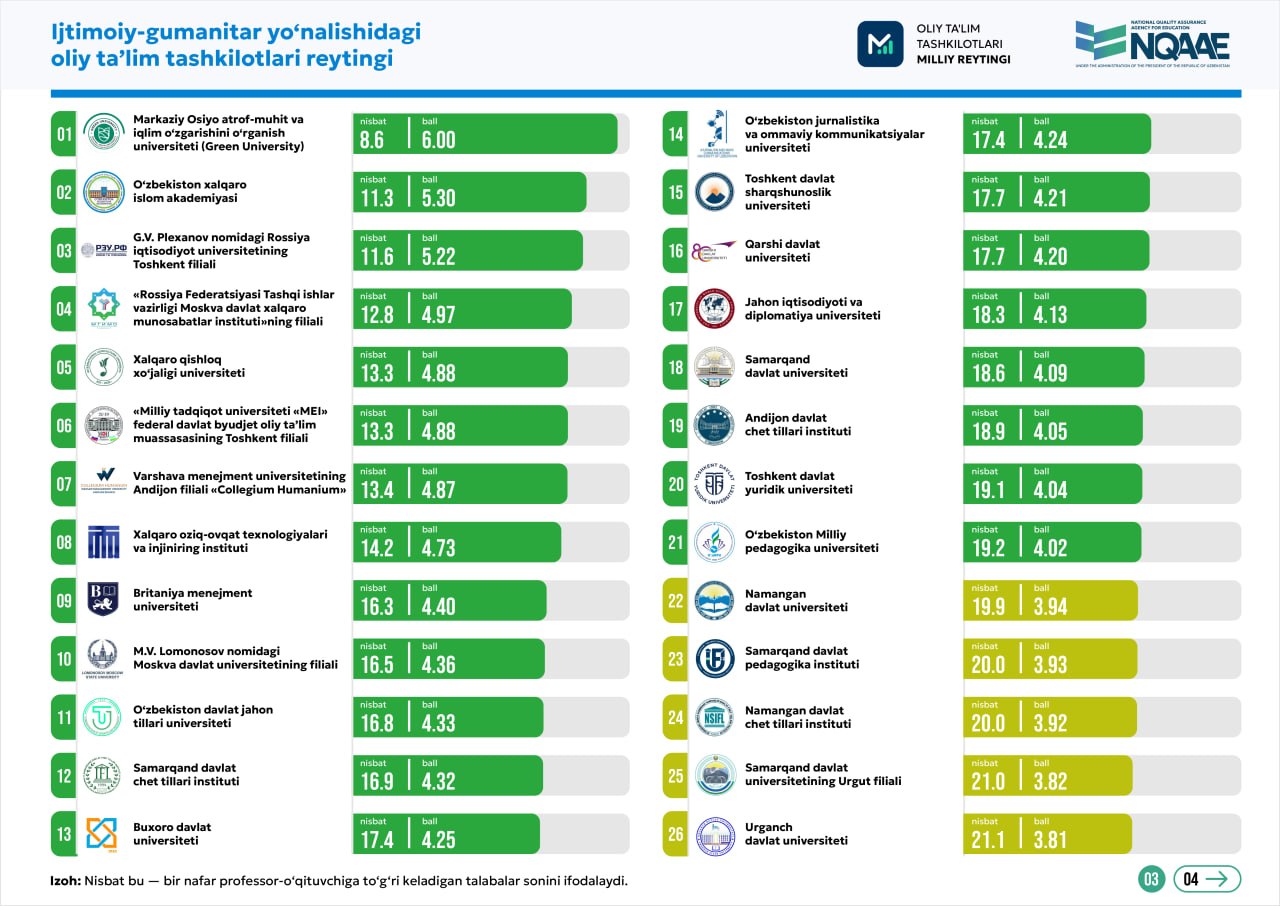
It was also noted that in some higher education institutions, the ratio of faculty to students is sharply high. In particular, at IT Park University, there are 244 students per one faculty member, at Tashkent University of Economics and Pedagogy 236.6, at the Singapore Institute of Management Development 140.1, at the International School of Finance and Technology 133.8, and at "Millat umidi" University 127.3.
Furthermore, the analysis noted that for some branches of foreign universities, including the Webster University Center for Educational Programs and Riga Nordic University, this indicator was not calculated because the State Statistics Committee data showed no faculty members at their primary place of employment. The document emphasized that such a situation may be related to teachers working under civil law contracts, but involving them in the educational process without formalizing labor relations contradicts current legislation.
It is noted that a high ratio of faculty to students may limit opportunities for individual work with students, effective organization of practical classes, and conducting scientific activities.
For reference, as of June 2026, 1,605,028 students are studying in higher education institutions in the country. They are taught by 61,088 faculty members. On average across the republic, there are 30.3 students per one faculty member.