The 1 percent tax cashback in Uzbekistan may be abolished.
Instead of mass incentives, it is recommended to introduce targeted incentives and state lotteries in sectors with high tax risk. This could reduce budget expenditures by nearly 20 times.
The Institute for Reducing the Share of the Shadow Economy, Improving Tax and Customs Administration, and Fiscal Analysis under the Ministry of Economy and Finance has published an analysis on improving the 1% tax cashback mechanism currently applied in Uzbekistan here.
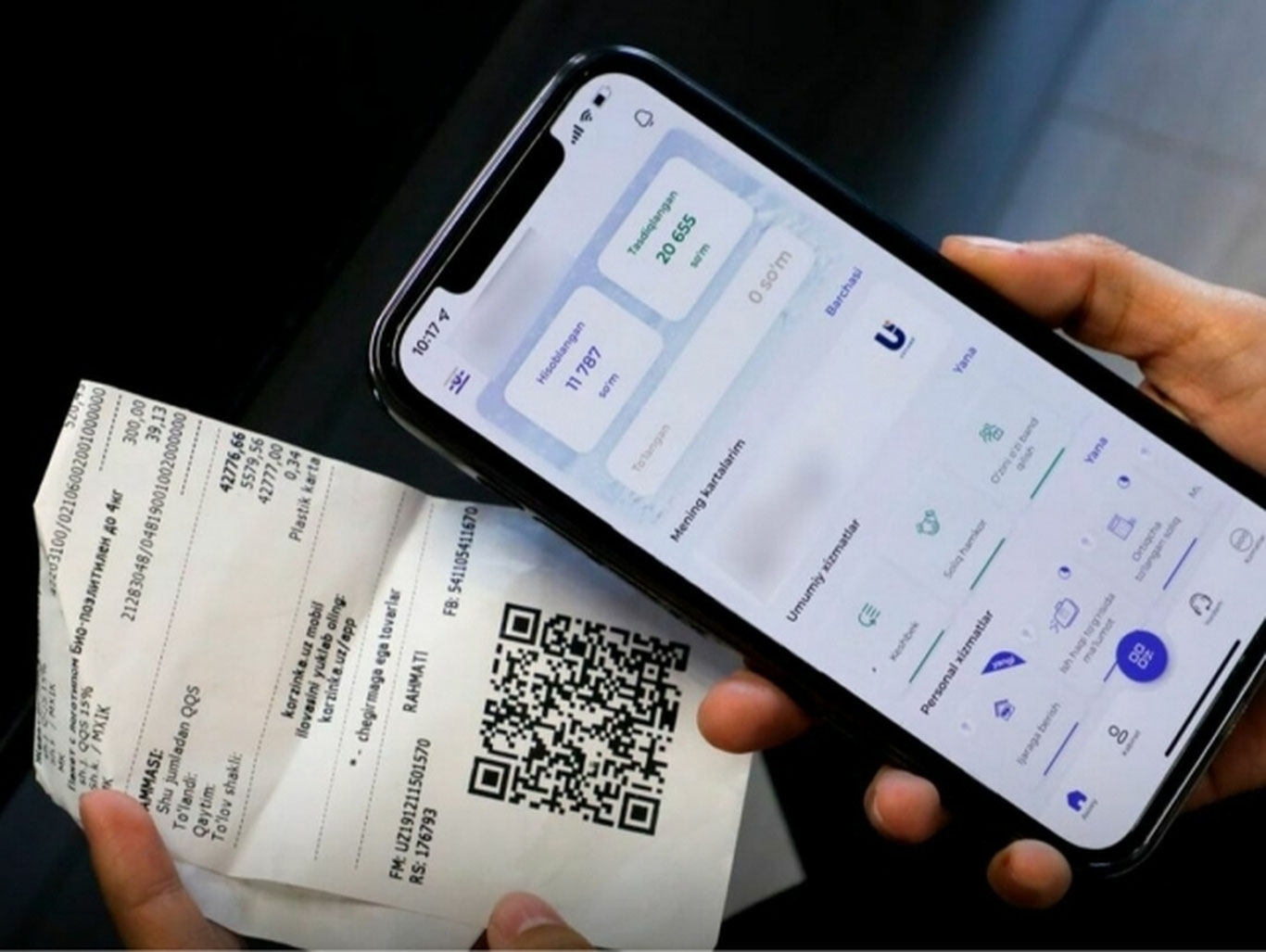
It notes that the tax cashback system was an important tool in the initial phase of introducing online cash registers to encourage buyers to demand fiscal receipts, formalize trade turnover, and reduce the share of the shadow economy. Through this mechanism, citizens were engaged in public tax control, and material incentives were created for the official recording of each purchase.
Institute experts emphasized that once the habit of obtaining fiscal receipts is formed, the need for mass monetary incentives gradually decreases. In their view, funds allocated from the state budget should be regularly assessed from the perspective of economic and social efficiency.
The analysis states that to finance the tax cashback, 820 billion soums were allocated from the state budget in 2022, 1.24 trillion soums in 2023, 1.05 trillion soums in 2024, and 1.51 trillion soums in 2025. In 2026, this figure is projected to reach 1.81 trillion soums.
At the same time, it is noted that while turnover tax revenues continue to grow, their growth rate has slowed compared to the initial years of cashback implementation. The Institute cites as a reason that the increase in cashback expenditures is not proportional to the growth in tax revenues.
The analysis also highlights another aspect. According to it, in May 2026, of the 146.6 billion soums in tax cashback paid to buyers, 15.7 billion soums, or 10.7%, was attributed to the ten largest retail chains. Experts noted that in such a situation, part of the state funds is being spent on incentivizing purchases that would inevitably be formalized even without the tax cashback.
The Institute stated that due to the widespread use of artificial intelligence, Big Data technologies, electronic invoices, online cash registers, digital marking, and e-commerce platforms in modern tax administration, the ability to identify tax risks without the constant participation of buyers has expanded.
In this regard, it is proposed to gradually abandon mass incentives for fiscal receipts and transition to a targeted incentive system in areas with high tax risk.
Specifically, it is recommended to organize state lotteries among buyers who register fiscal receipts at public catering establishments, small retail outlets, and other high-risk sectors. It is proposed to offer prizes such as cars, travel vouchers, and other valuable rewards worth over 5 million soums.
According to the Institute's calculations, up to 100 billion soums per year would be sufficient to finance such a mechanism. This would allow reducing state budget expenditures by nearly 20 times compared to the current cashback system.
The analysis notes that there are also cases of illegal use of the mass cashback mechanism in some instances through the formalization of fictitious settlement transactions. It emphasizes the need to automatically detect such schemes by cross-referencing data from online cash registers, electronic invoices, payment systems, and other state information resources.
According to the Institute's conclusion, the tax cashback has played an important role in shaping the culture of obtaining fiscal receipts and increasing transparency in retail trade. However, in the context of the development of the digital economy, it is considered appropriate to improve tax administration based on the principles of risk-based control, targeted incentives, and digital transparency.