In Uzbekistan, payment for waste services is calculated solely based on the services provided.
In the new system, payments are directed to a state-controlled special account, and operators are paid only for work actually performed.
A new payment procedure for solid household waste removal services has been introduced starting January 1, 2026. According to this system, in the sanitation sector, payments are collected from consumers only for services actually rendered, and all payments are primarily made through online systems.
The main goal of the new procedure is to increase transparency in the sector, strengthen control over service quality, and prevent illegal payments and instances of the shadow economy. The online payment system allows citizens to make payments from any location and at any time, settle accounts without going to the bank or waiting in line, control their payments, and download electronic receipts.
Now, payments made by the population for waste services are directed not to the bank accounts of sanitation companies, but to a special account of a state-controlled body—the Agency for Waste Management and Development of the Circular Economy. Subsequently, payments to operators are made separately, based on the volume of waste collected from neighborhoods (in tons) and the distance traveled by special vehicles (in kilometers), paying only for the services actually rendered.
Furthermore, the activities of sanitation service companies are evaluated monthly, and they are categorized into "red," "yellow," and "green" categories. The results of this rating are taken into account when making payments to the companies. Companies that fail to provide quality services may face fines, contract termination, and reallocation of their assigned territories.
According to reports, 14 companies have currently been placed in the "red" category, with penalties applied against them, and contracts with two companies have been terminated. Additionally, 11.9 billion soums in non-real receivables calculated for services not actually rendered have been removed from the electronic system.
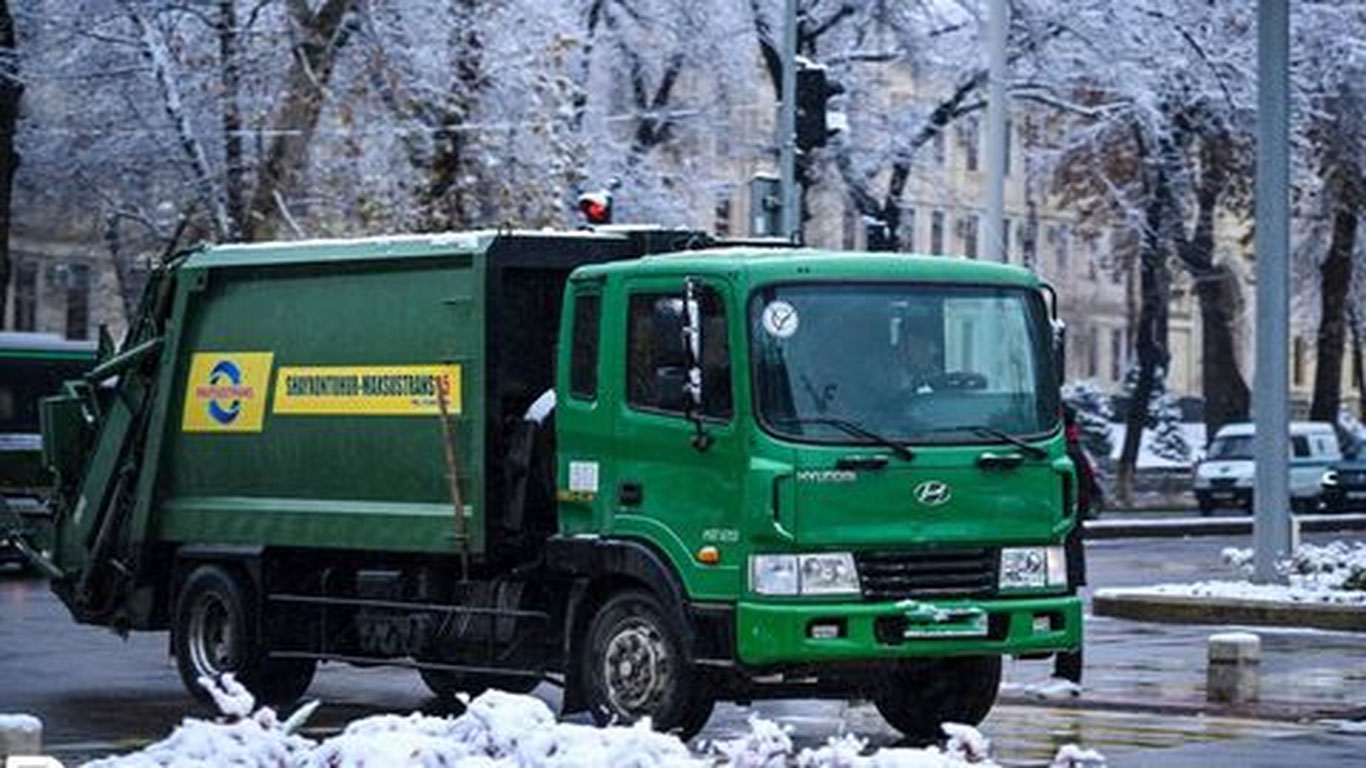
Through the "Toza Makon" unified electronic billing system, 9,430 neighborhoods, 7.1 million subscribers, and 3,606 waste collection points entered into the electronic map across the republic are under control. Moreover, 94% of the 3,230 special waste transport vehicles are monitored via GPS devices.
Currently, 846 waste collection sites and 645 special vehicles are connected to online surveillance cameras, with plans to increase this indicator to 100% by 2030. The integration of the billing system with the electrical system serves to fully digitalize the sector, establish strict control over service quality, and ensure the provision of quality services to the population.