The victims of the genocide committed against Azerbaijanis in 1918 are being remembered.
Between March 30 and April 3, 1918, more than 70,000 Azerbaijanis were killed.
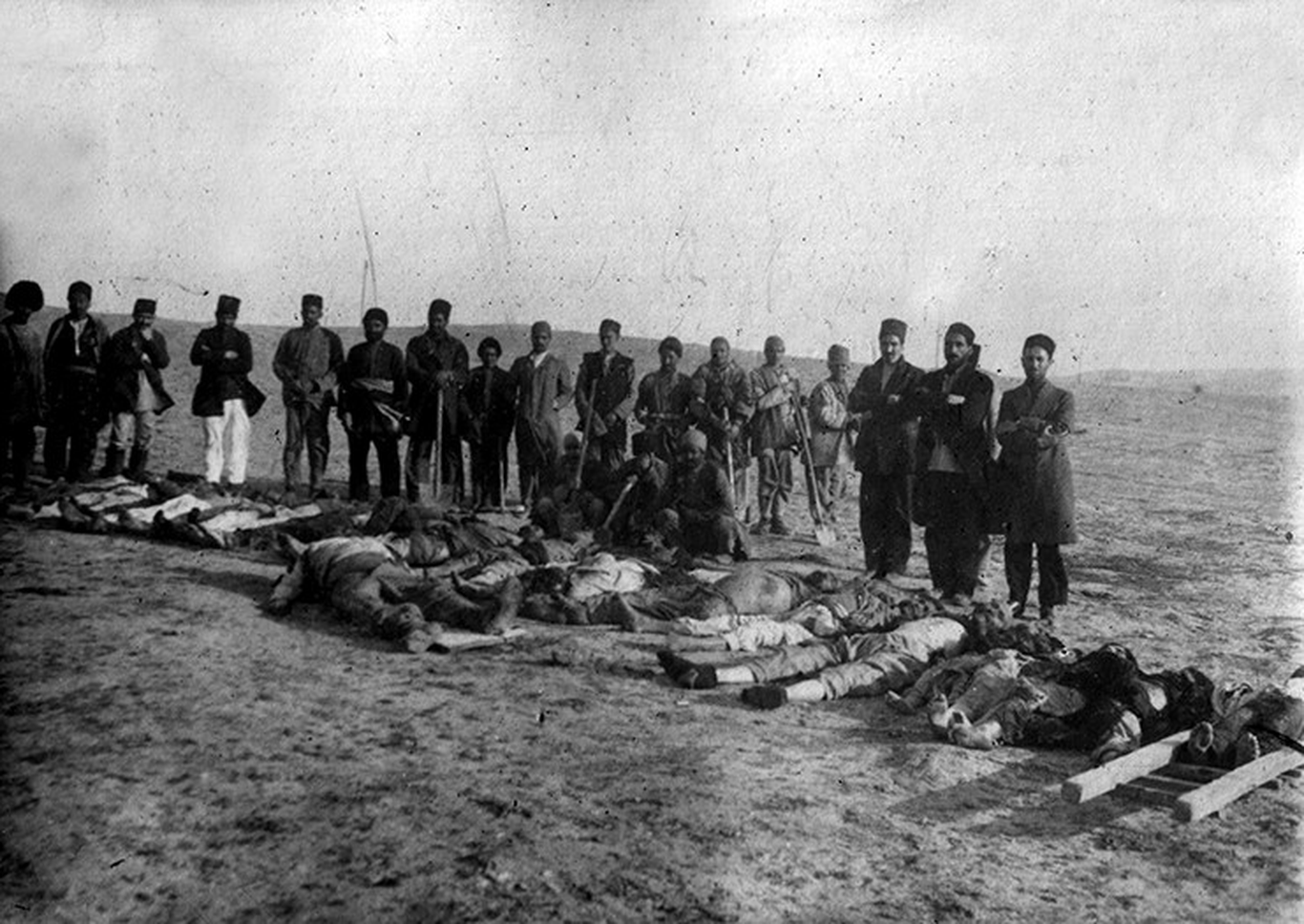
According to information, between March 30 and April 3, 1918, armed groups of the Baku Soviet and Dashnak Armenians killed over 70,000 Azerbaijanis in various areas of Baku city and Baku province, as well as in Shamakhi, Guba, Khachmaz, Lankaran, Hajigabul, Salyan, Zangezur, Karabakh, Nakhchivan, and other regions; 229 villages in Baku district, 272 in Ganja district, 115 in Zangezur, and 157 villages in Karabakh were wiped off the face of the earth; settlements were burned, and thousands of families were driven from their homeland.
It is noted that the March genocide began directly after the disarmament of Muslim soldiers on the ship "Evelina," which caused sharp discontent among the population. On March 27, about 300 soldiers and officers of a Muslim regiment arrived in Baku city from Lankaran to attend the funeral of Muhammad, the son of Haji Zeynalabdin Taghiyev. He had died accidentally while handling a weapon.
On March 29, while they were preparing to return on the "Evelina," the Baku Soviet sent armed guards to the port to disarm them. When the detachment refused to comply, the weapons were seized by force.
This action provoked the anger of the local population. They held gatherings at the Tazapir Mosque and the "Ismailiyya" building, demanding the return of the weapons. On March 30, at 16:40, during the discussion of negotiations, a provocation occurred, and Stepan Shaumyan announced that the negotiations were terminated. After that, Bolshevik-Dashnak armed groups began the massacre in Baku.
Sources note that during these clashes, attacks were carried out on neighborhoods where civilians lived in Baku city and other areas, some buildings were destroyed and burned. The events continued until the beginning of April and later spread to other regions.
According to official information, over 12,000 Azerbaijanis were killed in the March events. The Extraordinary Investigation Commission established later studied these events and reported significant casualties in a number of regions. For instance, it was reported that thousands of residents perished in Shamakhi district, and in the Guba region, tens of thousands of victims and hundreds of destroyed villages were recorded. In 2007, it was also reported that mass graves were discovered in the Guba region.
The process of giving a political assessment to these events began during the period of the Azerbaijan Democratic Republic. On July 15, 1918, the Extraordinary Investigation Commission was established.
On March 26, 1998, by decree of former President Heydar Aliyev of Azerbaijan, March 31 was declared the Day of Genocide of Azerbaijanis.
In recent years, additional measures have been taken to study and publicize these events. In 2018, a special plan for widely publicizing these events was approved by Ilham Aliyev.