Mardin Biennial 2026: The ancient city has become a center of global contemporary art.
The 7th Mardin Biennial, which will continue until June 21, brings together over 40 artists from nearly 20 countries around the world in one venue.
Today, Turkey is attracting the world's attention not only with its tourism potential but also with its art and cultural events. Festivals, biennials, and art conferences held in various regions of the country are increasing the interest of local and international tourists, adding new meaning and diversity to Turkey's cultural life.
The 7th Mardin Biennial, which will take place from May 15 to June 21 this year, brings together over 40 artists from nearly 20 countries around the world. This event is one of the important steps in promoting the unique historical-cultural environment, distinctive architecture, and rich ancient heritage of the city of Mardin.
The Mardin Biennial, a member of the International Biennial Association (IBA), was initially established in 2010 with the aim of transforming Mardin, considered a priceless gem of Southeastern Anatolia, into one of the important centers of contemporary art. The project aims to introduce new perspectives, creative approaches, and cultural thought to the region through the language of art.
Led by Chelenk Bafra, who has directed numerous exhibitions and art projects in Turkey and several European countries, this year's biennial is being held under the theme "GÖKzemin" ("Sky-Ground").
The biennial artistically interprets the connection between seemingly opposing concepts such as sky and ground, individual and society, past and future. Alongside the display of various artworks, the program includes master classes with artists, reading and discussion events, creative meetings, and musical performances.
Unlike previous years, this year's biennial has expanded its scope, not limited to Old Mardin but encompassing various historical and cultural sites throughout the entire region. Events are being held at the ancient city of Dara, Deyrulzafaron Monastery, Atesh Beyler Bath, the Sakip Sabanci Museum in Old Mardin, and several public squares.
Mardin: A place where history, culture, and gastronomy blend
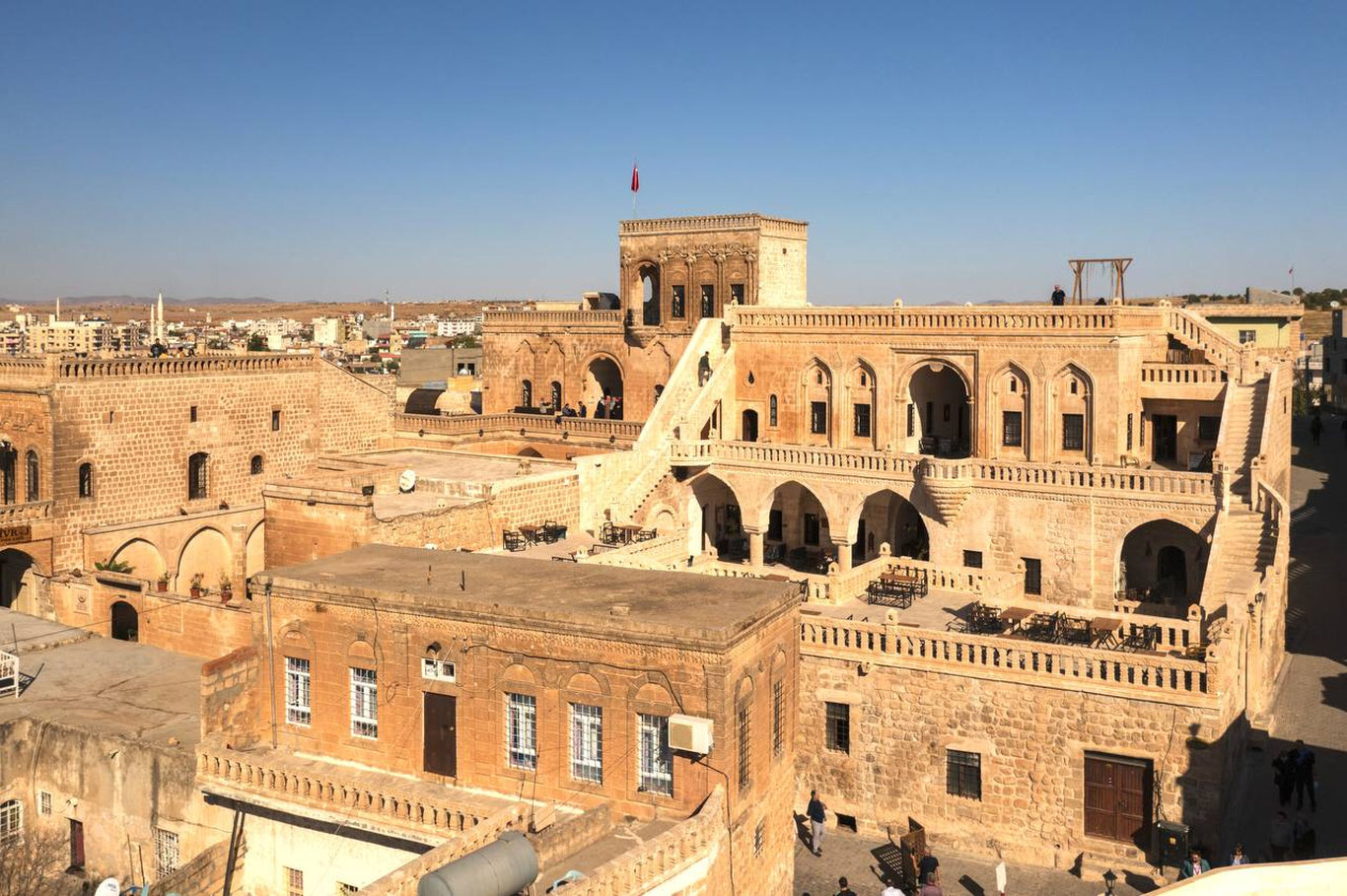
Located at the crossroads of ancient civilizations and trade routes, Mardin is one of the hidden gems of Southeastern Anatolia. Often described as an "open-air museum," the city embodies the multi-layered cultural heritage of Upper Mesopotamia, shaped over thousands of years. Traces of various peoples and cultures can be seen in the city's architectural landscape.
Among Mardin's most famous historical monuments are the Mardin Great Mosque, Deyrulzafaron Monastery, Mor Behnam Church, Zinjiriye and Kasimiye Madrasas. Additionally, the Mor Gabriel Monastery in the Midyat district and the ancient city of Dara, often called the "Ephesus of Mesopotamia," offer the opportunity to closely explore the region's rich historical and cultural heritage.
Mardin's rich cultural heritage is also reflected in its gastronomy. Traditional Mardin breakfast, meat dishes prepared with local spices, geographically indicated sembusek, and stuffed meatballs are among the city's most famous dishes.
Ancient monuments, unique "abbara" alleyways, traditional "dibek" coffee, delicate telkari-style silver jewelry, and local products like natural "bittim" soap used in skincare make a trip to Mardin even more unforgettable.