In Uzbekistan, forests will be established on 1.27 million hectares by 2030.
In Surkhandarya, it was proposed to create 10,000 hectares of green areas, establish an 84-kilometer "green wall" in Syrdarya, and expand scientific research on the dried bed of the Aral Sea.
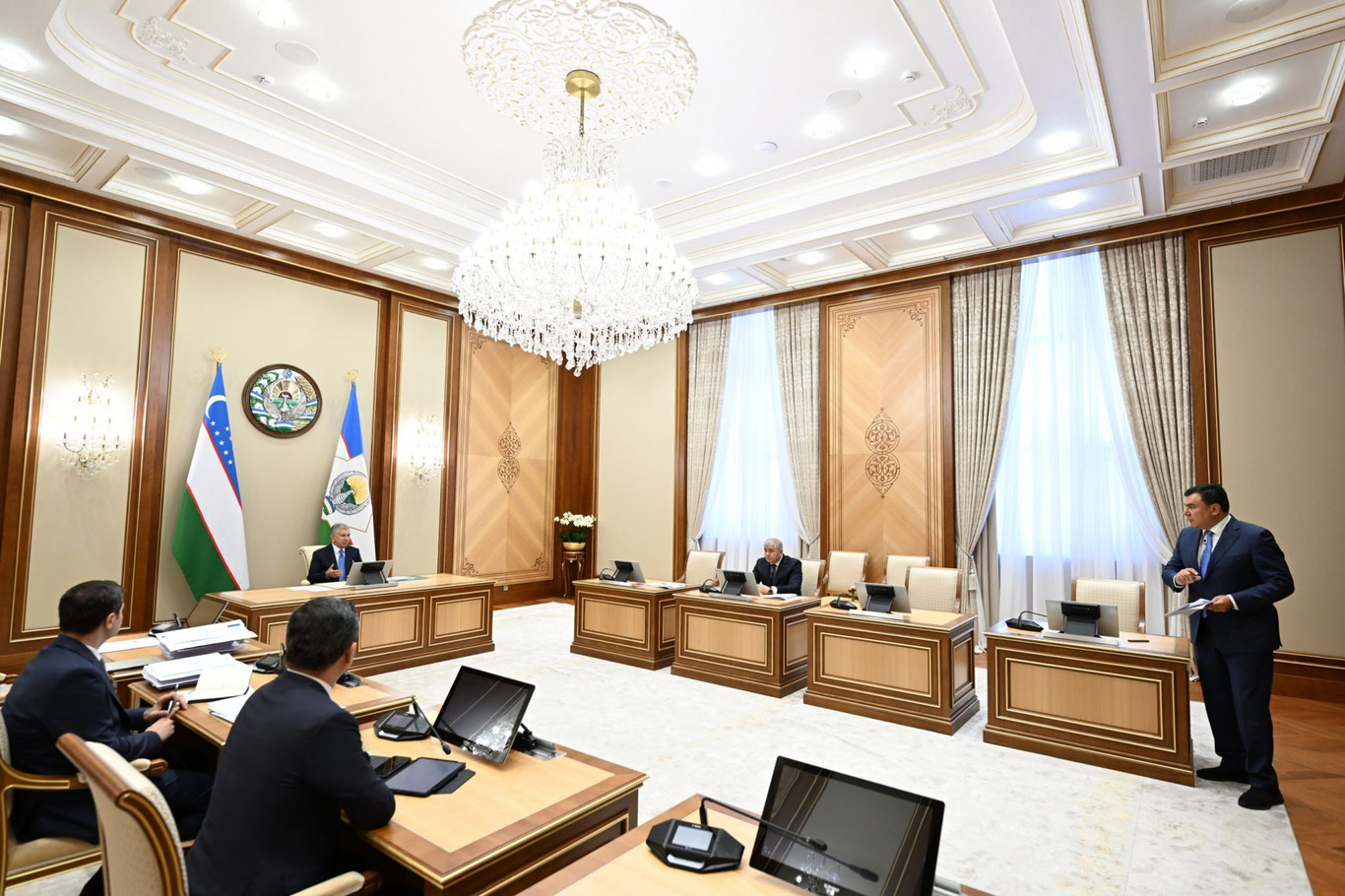
President Shavkat Mirziyoyev reviewed proposals on combating desertification, developing the desert economy, and implementing "green city" principles in urban areas during a presentation.
It was noted that climate change, water scarcity, land degradation, and desertification are among the most pressing environmental issues in the region, negatively impacting agricultural sustainability, food security, public health, and the economic development of territories.
According to data, nearly 80 percent of Uzbekistan's territory consists of desert and semi-desert areas. Soil salinization, sand drift, dust storms, and hot dry winds pose a serious environmental threat, particularly in the Republic of Karakalpakstan, Bukhara, Navoi, Khorezm regions, as well as in certain areas of Kashkadarya, Surkhandarya, and Jizzakh regions.
The presentation reviewed proposals to elevate anti-desertification efforts to a new level in 2026–2030. According to these plans, it is envisioned to establish and restore forests on an area of 1.27 million hectares, as well as create 16,000 hectares of protective forests in desert, mountain, and foothill areas.
Additionally, proposals were made to establish green cover on 10,000 hectares in Surkhandarya region, create an 84-kilometer "green wall" in the border areas of Syrdarya region, plant trees and shrubs using the "terrace" method in mountain and foothill areas, and test modern agricultural technologies on degraded lands.
The President emphasized the need to view desert areas not only as an environmental problem but also as a source of new economic opportunities. To this end, the importance of developing the "desert economy" approach, creating sustainable income sources on saline and fallow lands, establishing desert plant seed production and nursery cultivation, growing halophyte plants, increasing pasture productivity, and expanding livestock farming, ecological tourism, and scientific research was highlighted.
In this regard, proposals were made to establish desert plant nurseries in Karakalpakstan, conduct scientific expeditions on the dried bed of the Aral Sea, develop pistachio plantations based on modern methods in the Babatag area, and expand the network of halophyte gardens.
Furthermore, issues such as creating a regional bank for drought-resistant plants and seeds, and attracting international funds and private investments were also discussed.
The presentation also paid special attention to strengthening environmental cooperation with Central Asian states. In particular, initiatives were put forward to expand the activities of the Central Asian Regional Scientific and Research Center on combating desertification and developing the desert economy, increase practical projects under the "Green Shield" regional program, and develop a strategy for combating desertification until 2040.