Typhoon "Dolphin" hit China: more than 1 million people evacuated
Six people were injured as a result of the natural disaster, and more than 50,000 buildings were left without electricity.
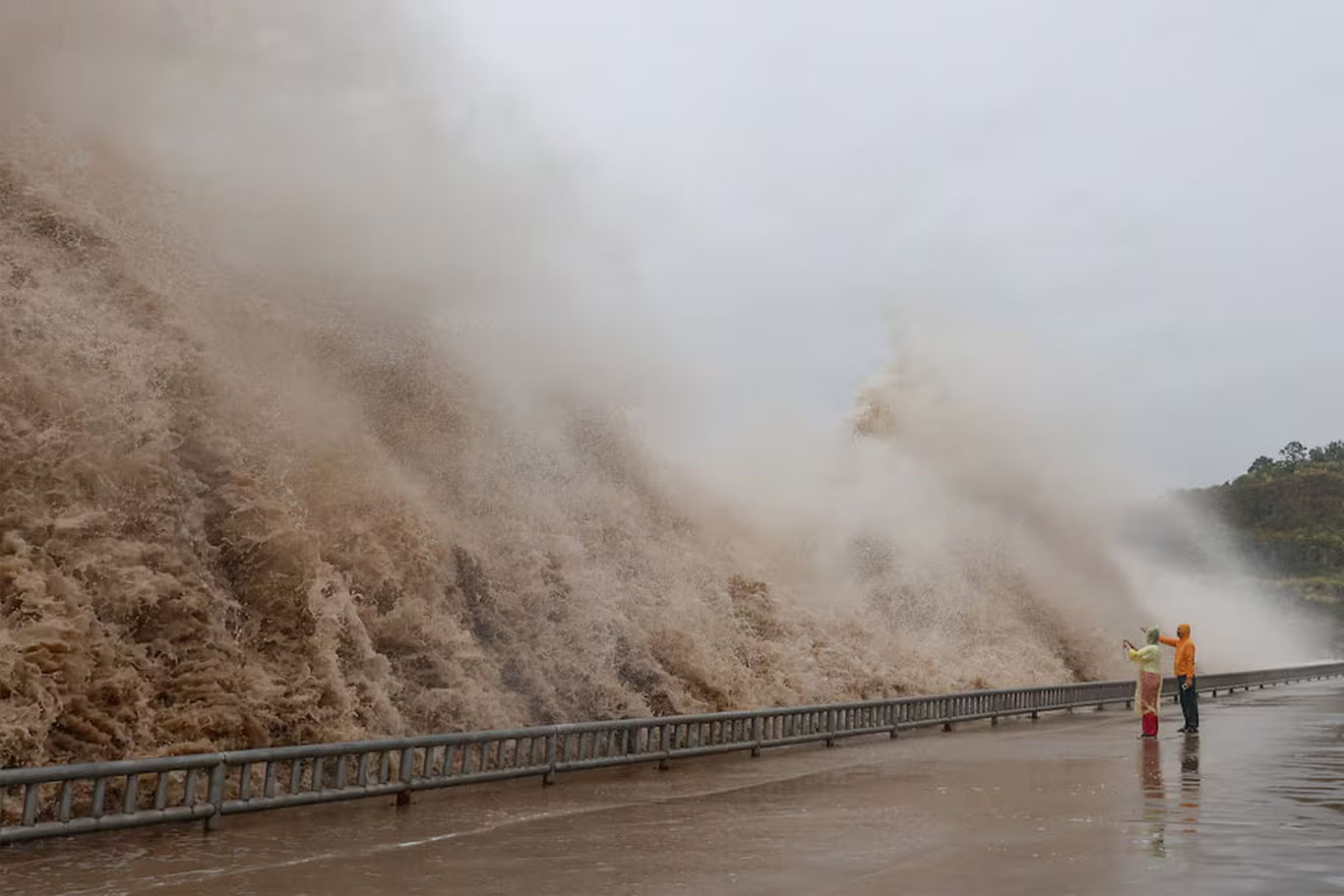
Typhoon "Dolphin," the strongest tropical cyclone to hit China's eastern coast this year, has made landfall. Heavy rain and wind have disrupted transportation in the eastern part of the country, and more than 1 million people have been evacuated to safe areas. Reuters reported this.
According to China's meteorological service, the typhoon made landfall near Yuhuan City in Zhejiang Province at around 17:30 on August 9 (14:30 Tashkent time). At that time, wind speeds at the typhoon's center reached 42 meters per second (151 kilometers per hour). This is equivalent to a Category 1 storm on the Saffir-Simpson scale.
Before reaching China, "Dolphin" passed through Okinawa Prefecture in southern Japan. As a result of the natural disaster, six people were injured, and more than 50,000 buildings were left without electricity.
Meteorologists forecast heavy rainfall until August 10 in Zhejiang, Shanghai, northern Fujian, northeastern Jiangxi, central and southern Anhui, and much of Jiangsu Province. Precipitation in central and eastern Zhejiang could reach 250–500 millimeters.
Wang Haiping, chief expert at the National Meteorological Center, told CCTV that after making landfall, Typhoon "Dolphin" will move westward. It is then expected to slow down and gradually weaken over central and southwestern China.
However, the typhoon's slow movement could cause heavy rainfall to persist for a longer period. This increases the risk of flooding and landslides, especially in mountainous areas and along small rivers.
In Shanghai, at least 30,300 people have been evacuated, and nearly 1,500 flights have been canceled. Ships in the city's ports have also been moved to safe locations. More than 500 small and medium-sized vessels from Yanshan Port have been relocated to shelters.
China's Ministry of Water Resources warned of possible severe flooding in the Qiantang, Yun, Jiao, and Shuiyang rivers. Water levels in small rivers in the areas most affected by the typhoon may exceed dangerous levels.
Officials stated that geological hazards such as landslides are high in some areas of Zhejiang. In areas where red-level warnings for flash floods in mountain streams have been issued, residents have been urged to strictly follow local authorities' evacuation instructions.
Before the typhoon approached, offshore workers were moved to safe areas, and ships were ordered to return to ports. Monitoring has also been intensified at reservoirs, mountain streams, high landslide-risk areas, construction sites, and tourist destinations.
In Shanghai, a 42-year-old tourist whose flight was canceled due to the typhoon said he and his family were stranded in the city. They were supposed to fly out on Sunday.