For negotiations to take place, Iran must not attack ships — US
The war that the US and Israel launched against Iran in the Middle East has now exceeded six months. However, the conflict is still not over, and its scope is expanding with new dimensions. While military strikes continue between the parties, issues of negotiations, economic pressure, and control over the Strait of Hormuz are also becoming increasingly important.
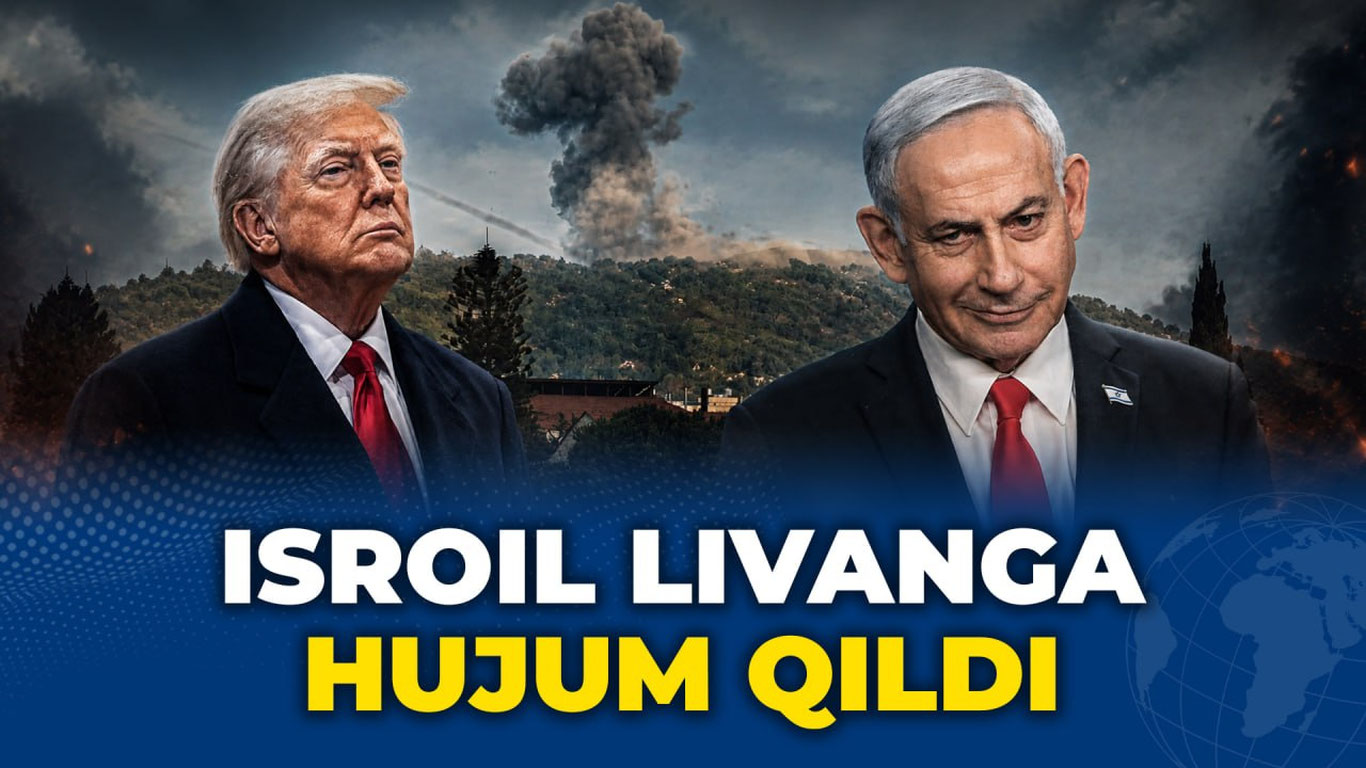
In June, an agreement was reached between the US and Iran to halt military actions. Later, the agreement was broken, and both sides accused each other of violating its terms. In early September, the US launched new strikes on Iranian military facilities, while Tehran responded with missile and drone attacks against US allies in the Persian Gulf.
At the same time, Israel is intensifying operations to destroy Hezbollah's strategic underground infrastructure in southern Lebanon.
The war, which began with the aim of curbing Iran's nuclear program, is now also coming down to the question of who can establish greater control over the Strait of Hormuz. Although the US and Israel have inflicted serious damage on Iran's nuclear and military capabilities, they have not been able to force Tehran to surrender or change its political course.
On September 3, Israeli Prime Minister Benjamin Netanyahu said the Iranian regime was "weaker than ever." According to him, the Iranian government is fighting for its survival, and Israel has the ability to "eliminate the Iranian threat once and for all," even to overthrow the current regime.
This statement is an important political signal indicating that the goals of the war may be expanding. When the war began, the main focus was on preventing Iran from acquiring nuclear weapons. Now, the Israeli leadership is openly discussing the possibility of regime change itself.
US President Donald Trump is also framing the military campaign in terms of limiting Iran's nuclear capabilities. In an interview with GB News, he said the US would "win soon" and emphasized that Iran could not acquire nuclear weapons. According to Trump, had the US not struck, Tehran could have built a nuclear weapon within two, possibly four, weeks. In his view, that timeline has now been extended to 25 years.
These figures should not be seen as assessments confirmed by independent experts, but rather as Trump's political evaluation of the war's outcomes. At the same time, his statement suggests that Washington is presenting the war not as a temporary military operation, but as a means of limiting Iran's strategic capabilities over the long term.
At the same time, another part of the US strategy is intensifying economic pressure on Iran. According to the Associated Press, the Trump administration, alongside military pressure, is also ramping up an economic campaign aimed at cutting off Iran's remaining trade ties.
However, while this pressure is currently weakening Iran's economy, it has not forced the country's political leadership to surrender. Economic weakness does not automatically mean political capitulation.
The weakening of Iran's currency, rising inflation, and shrinking foreign trade increase costs for the government. But for the regime to collapse, serious divisions would need to emerge within the country's political elite, security apparatus, and military structures.
So far, no clear signs of such a process are visible. For this reason, the idea of "regime change" put forward by Netanyahu remains one of the most uncertain directions of the war.
The US and Israel can bomb Iran's military facilities, inflict serious damage on its nuclear infrastructure, and destroy its missile systems. But determining the future form of Iran's political system from the outside is far more complex.
This risk has also been highlighted by US intelligence assessments themselves. According to The Wall Street Journal, during pre-war discussions, some assessments within the US intelligence community warned that the collapse of Iran's leadership could lead to the emergence of a more hardline government and strengthen Tehran's drive to build nuclear weapons.
On September 3, the Israeli army announced that it had cleared a large Hezbollah underground complex located beneath the Ali al-Taher ridge in southern Lebanon. According to Israeli military officials, two underground infrastructures were identified in the area, and efforts to destroy them are ongoing.
This ridge, approximately 600 meters high, provides strategic observation over areas in southern Lebanon.
According to Reuters, it overlooks the Litani River and the Hula Valley, making it a favorable position for Hezbollah for southern positions and attacks against Israel's northern territories.
Israeli forces have been trying to encircle the area since June. For this reason, Israel's operation at Ali al-Taher carries broader strategic significance than a routine tactical exercise.
According to Reuters, Iran has informed the US through Oman that it would respond sharply if Israel launched a large-scale attack on the Ali al-Taher area. Iranian sources said Islamic Revolutionary Guard Corps personnel were present in the area alongside Hezbollah fighters. Israel, for its part, denies the presence of Iranian forces in the area.
As Israel seeks to weaken Hezbollah, Beirut is also trying to limit the group's status as an armed force independent of the state. However, a prolonged presence of Israeli troops on Lebanese territory could put the Lebanese government in an even more difficult position.
This is because Hezbollah is likely to try to justify its armed presence as "resistance against the Israeli invasion."
The US is attempting to limit Iran's maritime capabilities. Iran, in turn, is increasing economic costs for Washington and its allies by pressuring commercial shipping.
For the US, keeping the Strait of Hormuz open carries not only a military mission but also global economic significance. For Iran, the strait is one of the most powerful tools of strategic pressure. This issue is also directly affecting oil prices. According to AP, against the backdrop of the escalating conflict, Brent crude prices reached nearly $95 per barrel.
If Tehran severely restricts movement in the Strait of Hormuz, the military response from the US and other countries could intensify. If it refrains from such a step, one of Iran's most powerful economic pressure tools would remain unused.
The US could strengthen its control over the strait, but doing so would require maintaining more military forces in the region. This, in turn, would increase the economic and political costs of the war.
According to a statement by US Vice President J. D. Vance on September 3, as long as Iran continues to attack commercial vessels, Washington will not restart negotiations. He stated that the US is considering all of its economic, military, diplomatic, and even covert pressure tools.
If Washington combines its overt military campaign with covert operations, intelligence, and economic measures, resistance for Iran could become even more difficult. However, such an approach is likely to blur the boundaries of the conflict even further.
This is precisely the most dangerous aspect of the current situation: each side is trying to reduce the other's capabilities, yet at the same time, neither can accurately predict the other's next move.
If the US expects Iran's complete surrender, the scope for negotiation may narrow. If Israel turns regime change into the primary goal of the war, the likelihood of a prolonged conflict increases. Iran, if it continues its resistance, may attempt to exert pressure through Hormuz and its regional allies.
Therefore, the current military superiority does not yet mean final victory. The final outcome depends less on how weakened Iran has become and more on how the post-war political order takes shape.
If no agreement is reached on such an order, today's military successes could become the starting point for the next future conflict.