The UN has approved changing the world map.
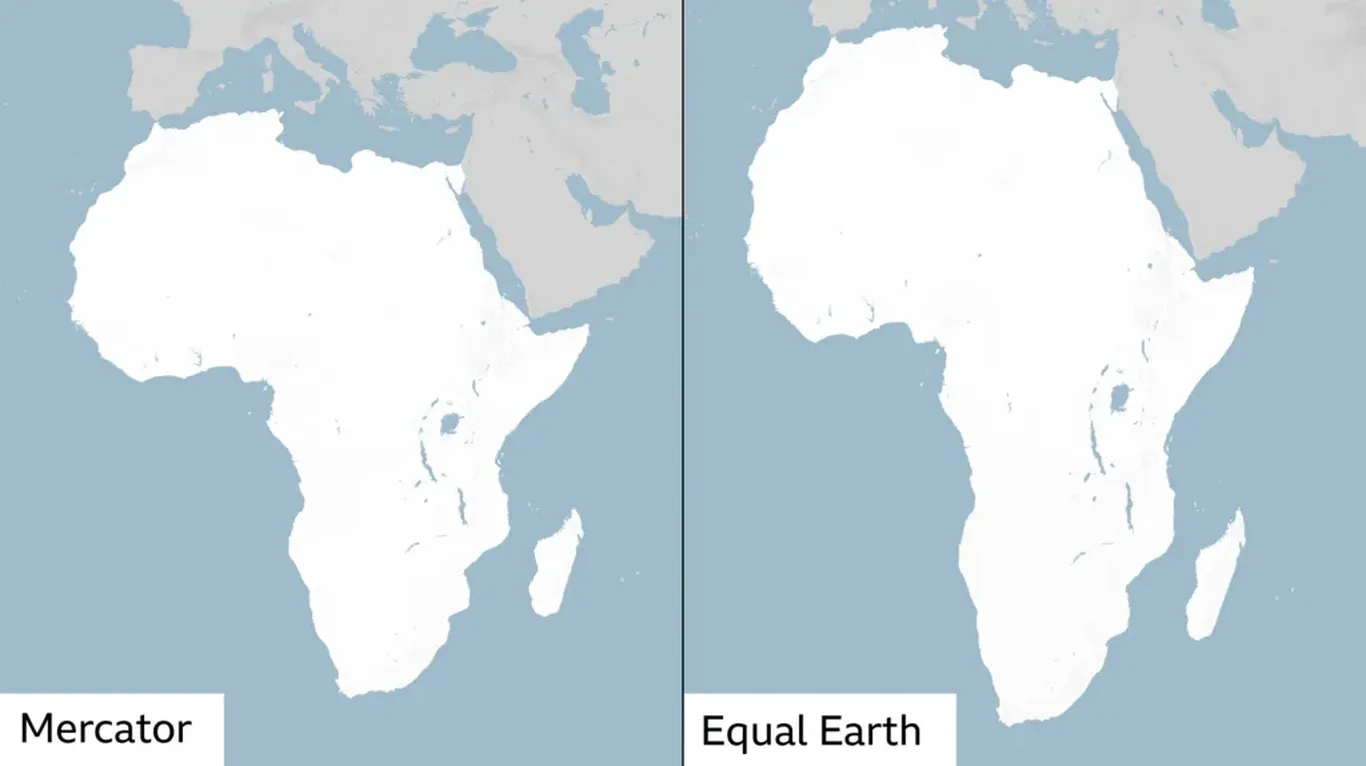
The decision is related to the fact that the actual size of Africa is not reflected in the Mercator projection.
The UN General Assembly has supported the transition to using a world map that more accurately reflects Africa's true size. The resolution, proposed by Togo, was approved by 164 countries, with the US voting against it and six countries abstaining.
The resolution, dubbed "correcting the map," is not legally binding. However, it could prompt changes to the maps used by various institutions around the world.
The issue concerns the Mercator projection, widely used since the 16th century. On this map, areas near the poles appear larger than they actually are, while areas around the equator appear smaller. In particular, Africa and Greenland appear nearly the same size on the map, even though Africa is 14 times larger than Greenland.
In 2018, cartographers developed the "Equal Earth" projection, which reflects the area of continents relatively more accurately. In February of this year, the 54 member states of the African Union adopted this projection.
Togo's Foreign Minister Robert Dussey emphasized that maps shape perceptions of where regions and peoples stand in the world. France's Foreign Minister Jean-Noel Barrot also announced plans to stop using the Mercator map.
The US representative, meanwhile, criticized the resolution, stating that the UN General Assembly should focus on important issues such as international peace and prosperity.
Supporters of the initiative stress that Africa being depicted as smaller on maps also affects perceptions of the continent's resources, population, and economic potential.