Who is Iran, who is on the side of the US-Israel?
The US and Israel's attack on Iran is still ongoing. The war has entered a new phase.
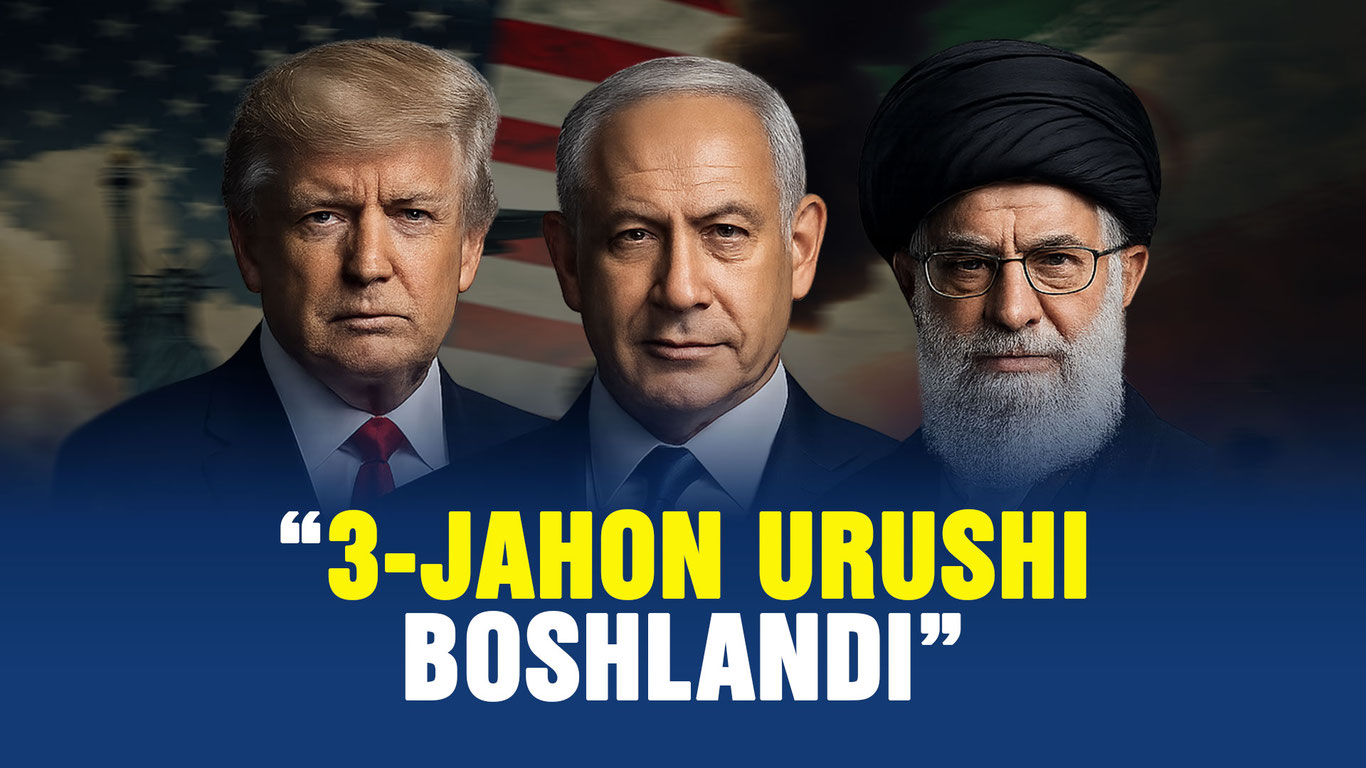
The geopolitical situation in the Middle East has entered a critical phase. The leaders of Germany, France and the United Kingdom have issued an unprecedentedly strong joint statement in response to Iran's aggressive actions in the region. The document, published by the German government, strongly condemned Tehran's "reckless attacks" and stated that the "European Union" is ready to take direct military measures to protect its interests and allies.
The leading European countries are demanding that Tehran immediately stop its military provocations. Otherwise, the Western coalition may carry out proportionate military operations aimed at destroying Iran's missile and drone launch infrastructure directly at the source. These steps are being planned in full coordination with Washington and strategic partners in the region. In particular, Iran's strikes on objects unrelated to Israeli and US operations have aroused serious objections and "surprise" in the European diplomatic corps.
British Prime Minister Keir Starmer has given the US permission to strike British military targets in an attempt to hit a source of Iranian missile facilities. According to unconfirmed reports, Britain has been taking part in the Persian Gulf defense operations against Iranian missile attacks, but did not take part in the US-Israeli counter-attack on Iran.
According to reports, Britain shot down a missile aimed at a base in Iraq where its military personnel are stationed.
French President Emmanuel Macron held an emergency meeting of the Defense Council after the attack on the naval base in Abu Dhabi. Paris stressed that this incident would not go unanswered and that combat readiness in the region would be raised to the highest level.
In a practical demonstration of the seriousness of the situation, the French aircraft carrier Charles de Gaulle, which recently participated in the Orion exercises, and its strike group were mobilized in the direction of Iran. This move demonstrates that Europe intends to exert not only diplomatic but also real military pressure.
Chinese Foreign Minister Wang Yi called the US and Israeli attacks on Iran unacceptable. He called on the parties to immediately cease fire and resume large-scale regional negotiations.
According to the Russian Foreign Ministry, Wang Yi and Lavrov condemned the strikes, which were carried out “despite Tehran’s openness to dialogue.”
The ministers called for an immediate cessation of the attacks and stressed the need to “resolve all issues on the Iranian issue through political and diplomatic means, including ensuring the legitimate security interests of the Gulf states.”
The Lebanese Hezbollah movement has joined the events in the Middle East. The group launched an attack on Israel. It interpreted this move as a response to the assassination of the Iranian supreme leader.
The Israeli military responded quickly, striking Hezbollah targets across the country, including on the southern outskirts of Beirut.
The missiles fired from Lebanese territory set off air raid sirens in several areas of northern Israel. This was the first attack from Lebanese territory since the US and Israel began their strikes on Iran.
North Korean President Kim Jong-un said that if Iran wanted, the DPRK would provide missiles against Israel, and that one of such missiles could destroy all of Israel.
The US attack on Iran was prompted by weeks of lobbying by Israel and Saudi Arabia, The Wall Street Journal reported, citing four sources.
According to sources, despite publicly expressing support for a diplomatic solution, Saudi Crown Prince Mohammed bin Salman has made several private calls to Trump over the past month urging the United States to strike Iran.
Israeli Prime Minister Benjamin Netanyahu has long openly advocated for U.S. strikes against Iran, which he sees as an “existential threat” to his country.
The combined effort helped Trump launch a large-scale airstrike against the Iranian leadership and military. Khamenei and several other senior Iranian officials were killed in the first hours of the operation.
The strike came despite U.S. intelligence assessments that Iranian forces were unlikely to pose a direct threat to the United States for the next decade.
The Saudi call for an attack came as Trump's special envoy, Steve Witkoff, and his son-in-law, Jared Kushner, were holding talks with Iranian leaders on their nuclear and missile programs.
During the talks, the Saudi crown prince and Iranian President Masoud Pazeshkian spoke by phone. Afterward, Mohammed bin