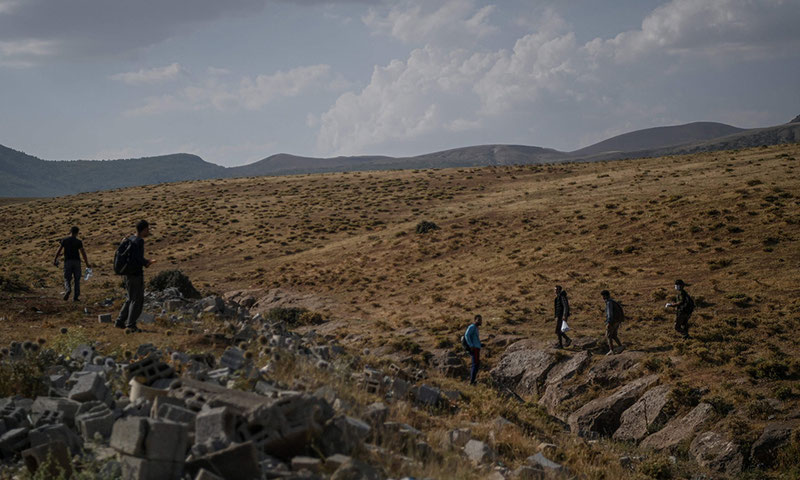
A record wave of illegal migration has been observed in Spain's Ceuta enclave.
Madrid has announced that nearly half of those who entered illegally have returned to Morocco.
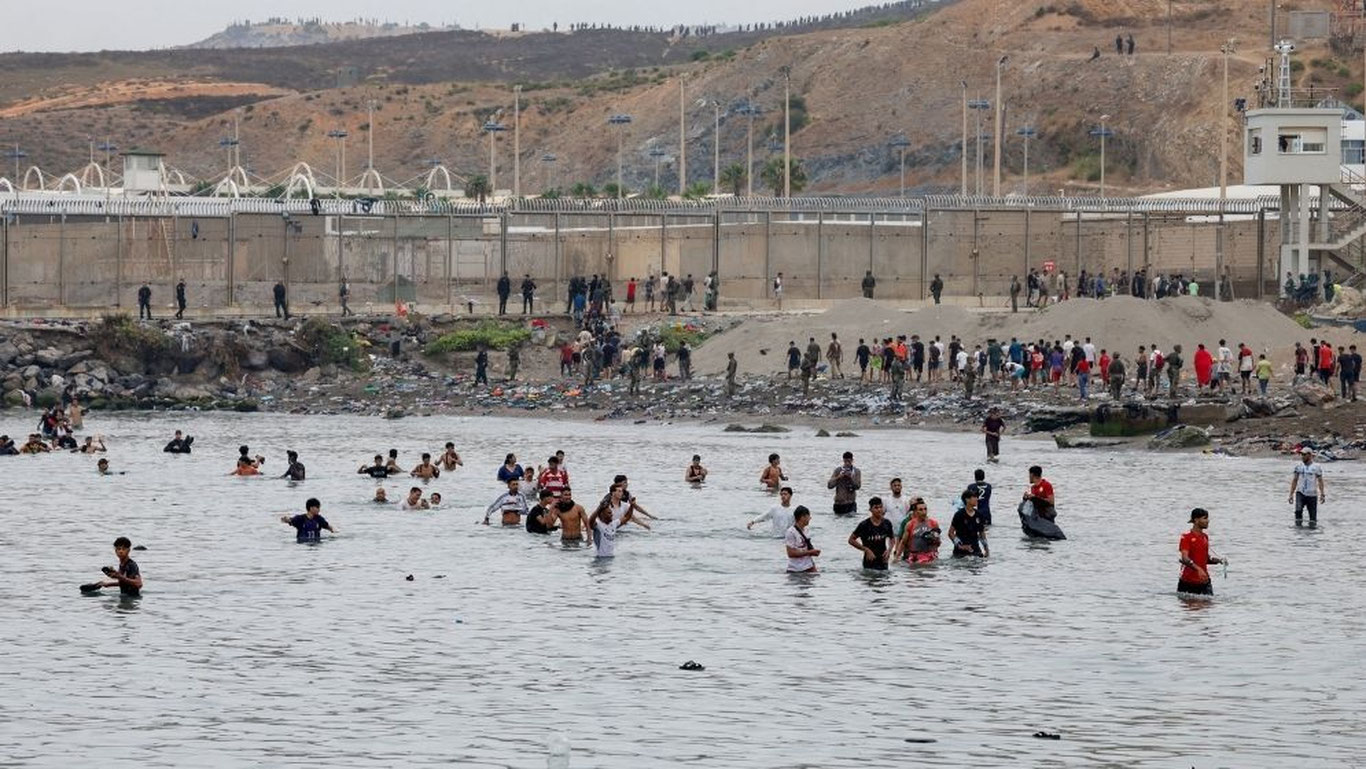
The unprecedented wave of illegal migration to Spain's enclave of Ceuta in North Africa has been halted. Reuters reported this.
According to Spanish officials, nearly half of the tens of thousands of people who have crossed the border since Thursday have voluntarily returned to Morocco. The incident has intensified sharp debates over migration policy across Europe.
According to Spain's Ministry of the Interior, approximately 50,000 people entered Ceuta illegally by land and sea starting Thursday morning. Nearly 25,000 of them have already returned to Morocco.
Juan Jesús Vivas, head of Ceuta's local government, said that around 60,000 people crossed the river and 34 people died. Earlier, Spanish officials reported that the bodies of 19 deceased individuals had been found at sea.
Moroccan security forces attempted to disperse the crowd gathered at the Ceuta border using tear gas, batons, and water cannons. Reuters correspondents observed that clashes at the border left behind the wreckage of a burned bus and several vehicles, while military equipment was deployed on the Spanish side.
Currently, hundreds of migrants continue to return to Morocco through checkpoints and open gaps in the barriers. Some of them said they could not find food or shelter in Ceuta.
During his visit to Ceuta, Spanish Prime Minister Pedro Sánchez described the mass illegal entry as an assault on the country's territorial sovereignty. He stated that Madrid, in cooperation with Morocco, is swiftly returning those who entered illegally.
Ceuta and Melilla are autonomous Spanish cities located in Moroccan territory. They are the only European Union territories with land borders on the African continent. Although illegal migration has been observed in these areas before, it is noted that this influx has reached record levels in terms of scale.
The Spanish Civil Guard police association (AUGC) stated that there were insufficient forces and resources to control the border during the mass incursion. Officials suggest that the surge in migrant flows may also have been influenced by a recent ruling by Spain's Supreme Court restricting the immediate return of some migrants who arrive in Ceuta and Melilla by sea.
The migration crisis has also sparked sharp disputes among European states. France announced it would strengthen controls at its border with Spain. Italian Prime Minister Giorgia Meloni expressed readiness to consider temporarily suspending the Schengen regime with Spain if necessary.
Italian Foreign Minister Antonio Tajani emphasized that Spain's amnesty policy toward illegal migrants has encouraged human trafficking. In response to this statement, Madrid summoned the Italian ambassador to the Ministry of Foreign Affairs and lodged a formal protest.
Additionally, Marine Le Pen, leader of France's far-right National Rally party, announced that if elected president, she intends to restrict the right to free movement within the Schengen area to citizens of European states only.