Air quality in Tashkent: what is causing the pollution?
Satellite images showed large dust masses in the capital and adjacent areas on October 25–26.
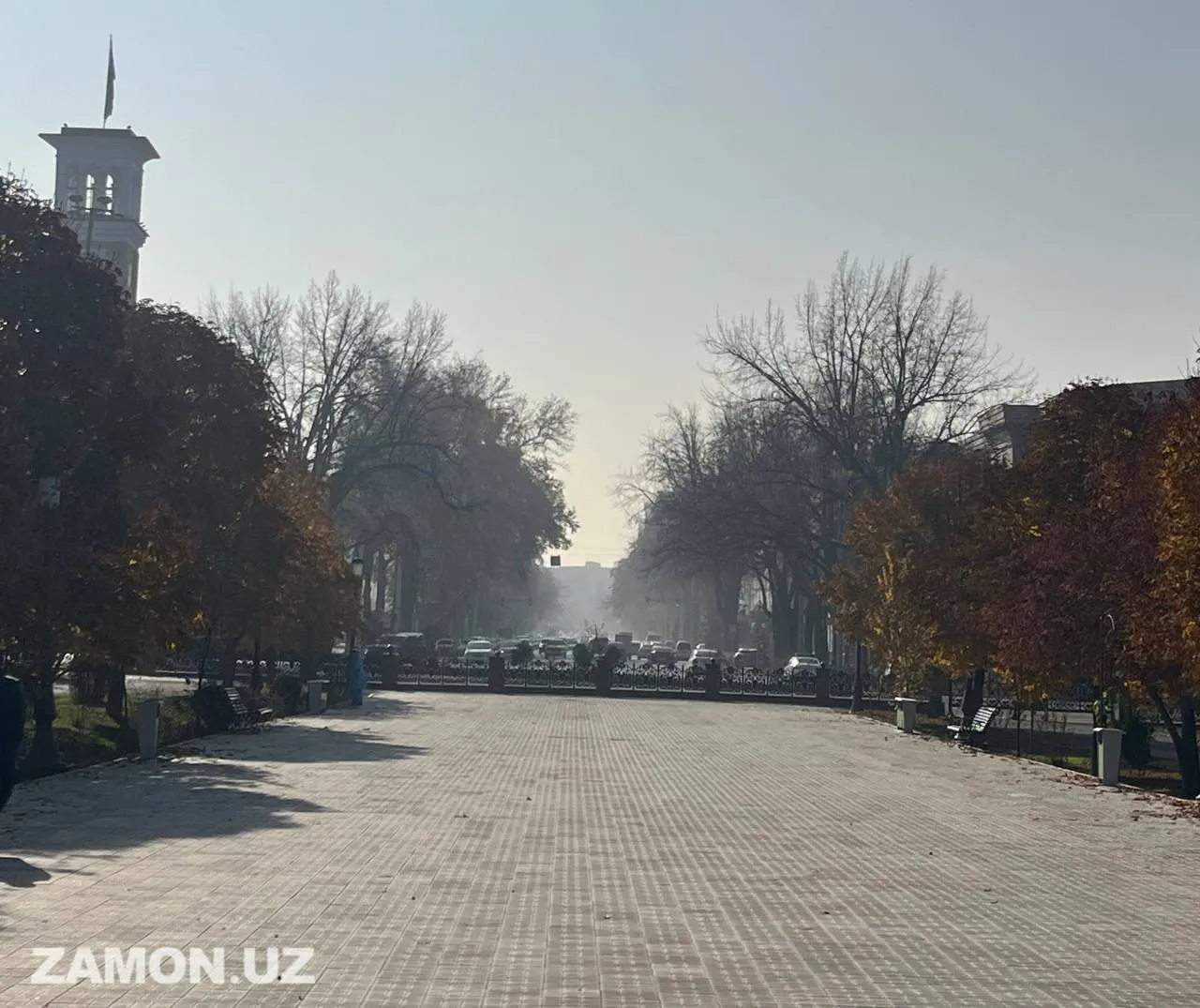
Unfavorable meteorological conditions and natural factors are also contributing to the air pollution observed in Uzbekistan, particularly in Tashkent city. In this regard, low precipitation, wind, and processes related to the natural exchange of atmospheric air are of significant importance. Farrukh Sattarov, Doctor of Philosophy in Technical Sciences, Director of the National Center for Climate Change, provided information about this.
By October 26 of the current year, only 3.9 millimeters of precipitation had been observed in Tashkent city. The monthly norm is 23.7 millimeters. This means that the amount of precipitation was nearly 6 times less than the norm. Low precipitation weakens the process of washing away dust particles in the air and creates conditions for their accumulation in the atmosphere.
According to scientific observations, changes have also been observed in processes related to the natural exchange of atmospheric air over the past decade. In particular, during the cold half of the year, unfavorable meteorological conditions associated with strong winds and low precipitation have increased by 57 percent compared to previous years. Such conditions can make the natural cleansing of air more difficult.
It is noted that changes in air quality, the movement of natural factors into regions, and their impact on atmospheric air quality are monitored by the Ministry of Ecology and Climate Change not only through monitoring stations but also via satellites. Specialists are monitoring changes in air quality not only through ground-based monitoring stations but also through satellite imagery.
For October 1–26, satellite images were analyzed based on the SILAM model (an international computer system designed for modeling and forecasting atmospheric composition and air quality) and compared with the AQI air quality index. Analyses show that the air quality index also increased during periods when dust masses entered Tashkent city and adjacent areas. For example, on October 4–5, precipitation was observed and the AQI index was at 66–71. On subsequent days of the month, air quality deteriorated against the background of low precipitation and the accumulation of dust masses.
In images obtained from Europe's EUMETSAT platform (the European meteorological satellite agency specializing in observing weather, climate, and the environment from space) and the Meteosat satellite, large dust masses were observed on October 25–26 in Tashkent city and surrounding areas. This process covered Tashkent city and region, as well as partially Syrdarya and Jizzakh regions.
According to specialists' forecasts, the impact of dust masses and unfavorable conditions related to air pollution may continue until the beginning of next week.
It is emphasized that various factors contribute to the deterioration of air quality. Therefore, in correctly assessing the situation, it is important to analyze meteorological conditions, the movement of dust masses, and monitoring data together.