Now things are accelerating even more in the MIB: artificial intelligence is being introduced into the system.
Starting from March 1, artificial intelligence technologies will also be introduced into the activities of the MIB. 30 percent of the workload will be assigned to it. This will prevent a number of errors and shortcomings and increase work efficiency.
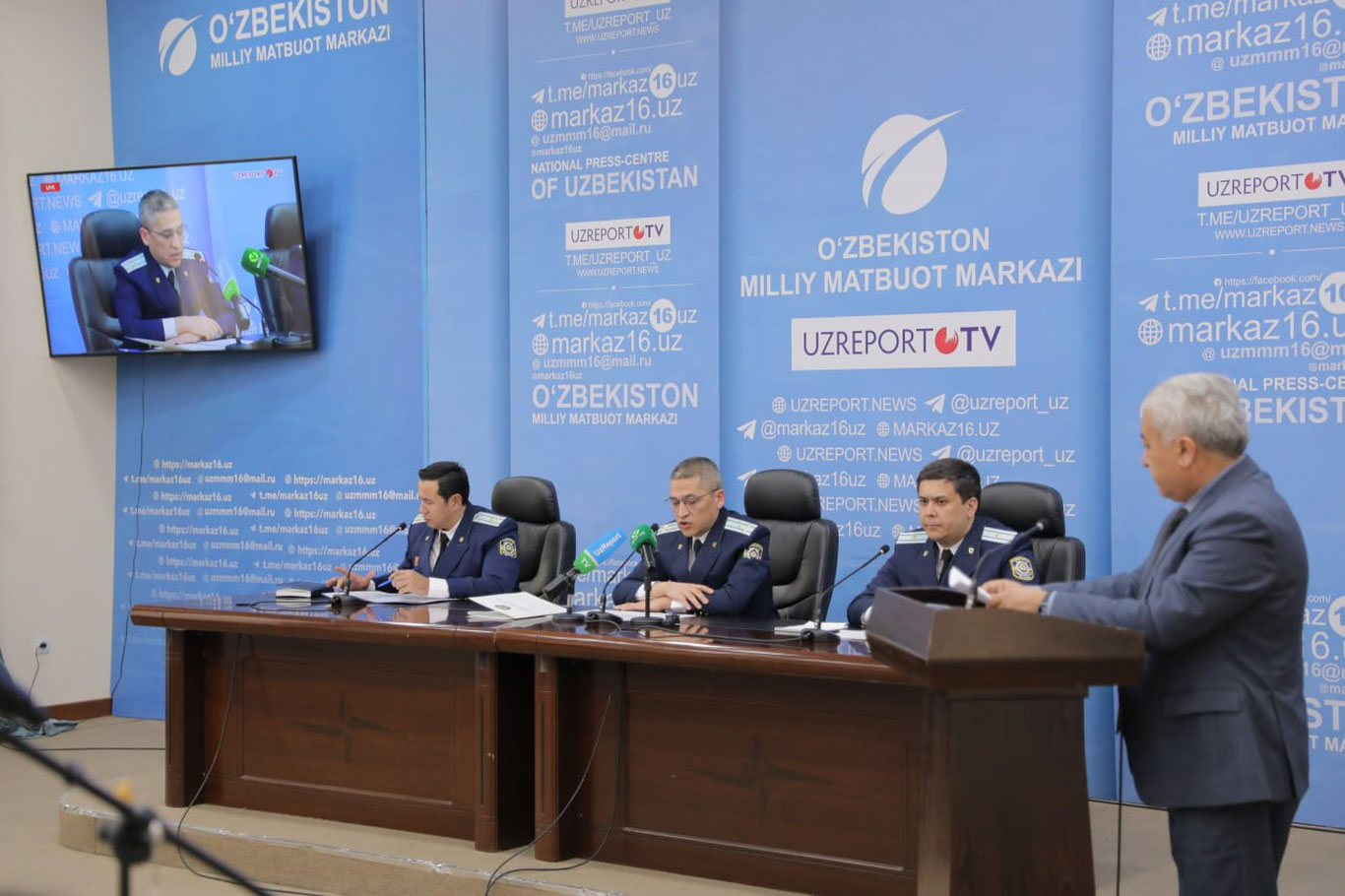
Yesterday, on February 20, a press conference on the topic "Work carried out in the field of enforcement in the past period, innovations and digitalization issues in the field" was held at the National Press Center of Uzbekistan with the leadership and responsible employees of the Compulsory Enforcement Bureau under the Prosecutor General's Office.
Within the framework of the conference, along with the work carried out in the field, detailed information was also provided about the innovations expected in the system, reports the Zamon.uz correspondent who participated in it.
In particular, starting from March 1 of this year, artificial intelligence technologies will also be introduced into the activities of the CEB. 30 percent of the workload will be assigned to it. This will prevent a number of errors and shortcomings and increase work efficiency.
According to the information, in some cases, there are discrepancies between the paper form of enforcement documents and the electronic form sent by the court. That is, the enforcement document contains the name and surname of one person, while the electronic document sent by the court contains the information of another citizen. As a result, in many cases, a number of restrictions are imposed on a citizen who is not actually a debtor, or enforcement documents are returned to the court.
Now, artificial intelligence technology will help compare both documents and identify errors and shortcomings. In this way, the human factor is minimized in accepting and returning enforcement documents sent by courts.
Also, an artificial intelligence chatbot will be created to answer applicants' questions outside the usual working hours of CEB bodies.
In the system, artificial intelligence capabilities will be extended to the level of formalizing procedural documents.
It is emphasized that CEB employees are now also being equipped with tablets and body cameras. This is aimed at preventing unpleasant situations that may arise during enforcement actions.
Equipping with tablets increases work efficiency. That is, an employee can now perform tasks that they previously had to go to the office for, also through a tablet.
"We can reduce the workload in the CEB system by digitalizing the field and providing employees with the necessary modern tools," said the head of the CEB information service, Farruh Toshpulatov.
During the conference, attention was also paid to problems related to alimony collections. According to information, at the republican level, the process of collecting alimony payments has become difficult because 61 percent of alimony payers do not have a permanent job or income.
As a solution, job fairs are being organized for debtor citizens, and collections are being carried out by ensuring their employment. In this regard, in 2025, 26,753 citizens who had the desire to pay alimony but lacked employment were provided with jobs.
For the benefit of children in need of material assistance, 3.1 trln soums of alimony funds have been collected.
From the "Alimony Payments" fund, 26.8 bln soums of monetary funds have been paid to 588 collectors.
In addition, as a result of explanatory work carried out, 13,834 families have been reconciled.