Islamic Civilization Center – Eurasia's New Geostrategic Center — Forbes
The Islamic Civilization Center is becoming the "symbolic and strategic pillar" of Uzbekistan's new role as a cultural and diplomatic bridge between Eurasia, the Middle East, and South Asia.
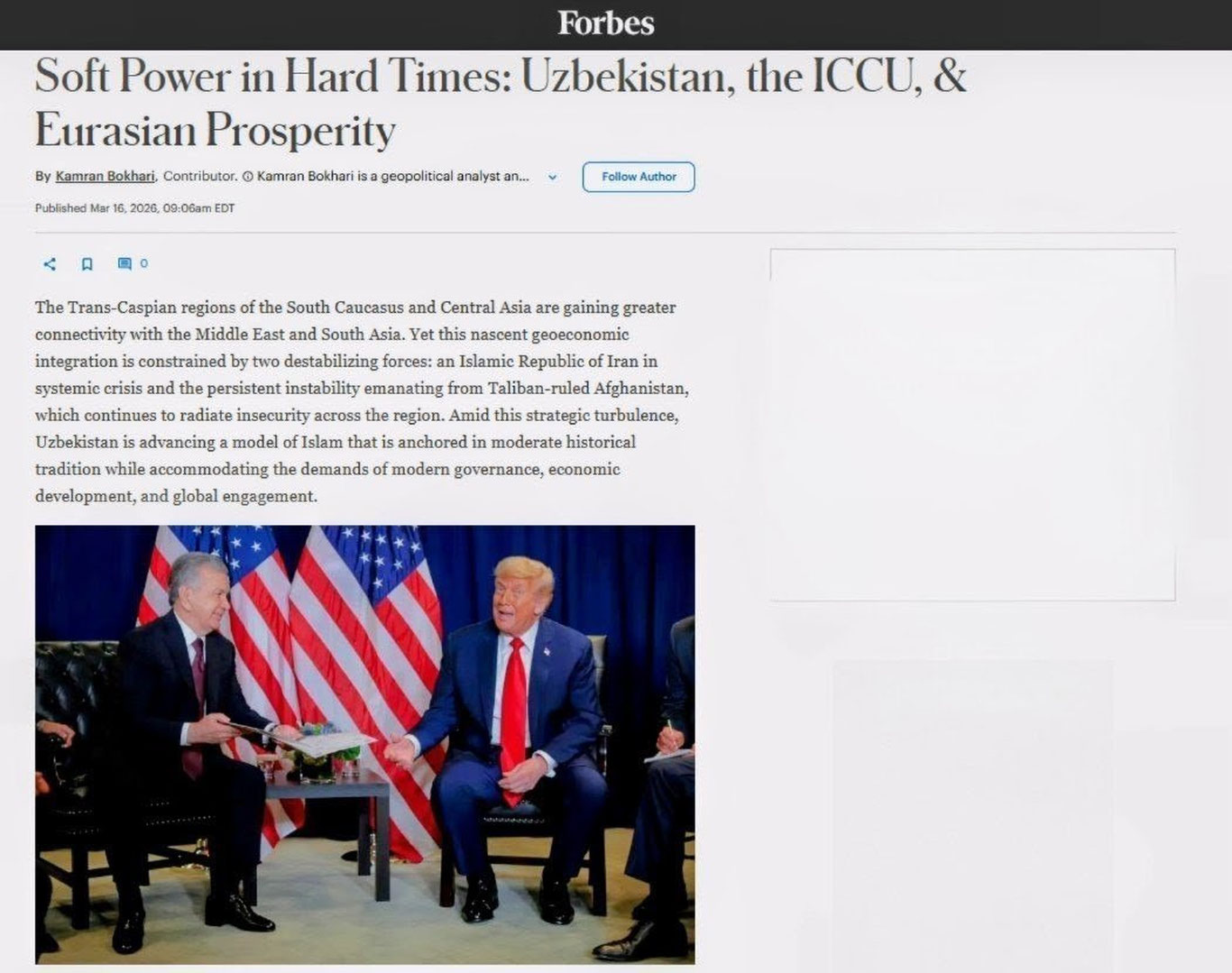
On the official opening day of the Center of Islamic Civilization in Tashkent, the prestigious international publication Forbes published an analytical article, calling the Uzbek project a "New Center in Eurasia" and emphasizing its cultural-diplomatic and geostrategic significance.
The article's author, renowned geopolitical analyst Kamran Bokhari, assesses the establishment of the Center as part of the process of comprehensive changes underway in Uzbekistan – its transformation from a regional player into an active participant in the architecture of global security, economy, and cultural cooperation. The publication notes: "The Center is a significant initiative that manifests Uzbekistan's historical role in shaping Islamic intellectual and cultural traditions in the Eurasian space."
Forbes draws attention to the fact that in conditions of global instability and "competition of ideas," the Center of Islamic Civilization is becoming not just a cultural object, but a strategic platform for soft power: "The Center has the potential to become a crucial arena for showcasing the model of tolerant Central Asian Muslim traditions and for constructive dialogue."
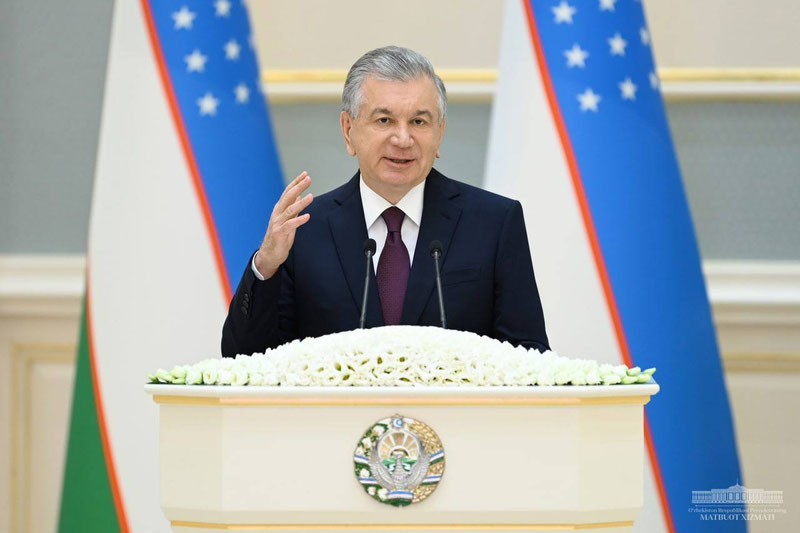
The article also pays special attention to the policy being pursued under the leadership of the President of the Republic of Uzbekistan, Shavkat Mirziyoyev, emphasizing that it is aimed at promoting the humanistic essence of Islam, developing international cooperation, and shaping a new image for the region.
In the author's opinion, the Center of Islamic Civilization is becoming a "symbolic and strategic pillar" of Uzbekistan's new role as a cultural and diplomatic bridge between Eurasia, the Middle East, and South Asia.
The publication further emphasizes that the establishment of the Center strengthens Uzbekistan's position as a state capable of harmonizing its historical heritage with modern tools of influence.
"Uzbekistan is transforming its civilizational heritage into a modern soft power tool that supports global stability and sustainable development," the article states.
Forbes assesses the opening of the Center not only as a national event but as part of a broader geo-economic and geopolitical strategy. Within this framework, Tashkent is strengthening its position as one of the key hubs of Eurasia.
This article, published on the day the Center opened, confirms the growing international interest in Uzbekistan and the strengthening of its role in shaping a new global balance through culture, science, and dialogue of civilizations.